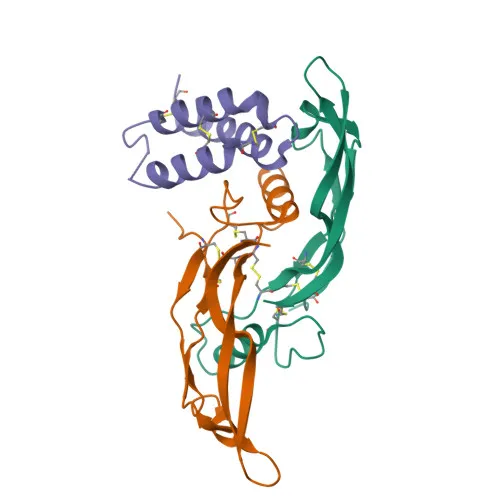
Monoclonal Antibodies
Anti-RGMA Rabbit Monoclonal Antibody for WB and ELISA - Q96B86
Item Number : CM0003065
Price varies based on specs and customizations
- Application
- WB, ELISA
- Cross Reactivity
- Rat
- Protein Weight
- 49 kDa

Shipping:
Contact us to get shipping details Enjoy On-time Dispatch Guarantee.
Why Choose Us
Easy ordering process, quality products, and dedicated support for your business success.
Core Product Specifications and Parameters
| Parameter | Value |
|---|---|
| Product Name | RGMA Rabbit mAb |
| Remarks/Alias | RGM; RGMA |
| Species | Human |
| Gene ID | 56963 |
| Immunogen | A synthetic peptide corresponding to a sequence within amino acids 350-450 of human RGMA (Q96B86). |
| Source | Rabbit |
| Category | Monoclonal Antibodies |
| Application | WB, ELISA |
| Cross Reactivity | Rat |
| SWISS | Q96B86 |
| Protein Weight | 49 kDa |
| Shipping | Ice bag |
Biological Background: RGMA Function and Localization
- RGMA (Repulsive Guidance Molecule A) is a member of the RGM family, playing critical roles in the developing and adult nervous system.
- It regulates cephalic neural tube closure, inhibits neurite outgrowth, and limits cortical neuron branching, while also being involved in mature synapse formation.
- Upon binding to its receptor NEO1/neogenin, RGMA activates the RHOA-ROCK1 signaling cascade via UNC5B-ARHGEF12/LARG-PTK2/FAK1, resulting in neuronal growth cone collapse and neurite outgrowth inhibition.
- The NEO1-RGMA interaction also inactivates HRAS through the HRAS-PTK2/FAK1-AKT1 pathway, further modulating neurite dynamics.
- Additionally, RGMA functions as a bone morphogenetic protein (BMP) coreceptor, potentially signaling through SMAD1, SMAD5, and SMAD8.
- At the subcellular level, RGMA is anchored to the cell membrane via a GPI linkage and undergoes autocatalytic cleavage, alternative splicing, and post‑translational modifications including disulfide bond formation and glycosylation.
Experimental Guidance and Technical Tips
- The immunogen is a synthetic peptide spanning amino acids 350–450, corresponding to the C‑terminal region of human RGMA. This design may favor detection of the full‑length protein and certain cleavage products.
- For Western blot (WB), the predicted molecular weight of RGMA is approximately 49 kDa; include appropriate loading controls and validate expression in your target tissue or cell line.
- In ELISA applications, the antibody can be considered as either a capture or detection reagent; optimize coating concentration and detection system for your specific assay format.
- The supplier reports cross‑reactivity with rat RGMA; however, we recommend confirming performance and specificity in your own experimental system before large‑scale use.
CamelBio: Your One-Stop Sourcing Bridge
CamelBio connects diagnostic manufacturers, research labs, and institutes with a comprehensive one‑stop platform for IVD raw materials, technical services, and consulting—from concept to clinic. This RGMA monoclonal antibody supports investigations into nervous system development, neuronal guidance, and BMP signaling, and we offer complementary sourcing for validated antibody pairs, bulk reagents, and rare‑target raw materials. Let us streamline your procurement so you can focus on advancing your diagnostic and research programs.
REQUEST A QUOTE
Our professional team will reply to you within one business day. Please feel free to contact us!