Polyclonal Antibodies
Anti-RFC4 Rabbit Polyclonal Antibody for WB - P35249
Item Number : CM0029890
Price varies based on specs and customizations
- Application
- WB, IF/ICC, IP, ELISA
- Cross Reactivity
- Human, Rat
- Protein Weight
- 40kDa

Shipping:
Contact us to get shipping details Enjoy On-time Dispatch Guarantee.
Why Choose Us
Easy ordering process, quality products, and dedicated support for your business success.
Easy Process
Quality Assured
Dedicated Support
Core Product Specifications and Parameters
| Parameter | Value |
|---|---|
| Product Name | RFC4 Rabbit pAb |
| Remarks/Alias | A1; RFC37; RFC4 |
| Species | Human |
| GeneID (Human) | 5984 |
| GeneID | 5984 |
| Immunogen | Recombinant fusion protein containing a sequence corresponding to amino acids 204-363 of human RFC4 (NP_002907.1). |
| Source | Rabbit |
| Category | Polyclonal Antibodies |
| Application | WB, IF/ICC, IP, ELISA |
| Cross Reactivity | Human, Rat |
| SWISS | P35249 |
| Protein Weight | 40kDa |
| Shipping | Ice bag |
Biological Background: RFC4 Function and Localization
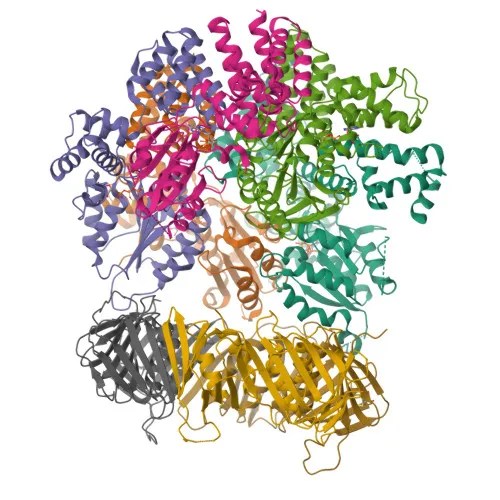
- RFC4 is a subunit of the replication factor C (RFC) complex, also known as Activator 1 37 kDa subunit (A1 37 kDa subunit), Activator 1 subunit 4, and RFC37. It is a DNA replication factor essential for genomic stability.
- The RFC complex acts during the elongation of primed DNA templates by DNA polymerases delta and epsilon, facilitating processive DNA synthesis.
- RFC4 is necessary for the ATP-dependent loading of proliferating cell nuclear antigen (PCNA) onto primed DNA, a critical step for DNA replication and repair.
- RFC4 likely serves as a structural scaffold within the RFC complex, facilitating the assembly of other subunits (RFC1, RFC2, RFC3, RFC5).
- Subcellularly, RFC4 localizes to the nucleus, consistent with its role in DNA replication.
- Post-translational modifications include acetylation, which may regulate its function or interactions. Alternative splicing generates multiple transcript variants.
- The protein is associated with ATP binding (nucleotide-binding) activity, crucial for its energy-dependent functions.
- Keywords from UniProt include 3D-structure, acetylation, alternative splicing, ATP-binding, deafness, direct protein sequencing, DNA replication, nucleotide-binding, nucleus, proteomics identification, and reference proteome. Deafness may indicate a possible disease association.
Experimental Guidance and Technical Tips
- The immunogen corresponds to amino acids 204-363 of human RFC4, which is within the C-terminal region. The antibody is expected to recognize full-length RFC4 and may cross-react with isoforms containing this region.
- For Western blotting (WB), anticipate a band at approximately 40 kDa. Validate specificity using recombinant protein or cell lysates with known RFC4 expression.
- In immunofluorescence (IF/ICC), confirm nuclear staining pattern in human or rat cells. Use appropriate nuclear markers to verify localization.
- For immunoprecipitation (IP), consider that RFC4 is part of a multi-subunit complex; optimize lysis and wash conditions to preserve protein interactions if complex analysis is desired.
- Cross-reactivity is reported for human and rat; verify reactivity with your specific sample and application.
CamelBio: Your One-Stop Sourcing Bridge
- Whether advancing a DNA replication research project or developing a diagnostic assay, CamelBio streamlines sourcing with validated antibody pairs, bulk ancillary reagents, and rare target raw-material access.
- For RFC4, we support researchers with optimized monoclonal/polyclonal antibodies and can assist with custom procurement needs—from antigen generation to assay-ready conjugates—accelerating your work from concept to clinic.
REQUEST A QUOTE
Our professional team will reply to you within one business day. Please feel free to contact us!