Polyclonal Antibodies
Anti-Rev-erb beta/NR1D2 Polyclonal Antibody for WB, ELISA - Q14995
Item Number : CM0020866
Price varies based on specs and customizations
- Application
- WB, ELISA
- Cross Reactivity
- Mouse, Rat
- Protein Weight
- 65kDa

Shipping:
Contact us to get shipping details Enjoy On-time Dispatch Guarantee.
Why Choose Us
Easy ordering process, quality products, and dedicated support for your business success.
Core Product Specifications and Parameters
| Parameter | Value |
|---|---|
| Product Name | Rev-erb beta/NR1D2 Rabbit pAb |
| Remarks/Alias | RVR; BD73; EAR-1R; REVERBB; REVERBbeta; Rev-erb beta/NR1D2 |
| Species | Human |
| GeneID | 9975 |
| Immunogen | Recombinant fusion protein containing a sequence corresponding to amino acids 220-300 of human Rev-erb beta/NR1D2 (NP_005117.3) |
| Source | Rabbit |
| Category | Polyclonal Antibodies |
| Application | WB, ELISA |
| Cross Reactivity | Mouse, Rat |
| SWISS | Q14995 |
| Protein Weight | 65kDa |
| Shipping | Ice bag |
Biological Background: Rev-erb beta/NR1D2 Function and Localization
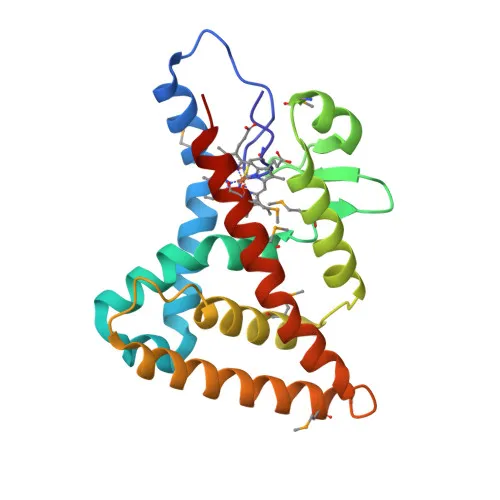
- NR1D2 (Rev-erb beta) is a heme-binding nuclear receptor that functions primarily as a transcriptional repressor, playing a central role in the circadian clock and metabolic regulation.
- It forms a critical negative limb of the circadian oscillator by directly repressing the expression of core clock components BMAL1 and CLOCK.
- In metabolic tissues, it regulates lipid and energy homeostasis by repressing genes such as CD36, FABP3, FABP4, UCP3, SCD1, and APOC3, and can also activate SREBF1 and IL6 in skeletal muscle.
- DNA binding occurs either as a monomer to a RevRE (5'-PuGGTCA-3' preceded by an A/T-rich sequence) or as a homodimer to a direct repeat spaced by two nucleotides (RevDR-2), allowing competitive repression of RORA.
- Beyond circadian and metabolic functions, it contributes to the regulation of the sleep/wake cycle and may influence neutrophilic inflammation in the lung.
- The protein is primarily nuclear but can also localize to the cytoplasm; it is widely expressed with highest levels in liver, adipose tissue, skeletal muscle, and brain, and its expression oscillates diurnally in the suprachiasmatic nucleus.
- Key structural features include zinc-finger motifs for DNA binding, and post-translational modifications such as acetylation, phosphorylation, and sumoylation regulate its activity.
Experimental Guidance and Technical Tips
- The immunogen targets a region within the hinge/ligand-binding domain (aa 220–300) of human NR1D2, which may generate antibodies that detect both monomeric and DNA-bound forms of the protein. For WB, consider using nuclear extracts or whole-cell lysates from tissues with high expression, such as liver or skeletal muscle.
- Given the listed applications (WB and ELISA), optimize antibody dilutions and validate performance in your specific experimental system. Cross-reactivity with mouse and rat makes this antibody suitable for studies in rodent models of circadian or metabolic disorders.
CamelBio: Your One-Stop Sourcing Bridge
CamelBio partners with diagnostic manufacturers, laboratories, and research institutes to provide comprehensive IVD raw material sourcing. This anti-Rev-erb beta/NR1D2 antibody supports research in circadian biology, metabolic disorders, and inflammation. We offer one-stop access to validated antibody pairs, optimized monoclonal and polyclonal antibodies, bulk ancillary reagents, and custom sourcing for rare targets, helping you streamline your workflow from discovery to clinical application.
REQUEST A QUOTE
Our professional team will reply to you within one business day. Please feel free to contact us!