Monoclonal Antibodies
Anti-RCC1 Rabbit Monoclonal Antibody for WB, IHC-P, ELISA - P18754
Item Number : CM0002948
Price varies based on specs and customizations
- Application
- WB, IHC-P, ELISA
- Cross Reactivity
- Human, Mouse, Rat
- Protein Weight
- 45kDa

Shipping:
Contact us to get shipping details Enjoy On-time Dispatch Guarantee.
Why Choose Us
Easy ordering process, quality products, and dedicated support for your business success.
Core Product Specifications and Parameters
| Parameter | Value |
|---|---|
| Product Name | RCC1 Rabbit mAb |
| Remarks/Alias | CHC1; RCC1-I; RCC1 |
| Species | Human |
| GeneID (human) | 1104 |
| GeneID | 1104 |
| Immunogen | Synthetic Peptide | A synthetic peptide corresponding to a sequence within amino acids 1-100 of human RCC1 (P18754). |
| Source | Rabbit |
| Category | Monoclonal Antibodies |
| Application | WB, IHC-P, ELISA |
| Cross Reactivity | Human, Mouse, Rat |
| SWISS | P18754 |
| Protein Weight | 45kDa |
| Shipping | Ice bag |
Biological Background: RCC1 Function and Localization
-
RCC1 acts as a guanine-nucleotide releasing factor (GEF) for the small GTPase Ran, catalyzing the exchange of GDP for GTP to regulate Ran's activity (PubMed:11336674, PubMed:17435751, PubMed:1944575).
Related references:
PMID:11336674, PMID:17435751, PMID:1944575 -
By maintaining a high concentration of GTP-bound Ran in the nucleus, RCC1 facilitates the release of cargo proteins from importins after nuclear import (PubMed:22215983).
Related references:
PMID:22215983 -
During mitosis, RCC1 generates chromosome-associated Ran-GTP, which is essential for proper mitotic spindle assembly and progression through mitosis (PubMed:12194828, PubMed:17435751, PubMed:22215983).
Related references:
PMID:12194828, PMID:17435751, PMID:22215983 -
RCC1 binds directly to nucleosomes and double-stranded DNA, anchoring its GEF activity to chromatin (PubMed:17435751, PubMed:18762580).
Related references:
PMID:17435751, PMID:18762580 -
It regulates the onset of chromosome condensation during S phase, ensuring proper cell cycle progression (PubMed:3678831).
Related references:
PMID:3678831 -
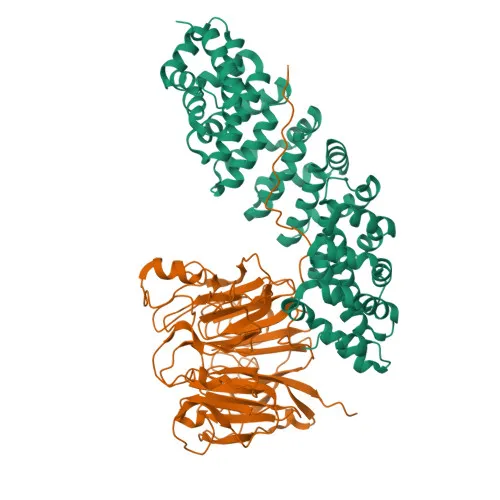
The protein contains seven tandem RCC1 repeats, forming a seven-bladed β-propeller structure, and undergoes alternative splicing to generate multiple isoforms.
-
Post-translational modifications of RCC1 include phosphorylation and methylation, which may modulate its activity and interactions.
-
Subcellularly, RCC1 is predominantly nuclear where it associates with chromatin, but it can also be detected in the cytoplasm.
Experimental Guidance and Technical Tips
- The immunogen used is a synthetic peptide spanning amino acids 1-100 of human RCC1; this N-terminal region is highly conserved across human, mouse, and rat, which may account for the observed cross-reactivity.
- For Western blotting, a band corresponding to the predicted molecular weight of ~45 kDa is expected; confirm specificity using positive controls such as HeLa or HEK293 whole-cell lysates.
- In immunohistochemistry on paraffin sections, antigen retrieval is recommended, and titration may be necessary to optimize signal due to the chromatin-bound nature of the target.
- For ELISA, the same peptide immunogen can be utilized as a coating standard, or recombinant RCC1 protein may be used for quantitative assay development.
CamelBio: Your One-Stop Sourcing Bridge
CamelBio connects diagnostic manufacturers and research labs with a one-stop supply chain for IVD raw materials, including this anti-RCC1 monoclonal antibody targeting chromatin dynamics and cell cycle regulation. Our portfolio extends from validated antibody pairs and optimized monoclonal/polyclonal antibodies to bulk ancillary reagents, ensuring consistent performance in your development pipeline. We also specialize in sourcing rare-target raw materials, supporting your assay design from concept to clinic.
REQUEST A QUOTE
Our professional team will reply to you within one business day. Please feel free to contact us!