Polyclonal Antibodies
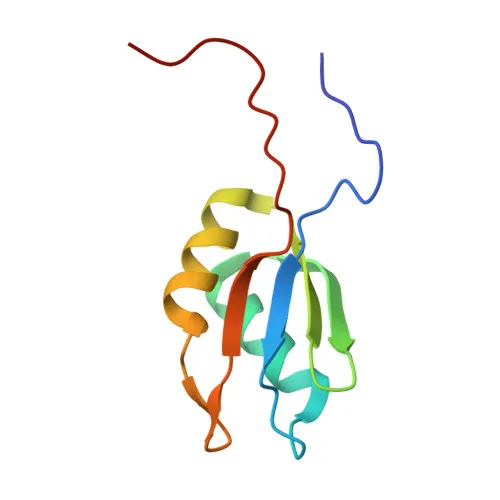
Anti-RBM14 Polyclonal Antibody for WB, ELISA - Q96PK6
Item Number : CM0029353
Price varies based on specs and customizations
- Application
- WB, ELISA
- Cross Reactivity
- Human, Mouse, Rat
- Protein Weight
- 69kDa

Shipping:
Contact us to get shipping details Enjoy On-time Dispatch Guarantee.
Why Choose Us
Easy ordering process, quality products, and dedicated support for your business success.
Core Product Specifications and Parameters
| Parameter | Value |
|---|---|
| Product Name | RBM14 Rabbit pAb |
| Remarks/Alias | SIP; COAA; PSP2; SYTIP1; TMEM137; RBM14 |
| Species | Human |
| Gene ID (Human) | 10432 |
| Gene ID | 10432 |
| Immunogen | Recombinant protein|Recombinant fusion protein containing a sequence corresponding to amino acids 110-220 of human RBM14 (NP_006319.1). |
| Source | Rabbit |
| Category | Polyclonal Antibodies |
| Application | WB, ELISA |
| Cross Reactivity | Human, Mouse, Rat |
| SWISS | Q96PK6 |
| Protein Weight | 69kDa |
| Shipping | Ice bag |
Biological Background: RBM14 Function and Localization
- Isoform 1 acts as a nuclear receptor coactivator, enhancing transcription via NCOA6 and CITED1, while isoform 2 functions as a transcriptional repressor modulating coactivators including isoform 1, NCOA6 and CITED1 (PubMed:11443112). Related references: PMID:11443112
- Regulates centriole biogenesis by suppressing formation of aberrant centriolar protein complexes in the cytoplasm, preserving mitotic spindle integrity; prevents STIL-CPAP complex formation by interfering with STIL-CPAP interaction (PubMed:25385835). Related references: PMID:25385835
- Involved in DNA virus-mediated innate immune response by assembling into HDP-RNP complex, which facilitates IRF3 phosphorylation and activates innate immunity via cGAS-STING pathway (PubMed:28712728). Related references: PMID:28712728
- Plays a role in regulation of pre-mRNA alternative splicing (PubMed:37548402). Related references: PMID:37548402
- Alternative names include Paraspeckle protein 2 (PSP2), RNA-binding motif protein 14, RRM-containing coactivator activator/modulator, and Synaptotagmin-interacting protein (SYT-interacting protein), reflecting its diverse interactions.
- Located in the nucleus, nucleolus, and cytoplasm, indicating shuttling between compartments.
- Expressed in all tissues tested, including brain, heart, skeletal muscle, colon, thymus, spleen, kidney, liver, small intestine, placenta, lung, and peripheral blood lymphocytes.
- Post-translational modifications include acetylation, phosphorylation, and ubiquitination (isopeptide bond), as suggested by keywords.
Experimental Guidance and Technical Tips
- The immunogen corresponds to a region (aa 110-220) of human RBM14. For WB, consider using lysates from cell lines expressing RBM14 (e.g., HeLa, 293T) as positive controls.
- Because the antibody is polyclonal, it may recognize multiple epitopes; validate specificity by knockdown or overexpression experiments.
- Predicted molecular weight is 69 kDa; in WB, a band near 69 kDa is expected, but isoform variations or post-translational modifications may cause slight shifts.
CamelBio: Your One-Stop Sourcing Bridge
As a dedicated IVD raw-material partner, CamelBio offers comprehensive support from concept to clinic. For RBM14 and related transcription/immune targets, we supply validated antibody pairs, optimized polyclonal antibodies, and bulk ancillary reagents. Leverage our one-stop sourcing bridge to accelerate your diagnostic development with confidence.
REQUEST A QUOTE
Our professional team will reply to you within one business day. Please feel free to contact us!