Polyclonal Antibodies
Anti-Rap1B Polyclonal Antibody for WB, IF/ICC, ELISA - P61224
Item Number : CM0016868
Price varies based on specs and customizations
- Application
- WB, IF/ICC, ELISA
- Cross Reactivity
- Human, Mouse
- Protein Weight
- 21kDa

Shipping:
Contact us to get shipping details Enjoy On-time Dispatch Guarantee.
Why Choose Us
Easy ordering process, quality products, and dedicated support for your business success.
Core Product Specifications and Parameters
| Parameter | Specification |
|---|---|
| Product Name | Rap1B Rabbit pAb |
| Remarks/Alias | K-REV; RAL1B; Rap1B |
| Species | Human |
| Gene ID (Human) | 5908 |
| Gene ID | 5908 |
| Immunogen | Recombinant fusion protein containing a sequence corresponding to amino acids 1-184 of human Rap1B (NP_056461.1). |
| Source | Rabbit |
| Category | Polyclonal Antibodies |
| Application | WB, IF/ICC, ELISA |
| Cross Reactivity | Human, Mouse |
| SWISS | P61224 |
| Protein Weight | 21kDa |
| Shipping | Ice bag |
Biological Background: Rap1B Function and Localization
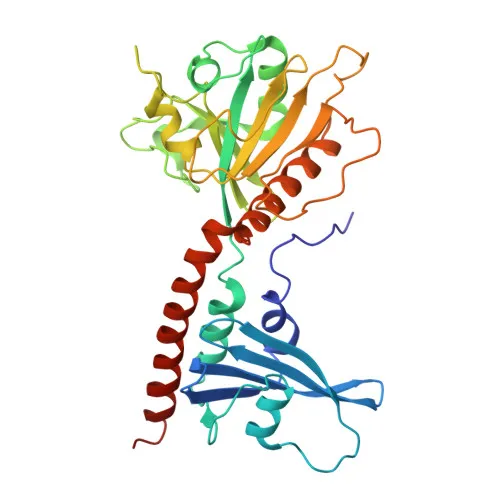
- Rap1B (Ras-related protein Rap-1b), also known as GTP-binding protein smg p21B, is a member of the Ras small GTPase superfamily.
- Encoded by the RAP1B gene (Gene ID: 5908) in humans, the protein exists in multiple isoforms due to alternative splicing.
- Rap1B possesses intrinsic GTPase activity and functions as a molecular switch in signal transduction, cycling between active GTP-bound and inactive GDP-bound states.
- It plays a critical role in endothelial cell polarity and vascular lumen formation by contributing to the polarizing activity of KRIT1 and CDH5.
- Required for the localization of phosphorylated PRKCZ, PARD3, and TIAM1 to cell junctions, thereby establishing basal endothelial barrier function.
- Subcellularly, Rap1B localizes to the cell membrane, cytosol, and cell junctions.
- The protein undergoes several post-translational modifications including prenylation (lipid modification), phosphorylation, and methylation, which regulate its membrane association and activity.
- Clinically, RAP1B mutations are associated with disease variants, highlighting its importance in human health.
Experimental Guidance and Technical Tips
- For Western blot, use human or mouse cell lines known to express Rap1B (e.g., endothelial cells) as positive controls; a band at approximately 21 kDa is expected.
- In immunofluorescence/ICC, consider optimizing fixation and permeabilization conditions to preserve antigen accessibility, as Rap1B localizes to cell membrane and junctions.
- For ELISA, the antibody may be tested against recombinant Rap1B protein (such as the immunogen) to confirm binding; titrate the antibody for optimal signal-to-noise ratio.
- Given the polyclonal nature, the antibody may detect multiple Rap1B isoforms or related Rap family members; validate specificity in the relevant sample system.
- Cross-reactivity is reported for human and mouse; if using rat samples, conduct pilot experiments to verify reactivity.
CamelBio: Your One-Stop Sourcing Bridge
CamelBio provides diagnostic manufacturers, labs, and research institutes with one-stop access to IVD raw materials, technical services, and consulting—covering every stage from concept to clinic. For your Rap1B-targeted studies in vascular biology and signal transduction, we offer validated antibody pairs, optimized polyclonal antibodies like this anti-Rap1B pAb, and bulk ancillary reagents to support kit development. Count on CamelBio as your sourcing bridge for reliable, high-quality raw materials.
REQUEST A QUOTE
Our professional team will reply to you within one business day. Please feel free to contact us!