Polyclonal Antibodies
Anti-RAB10 Rabbit Polyclonal Antibody for WB and ELISA - P61026
Item Number : CM0027732
Price varies based on specs and customizations
- Application
- WB, ELISA
- Cross Reactivity
- Mouse
- Protein Weight
- 23kDa

Shipping:
Contact us to get shipping details Enjoy On-time Dispatch Guarantee.
Why Choose Us
Easy ordering process, quality products, and dedicated support for your business success.
Core Product Specifications and Parameters
| Parameter | Value |
|---|---|
| Product Name | RAB10 Rabbit pAb |
| Remarks/Alias | RAB10 |
| Species | Human |
| GeneID (Human) | 10890 |
| GeneID | 10890 |
| Immunogen | Recombinant fusion protein containing a sequence corresponding to amino acids 98-198 of human RAB10 (NP_057215.3) |
| Source | Rabbit |
| Category | Polyclonal Antibodies |
| Application | WB, ELISA |
| Cross Reactivity | Mouse |
| SWISS | P61026 |
| Protein Weight | 23kDa |
| Shipping | Ice bag |
Biological Background: RAB10 Function and Localization
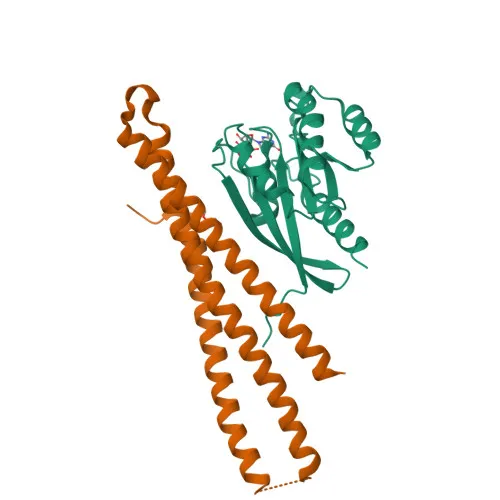
- RAB10 encodes the small GTPase Rab-10, a key regulator of intracellular membrane trafficking.
- It cycles between GDP- and GTP-bound states to control vesicle formation, movement, tethering, and fusion. Related references: PMID:21248164
- Primarily mediates biosynthetic transport from the Golgi to the plasma membrane, crucial for processes like GLUT4 translocation and TLR4 surface delivery (PubMed:21248164; By similarity). Related references: PMID:21248164
- Facilitates asymmetric protein transport to the plasma membrane and contributes to axonogenesis and basolateral trafficking in epithelial cells (PubMed:16641372). Related references: PMID:16641372
- Along with LRRK2, RAB8A, and RILPL1, regulates ciliogenesis; LRRK2-mediated phosphorylation at Thr-73 inhibits cilia formation (PubMed:30398148). Related references: PMID:30398148
- Participates in a Rab8-Rab10-Rab11-dependent endosomal export route for specific newly synthesized proteins (PubMed:32344433). Under lysosomal stress, it promotes extracellular release of lysosomal content via EHBP1/EHNP1L1 (PubMed:30209220). Related references: PMID:32344433, PMID:30209220
- Localizes to the Golgi, TGN, endosomes, recycling endosomes, cytoplasmic vesicles, phagosomes, ER, cilium basal body, and lysosomes. Expressed in the hippocampus, neutrophils, and testis.
Experimental Guidance and Technical Tips
- The immunogen covers amino acids 98–198, a central region, therefore the antibody may recognize both GDP- and GTP-bound RAB10; for functional studies, consider combining with GTPase activity assays.
- For WB, the predicted molecular weight is ~23 kDa; use a 12–15% gel for clear separation and validate in relevant cell lines (e.g., HeLa, HEK293) expressing endogenous RAB10.
- In ELISA, optimize antigen coating concentration and antibody dilution; pre‑adsorption against the immunogen can help confirm binding specificity.
- Given the mouse cross‑reactivity, the antibody is suitable for mouse tissue or cell studies; validation in knockout controls is recommended to confirm specificity.
- Due to RAB10’s dynamic membrane association, subcellular fractionation to enrich membrane fractions may enhance detection signal.
CamelBio: Your One-Stop Sourcing Bridge
CamelBio provides diagnostic manufacturers, labs, and research institutes with one-stop access to IVD raw materials, technical services, and consulting—covering every stage from concept to clinic. For RAB10-focused studies in intracellular trafficking, ciliogenesis, or neurodegenerative diseases, CamelBio supplies validated antibody pairs, optimized monoclonal/polyclonal antibodies, bulk ancillary reagents, and custom rare-target raw-material sourcing to accelerate your assay development and production.
REQUEST A QUOTE
Our professional team will reply to you within one business day. Please feel free to contact us!