Polyclonal Antibodies
Anti-QPCT Polyclonal Antibody for WB, IF/ICC, ELISA - Q16769
Item Number : CM0025233
Price varies based on specs and customizations
- Application
- WB, IF/ICC, ELISA
- Cross Reactivity
- Human, Mouse, Rat
- Protein Weight
- 41kDa

Shipping:
Contact us to get shipping details Enjoy On-time Dispatch Guarantee.
Why Choose Us
Easy ordering process, quality products, and dedicated support for your business success.
Core Product Specifications and Parameters
| Parameter | Value |
|---|---|
| Product Name | QPCT Rabbit pAb |
| Remarks/Alias | QC; GCT; sQC; QPCT |
| Species | Human |
| GeneID (human) | 25797 |
| GeneID | 25797 |
| Immunogen | Recombinant fusion protein containing a sequence corresponding to amino acids 1-361 of human QPCT (NP_036545.1). |
| Source | Rabbit |
| Category | Polyclonal Antibodies |
| Application | WB, IF/ICC, ELISA |
| Cross Reactivity | Human, Mouse, Rat |
| SWISS | Q16769 |
| Protein Weight | 41kDa |
| Shipping | Ice bag |
Biological Background: QPCT Function and Localization
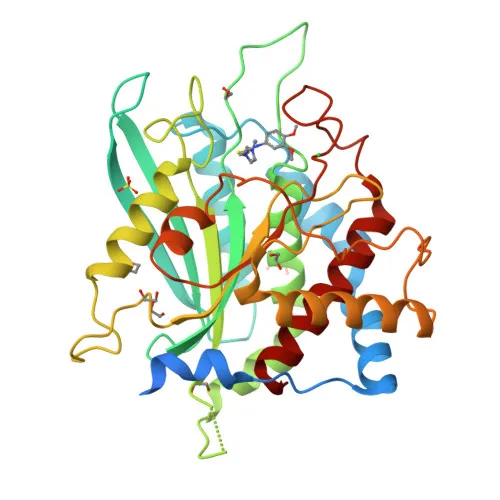
- Protein identity: QPCT (glutaminyl-peptide cyclotransferase), also known as glutaminyl cyclase (QC, sQC) and glutamyl cyclase, is a secreted transferase enzyme encoded by the QPCT gene. It belongs to the acyltransferase family and contains a zinc-binding active site.
- Core enzymatic function: Catalyzes the formation of N-terminal pyroglutamyl residues from glutaminyl or glutamyl precursors, a critical modification for the bioactivity and stability of many peptides and proteins.
- Substrate specificity: Exhibits a bias against acidic and tryptophan residues immediately adjacent to the N-terminal glutaminyl, but shows little dependence on peptide chain length beyond the second residue.
- Amyloid-beta processing: In vitro, converts N-terminally truncated amyloid-beta peptides (e.g., [Glu-3]-amyloid-beta) into pyroglutamate-modified forms, which are more aggregation-prone and neurotoxic.
- Disease relevance: Implicated in Alzheimer’s disease through the generation of pyroglutamate-amyloid-beta peptides found in senile plaques; may also participate in other amyloid-related pathologies.
- Subcellular localization: Secreted into the extracellular space, consistent with its role in modifying extracellular substrates such as hormones, chemokines, and amyloid peptides.
- Structural features: Contains disulfide bonds, N-linked glycosylation sites, and a signal peptide; the mature protein has a predicted molecular weight of approximately 40.9 kDa (observed around 41 kDa).
- Alternative splicing: The QPCT gene undergoes alternative splicing, producing multiple isoforms; the immunogen (full-length, aa 1-361) targets all known isoforms containing this region.
Experimental Guidance and Technical Tips
- The immunogen corresponds to the full-length human QPCT protein (aa 1-361), which should provide broad epitope coverage and may recognize both precursor and mature forms. Polyclonal nature can enhance detection sensitivity across splice variants.
- For Western blot, a specific band is expected near 41 kDa under reducing conditions. Because QPCT is secreted, it may be preferable to analyze serum, plasma, or cell culture supernatants rather than whole-cell lysates, depending on experimental context.
- For IF/ICC, fixation and permeabilization protocols should be optimized to visualize QPCT in secretory pathway compartments; extracellular staining may require non-permeabilizing conditions. Co-localization with Golgi or vesicle markers can be assessed.
- For ELISA, consider using the antibody in a sandwich format with a distinct capture antibody; this antibody may serve as a detection reagent. QPCT is present in soluble form in biological fluids, making it suitable for quantitative assays.
- Cross-reactivity with mouse and rat QPCT allows evaluation in rodent models of neurodegeneration. However, amino acid sequence identity is not 100%, so sensitivity should be validated in the relevant species and tissue system.
CamelBio: Your One-Stop Sourcing Bridge
CamelBio offers diagnostic manufacturers, laboratories, and research institutions streamlined access to validated IVD raw materials across the entire assay development life cycle. For QPCT and related neurodegenerative disease markers, we supply optimized antibodies, antigen pairs, buffers, and ancillary reagents in bulk quantities. Our sourcing expertise extends to rare targets and custom conjugation services, helping you accelerate pyroglutamyl peptide assay development from concept to clinic.
REQUEST A QUOTE
Our professional team will reply to you within one business day. Please feel free to contact us!