Polyclonal Antibodies
Anti-QDPR Polyclonal Antibody for WB and ELISA - P09417
Item Number : CM0028189
Price varies based on specs and customizations
- Application
- WB, ELISA
- Cross Reactivity
- Human, Mouse, Rat
- Protein Weight
- 26kDa

Shipping:
Contact us to get shipping details Enjoy On-time Dispatch Guarantee.
Why Choose Us
Easy ordering process, quality products, and dedicated support for your business success.
Core Product Specifications and Parameters
| Parameter | Value |
|---|---|
| Product Name | QDPR Rabbit pAb |
| Remarks/Alias | DHPR; PKU2; HDHPR; SDR33C1; QDPR |
| Species | Human |
| GeneID (human) | 5860 |
| GeneID | 5860 |
| Immunogen | Recombinant fusion protein containing a sequence corresponding to amino acids 1-244 of human QDPR (NP_000311.2) |
| Source | Rabbit |
| Category | Polyclonal Antibodies |
| Application | WB, ELISA |
| Cross Reactivity | Human, Mouse, Rat |
| SWISS | P09417 |
| Protein Weight | 26kDa |
| Shipping | Ice bag |
Biological Background: QDPR Function and Localization
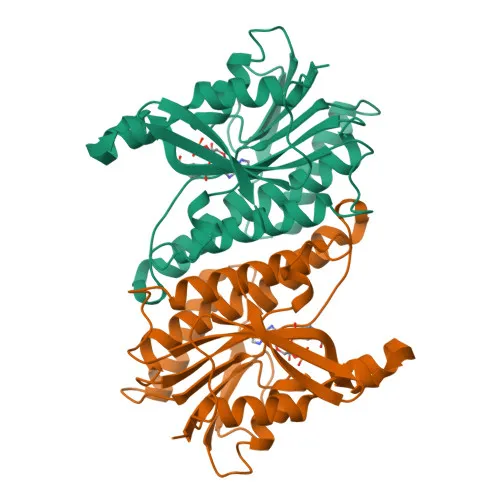
- QDPR, also known as dihydropteridine reductase (DHPR) or quinoid dihydropteridine reductase, is encoded by the QDPR gene and belongs to the short-chain dehydrogenase/reductase family, specifically SDR33C1.
- The primary function of QDPR is to catalyze the NADP-dependent reduction of quinonoid dihydrobiopterin to tetrahydrobiopterin (BH4), a critical cofactor for aromatic amino acid hydroxylases and nitric oxide synthases.
- As a key enzyme in BH4 biosynthesis and recycling, QDPR maintains cellular BH4 pools essential for neurotransmitter and catecholamine production.
- Alternative splicing of the QDPR gene produces multiple isoforms, and the protein undergoes post-translational modifications such as acetylation, which may regulate activity or stability.
- Mutations in QDPR are linked to phenylketonuria (PKU), and the protein is designated as a disease variant in reference proteome databases.
- The enzyme requires NADP as a cofactor and has been characterized structurally and biochemically as an oxidoreductase.
- The observed molecular weight is approximately 26 kDa, consistent with the calculated mass of about 25.8 kDa.
- QDPR has been identified through proteomics and direct protein sequencing, confirming its sequence and expression.
Experimental Guidance and Technical Tips
- The immunogen is a full-length recombinant protein (amino acids 1–244 of human QDPR), enabling recognition of both native and denatured forms in WB and ELISA.
- For Western blotting, consider reducing conditions and use appropriate positive controls (e.g., human, mouse, or rat tissue lysates known to express QDPR) to verify the ~26 kDa band.
- In ELISA, determine optimal coating antigen and antibody dilution experimentally, and evaluate cross-reactivity in species-specific matrices.
- This antibody is a valuable tool for investigating tetrahydrobiopterin metabolism and phenylketonuria-related pathways.
CamelBio: Your One-Stop Sourcing Bridge
As a dedicated IVD raw-material partner, CamelBio streamlines your procurement of QDPR antibodies and related metabolic research tools. We provide comprehensive supply solutions, including validated antibody pairs, optimized polyclonal antibodies, and bulk ancillary reagents, supporting diagnostic development for tetrahydrobiopterin metabolism and phenylketonuria. From concept to clinic, rely on CamelBio for end-to-end sourcing and technical consultation.
REQUEST A QUOTE
Our professional team will reply to you within one business day. Please feel free to contact us!