Polyclonal Antibodies
Anti-PYCR1 Polyclonal Antibody for WB, ELISA - P32322
Item Number : CM0028892
Price varies based on specs and customizations
- Application
- WB, ELISA
- Cross Reactivity
- Human, Mouse, Rat
- Protein Weight
- 33kDa

Shipping:
Contact us to get shipping details Enjoy On-time Dispatch Guarantee.
Why Choose Us
Easy ordering process, quality products, and dedicated support for your business success.
Core Product Specifications and Parameters
| Parameter | Value |
|---|---|
| Product Name | PYCR1 Rabbit pAb |
| Remarks/Alias | P5C; P5CR; PRO3; PYCR; PIG45; PP222; ARCL2B; ARCL3B; PYCR1 |
| Species | Human |
| Gene ID (Human) | 5831 |
| Gene ID | 5831 |
| Immunogen | Recombinant fusion protein containing a sequence corresponding to amino acids 1-319 of human PYCR1 (NP_008838.2). |
| Source | Rabbit |
| Category | Polyclonal Antibodies |
| Application | WB, ELISA |
| Cross Reactivity | Human, Mouse, Rat |
| SWISS | P32322 |
| Protein Weight | 33kDa |
| Shipping | Ice bag |
Biological Background: PYCR1 Function and Localization
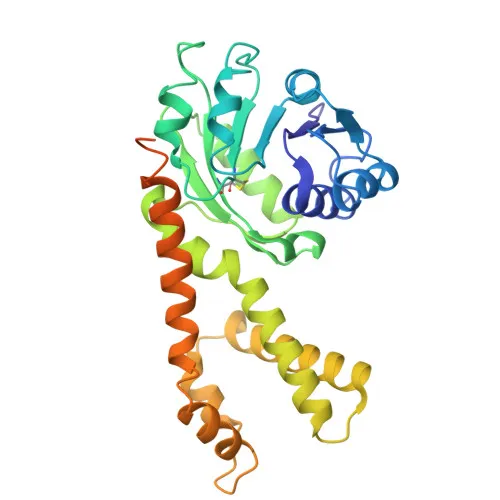
- PYCR1 (pyrroline-5-carboxylate reductase 1) is a mitochondrial oxidoreductase that catalyzes the final step in proline biosynthesis, reducing pyrroline-5-carboxylate to L-proline using NAD(P)H as a cofactor. Related references: PMID:16730026, PMID:19648921, PMID:23024808
- At physiological concentrations, the enzyme exhibits higher specific activity with NADH compared to NADPH. Related references: PMID:16730026, PMID:23024808
- PYCR1 is involved in the cellular response to oxidative stress, coupling proline metabolism with redox homeostasis. Related references: PMID:16730026, PMID:19648921
- The protein is localized to the mitochondrion, consistent with its role in amino acid metabolism and energy regulation.
- Alternative splicing generates multiple isoforms, and the protein is subject to post-translational modifications including acetylation and phosphorylation, which may regulate its activity.
- Mutations in PYCR1 are associated with autosomal recessive cutis laxa syndromes (ARCL2B and ARCL3B), underscoring its importance in connective tissue integrity.
Experimental Guidance and Technical Tips
- The immunogen used to generate this antibody corresponds to full-length human PYCR1 (aa 1-319), suggesting that it may recognize multiple isoforms and processed forms of the protein. When performing Western blot, a band near the predicted molecular weight of 33 kDa is expected; however, post-translational modifications or cleavage products could yield additional bands.
- Given the high sequence conservation of PYCR1 across human, mouse, and rat, this antibody is reported to cross-react with these species. Nonetheless, users should validate reactivity in their specific sample systems and consider potential species-dependent variations in expression levels.
- For ELISA applications, optimal coating concentrations and detection reagents must be empirically determined. The antibody may be used for either direct or sandwich ELISA configurations, but pairing with a capture antibody requires independent optimization.
CamelBio: Your One-Stop Sourcing Bridge
CamelBio provides this anti-PYCR1 polyclonal antibody as part of a comprehensive one-stop IVD raw-material portfolio, supporting amino acid metabolism and oxidative stress research. Our supply chain delivers validated antibody pairs, optimized monoclonal and polyclonal antibodies, and bulk ancillary reagents to accelerate assay development. For custom requirements or rare target sourcing, our procurement expertise ensures consistent, high-quality material access from concept to clinic.
REQUEST A QUOTE
Our professional team will reply to you within one business day. Please feel free to contact us!
Related Articles
Choosing the Thermal Architecture That Makes a Molecular Assay Transferable
Compare Peltier blocks and air-heated carousels across speed, uniformity, sample flexibility, optimization, and throughput for qPCR development.
qPCR Primer Design: The Small Decisions That Determine Assay Reliability
A practical guide to qPCR primer design, from amplicon length and 3' stability to validation for efficient, reproducible diagnostics.