Polyclonal Antibodies
Anti-PUS10 Polyclonal Antibody for WB and ELISA - Q3MIT2
Item Number : CM0021548
Price varies based on specs and customizations
- Application
- WB, ELISA
- Cross Reactivity
- Mouse, Rat
- Protein Weight
- 60kDa

Shipping:
Contact us to get shipping details Enjoy On-time Dispatch Guarantee.
Why Choose Us
Easy ordering process, quality products, and dedicated support for your business success.
Core Product Specifications and Parameters
| Parameter | Value |
|---|---|
| Product Name | PUS10 Rabbit pAb |
| Remarks/Alias | DOBI; Hup10; CCDC139; PUS10 |
| Species | Human |
| GeneID (Human) | 150962 |
| GeneID | 150962 |
| Immunogen | Recombinant Protein |
| Source | Rabbit |
| Category | Polyclonal Antibodies |
| Application | WB, ELISA |
| Cross Reactivity | Mouse, Rat |
| SWISS | Q3MIT2 |
| Protein Weight | 60kDa |
| Shipping | Ice bag |
Biological Background: PUS10 Function and Localization
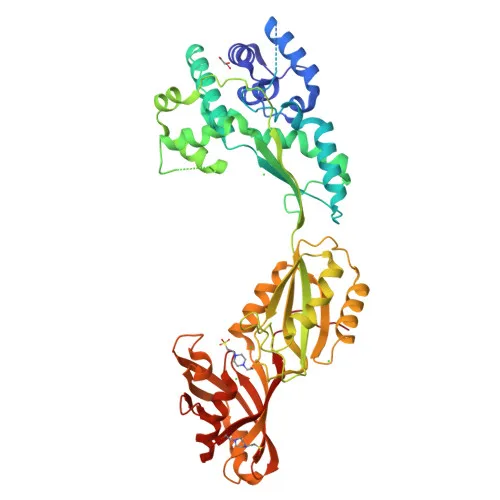
- PUS10 (also known as DOBI, Hup10, CCDC139) is a multifunctional protein that acts as a tRNA pseudouridylate synthase in the cytoplasm and participates in pri-miRNA processing in the nucleus, with distinct roles depending on its subcellular localization. Related references: PMID:31819270 PMID:33023933
- In the cytoplasm, PUS10 catalyzes the conversion of uracil to pseudouridine at positions 54 and 55 in the Ψ GC loop of a subset of tRNAs, a modification critical for tRNA structure and function. Related references: PMID:30530625 PMID:31819270 PMID:33023933
- The pseudouridylation activity of PUS10 is enhanced by the presence of 1-methyladenosine at positions 53–61 of the target tRNA, indicating a context-dependent regulatory mechanism. Related references: PMID:30530625
- In the nucleus, PUS10 binds to primary microRNAs (pri-miRNAs) and promotes their processing independently of its pseudouridylate synthase activity, highlighting a non-catalytic role in miRNA biogenesis. Related references: PMID:31819270
- PUS10 modulates TRAIL/TNFSF10-induced apoptosis by activating procaspase-8 and promoting BID cleavage, and is required for progression through the intrinsic mitochondrial cell death pathway. Related references: PMID:14527409 PMID:19712588
- Subcellularly, PUS10 localizes to the nucleus, cytoplasm, and mitochondria, consistent with its multifaceted functions in RNA processing and cell death signaling.
- The protein contains coiled-coil domains and is annotated with keywords including isomerase activity, metal-binding, zinc, phosphoprotein, and tRNA processing, reflecting its structural and enzymatic features.
Experimental Guidance and Technical Tips
- The immunogen used for this antibody (a recombinant fusion protein spanning amino acids 290–529) covers the C-terminal region of PUS10, which may be useful in detecting both full-length and truncated forms. Consider verifying detection of your target isoform in the relevant sample system.
- For Western blotting, the predicted molecular weight is approximately 60 kDa, but post-translational modifications or subcellular processing may result in minor band shifts. Validation in your specific cell or tissue lysate is recommended.
- ELISA applications can be optimized by using the antibody with recombinant PUS10 or peptide fragments. Cross-reactivity with mouse and rat suggests utility in comparative studies; however, experimental titration and controls are advised.
- As PUS10 functions differ between nucleus and cytoplasm, fractionation assays or immunofluorescence may be informative if exploring subcellular localization; note that this antibody has not been validated for IF or IHC and would require independent testing.
CamelBio: Your One-Stop Sourcing Bridge
CamelBio provides diagnostic manufacturers and research laboratories with streamlined access to high-quality IVD raw materials, including validated antibody pairs, monoclonal and polyclonal antibodies, and ancillary reagents for assay development. For projects focused on RNA modification enzymes or apoptosis-related targets like PUS10, our one-stop sourcing model supports procurement of rare-target antibodies and technical consultation to accelerate your pipeline from discovery to clinical application.
REQUEST A QUOTE
Our professional team will reply to you within one business day. Please feel free to contact us!