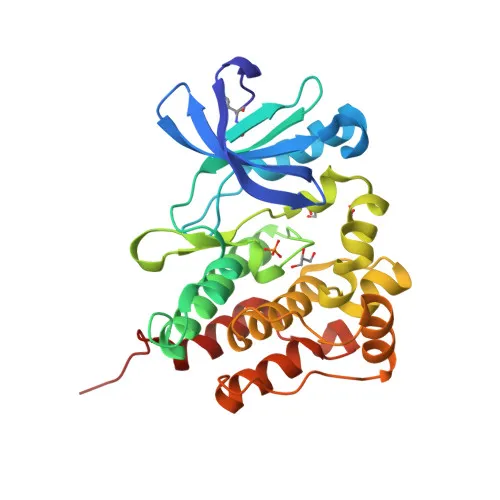
Polyclonal Antibodies
Anti-PTK6 Polyclonal Antibody for WB, IF/ICC, ELISA - Q13882
Item Number : CM0030340
Price varies based on specs and customizations
- Application
- WB, IF/ICC, ELISA
- Cross Reactivity
- Human, Mouse, Rat
- Protein Weight
- 52kDa

Shipping:
Contact us to get shipping details Enjoy On-time Dispatch Guarantee.
Why Choose Us
Easy ordering process, quality products, and dedicated support for your business success.
Core Product Specifications and Parameters
| Parameter | Value |
|---|---|
| Product Name | PTK6 Rabbit pAb |
| Remarks/Alias | BRK; PTK6 |
| Species | Human |
| Gene ID (Human) | 5753 |
| Gene ID | 5753 |
| Immunogen | Recombinant fusion protein containing a sequence corresponding to amino acids 222-451 of human PTK6 (NP_005966.1). |
| Source | Rabbit |
| Category | Polyclonal Antibodies |
| Application | WB, IF/ICC, ELISA |
| Cross Reactivity | Human, Mouse, Rat |
| SWISS | Q13882 |
| Protein Weight | 52kDa |
| Shipping | Ice bag |
Biological Background: PTK6 Function and Localization
- PTK6 (Protein-tyrosine kinase 6), also known as breast tumor kinase (BRK), is a 52 kDa non-receptor tyrosine-protein kinase encoded by the PTK6 gene (Gene ID: 5753).
- It plays a context-dependent role in regulating epithelial cell differentiation and maintenance, promoting apoptosis in normal tissues while enhancing proliferation, survival, and migration in tumorigenic settings.
- Upon EGF stimulation, PTK6 phosphorylates ARAP1, which delays EGFR downregulation and sustains signaling (PubMed:20554524). Related references: PMID:20554524
- PTK6 interacts with EGFR family members (EGFR, ERBB2, ERBB3) and activates downstream pathways including AKT, PI3K, and STAT3/STAT5B to drive oncogenic signaling.
- Subcellular localization includes the cytoplasm, nucleus, cell membrane, and ruffles, with nuclear PTK6 linked to growth regulation in normal epithelia and cytoplasmic PTK6 to oncogenic activation.
- It is predominantly expressed in epithelial tissues, with highest levels in colon, and overexpressed in many cancers including breast, ovarian, colon, and prostate carcinomas; not found in heart, brain, liver, or muscle.
- Post-translational modifications: classified as a phosphoprotein (UniProt keywords), and regulated by intramolecular interactions and phosphorylation events that control its kinase activity.
Experimental Guidance and Technical Tips
- The immunogen covers amino acids 222–451, which includes part of the kinase domain; antibody may recognize both phosphorylated and unphosphorylated forms, but epitope masking by post-translational modifications should be considered in certain assay conditions.
- For Western blot, a 52 kDa band is expected; use positive controls such as human colon carcinoma (e.g., HT-29) or prostate cancer (e.g., LNCaP) cell lysates. Validate specificity with siRNA-mediated knockdown or knockout cell lines.
- In immunofluorescence, PTK6 can localize to both cytoplasmic and nuclear compartments; permeabilization with 0.1–0.5% Triton X-100 and careful fixation are recommended to avoid artifacts.
- For ELISA, the recombinant immunogen fragment can serve as a positive coating antigen; include appropriate negative controls to assess background.
- Cross-reactivity with mouse and rat is predicted based on sequence homology; however, verify in the target species using relevant tissue or cell lysates.
CamelBio: Your One-Stop Sourcing Bridge
CamelBio is your reliable one-stop partner for IVD raw materials, providing comprehensive sourcing solutions that bridge concept to clinic. For PTK6 and epithelial/cancer research, we offer validated antibody pairs, optimized polyclonal antibodies, and bulk ancillary reagents. Whether you need rare target raw materials or support for large-scale diagnostic manufacturing, our consulting and supply capabilities help streamline your development pipeline.
REQUEST A QUOTE
Our professional team will reply to you within one business day. Please feel free to contact us!