Polyclonal Antibodies
Anti-PTGIR Polyclonal Antibody for WB, IHC-P, ELISA - P43119
Item Number : CM0019681
Price varies based on specs and customizations
- Application
- WB, IHC-P, ELISA
- Cross Reactivity
- Human, Mouse, Rat
- Protein Weight
- 41kDa

Shipping:
Contact us to get shipping details Enjoy On-time Dispatch Guarantee.
Why Choose Us
Easy ordering process, quality products, and dedicated support for your business success.
Core Product Specifications and Parameters
| Parameter | Value |
|---|---|
| Product Name | PTGIR Rabbit pAb |
| Remarks/Alias | IP; PRIPR; PTGIR |
| Species | Human |
| GeneID (Human) | 5739 |
| Immunogen | Recombinant fusion protein containing a sequence corresponding to amino acids 207-386 of human PTGIR (NP_000951.1) |
| Source | Rabbit |
| Category | Polyclonal Antibodies |
| Application | WB, IHC-P, ELISA |
| Cross Reactivity | Human, Mouse, Rat |
| SWISS | P43119 |
| Protein Weight | 41kDa |
| Shipping | Ice bag |
Biological Background: PTGIR Function and Localization
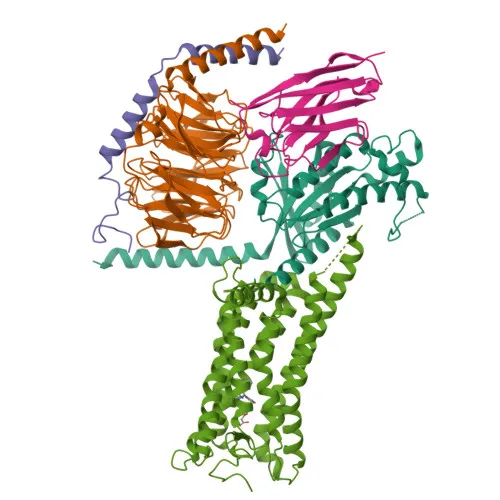
- PTGIR, also known as prostacyclin receptor, prostaglandin I2 receptor, PGI receptor, or prostanoid IP receptor, is a member of the G protein-coupled receptor (GPCR) superfamily.
- It functions as the receptor for prostacyclin (prostaglandin I2 or PGI2), a potent vasodilator and inhibitor of platelet aggregation.
- Upon ligand binding, PTGIR primarily couples to G(s) proteins, leading to the activation of adenylate cyclase and increased intracellular cAMP levels.
- The receptor is localized to the cell membrane, consistent with its role as a transmembrane signal transducer.
- PTGIR undergoes several post-translational modifications, including glycosylation, palmitoylation (lipoprotein), methylation, and prenylation, which are characteristic for GPCR maturation and trafficking.
- Its structure includes seven transmembrane helices, a disulfide bond, and is subject to proteomics identification as a reference proteome component.
Experimental Guidance and Technical Tips
- The immunogen covers amino acids 207–386, an intracellular region of PTGIR; this design may favor detection of total receptor forms in denaturing and native assays.
- For Western blot, PTGIR has a predicted molecular weight of approximately 41 kDa; a band near this size is expected, though post-translational modifications may cause slight shifts. Validate with appropriate controls in your sample system.
- In IHC-P applications, consider optimization of antigen retrieval and antibody dilution, as paraffin-embedded tissues may present epitope accessibility variations.
- While the antibody is listed for ELISA, direct antigen-coating formats using recombinant PTGIR fragments may be suitable; indirect detection schemes should be validated with the specific assay design.
- Cross-reactivity with mouse and rat PTGIR suggests utility in rodent models; however, confirm sequence homology between the immunogen and orthologous proteins for your specific application.
CamelBio: Your One-Stop Sourcing Bridge
CamelBio supports diagnostic manufacturers, laboratories, and research institutes by offering comprehensive access to IVD raw materials like this PTGIR polyclonal antibody for cardiovascular and inflammation research. Beyond antibodies, we provide validated antibody pairs, optimized monoclonal/polyclonal reagents, bulk ancillary reagents, and sourcing of rare-target raw materials—covering every stage from concept to clinical application. Reach out to explore how CamelBio can accelerate your diagnostic development with tailored supply solutions.
REQUEST A QUOTE
Our professional team will reply to you within one business day. Please feel free to contact us!