Polyclonal Antibodies
Anti-PTGFR Rabbit Polyclonal Antibody for WB - P43088
Item Number : CM0015074
Price varies based on specs and customizations
- Application
- WB, ELISA
- Cross Reactivity
- Mouse, Rat
- Protein Weight
- 40kDa

Shipping:
Contact us to get shipping details Enjoy On-time Dispatch Guarantee.
Why Choose Us
Easy ordering process, quality products, and dedicated support for your business success.
Core Product Specifications and Parameters
| Parameter | Specification |
|---|---|
| Product Name | PTGFR Rabbit pAb |
| Remarks / Alias | FP; PTGFR |
| Species | Human |
| GeneID (Human) | 5737 |
| GeneID | 5737 |
| Immunogen | Synthetic Peptide |
| Source | Rabbit |
| Category | Polyclonal Antibodies |
| Application | WB, ELISA |
| Cross Reactivity | Mouse, Rat |
| SWISS | P43088 |
| Protein Weight | 40kDa |
| Shipping | Ice bag |
Biological Background: PTGFR Function and Localization
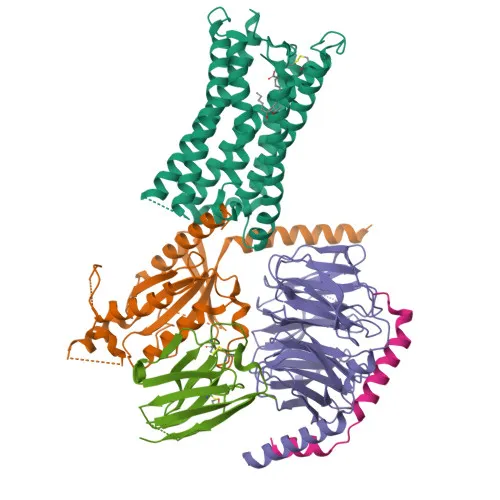
- The PTGFR gene encodes the prostaglandin F2-alpha receptor (also known as prostanoid FP receptor), a G protein-coupled receptor that mediates cellular responses to PGF2-alpha.
- Upon PGF2-alpha binding, the receptor activates a phosphatidylinositol-calcium second messenger system via G proteins, triggering downstream signaling cascades (By similarity).
- Isoforms 2 through 7 arise from alternative splicing; while they do not bind PGF2-alpha independently, they may modulate signaling by forming variant heteromeric complexes with isoform 1.
- A heterodimer between isoform 1 and isoform 5 is proposed to function as a receptor for prostamides, including the synthetic analog bimatoprost.
- The receptor is localized at the cell membrane and contains seven transmembrane domains, consistent with its GPCR classification.
- Tissue expression profiling indicates high specificity in the eye, where the receptor is involved in physiological processes such as regulating intraocular pressure.
- The protein undergoes post-translational modifications including glycosylation and disulfide bond formation, typical for membrane receptors, and is classified under keywords like alternative splicing, glycoprotein, and transducer.
Experimental Guidance and Technical Tips
- The immunogen was designed from a synthetic peptide spanning amino acids 50–150, corresponding to an extracellular/transmembrane region of human PTGFR; this may enable detection of multiple isoforms.
- For Western blotting, a band near 40 kDa is expected for isoform 1; consider using membrane-enriched protein extracts to enhance signal.
- The antibody’s cross-reactivity with mouse and rat suggests conserved epitopes; validate its performance in relevant tissue or cell models (e.g., eye-derived samples).
- In ELISA, the peptide immunogen can serve as a positive control to assess binding. Note that detection of native, glycosylated receptor may require optimized coating conditions.
- Given the existence of splice variants, confirm specificity by siRNA knockdown or overexpression experiments if isoform discrimination is needed.
CamelBio: Your One-Stop Sourcing Bridge
CamelBio provides diagnostic developers and research labs with a comprehensive portfolio of IVD raw materials, including validated antibody pairs, bulk ancillary reagents, and rare-target sourcing. This anti-PTGFR polyclonal antibody supports WB and ELISA applications across human, mouse, and rat samples, addressing GPCR-related research and ocular biology studies. Whether you need ready-to-use antibodies or customized raw-material procurement, CamelBio serves as your integrated sourcing partner from concept to clinic.
REQUEST A QUOTE
Our professional team will reply to you within one business day. Please feel free to contact us!