Monoclonal Antibodies
Anti-PTEN Monoclonal Antibody for WB, ELISA - P60484
Item Number : CM0002456
Price varies based on specs and customizations
- Application
- WB, ELISA
- Cross Reactivity
- Mouse, Rat
- Protein Weight
- 47 kDa

Shipping:
Contact us to get shipping details Enjoy On-time Dispatch Guarantee.
Why Choose Us
Easy ordering process, quality products, and dedicated support for your business success.
Core Product Specifications and Parameters
| Parameter | Value |
|---|---|
| Product Name | PTEN Mouse mAb |
| Remarks/Alias | BZS; DEC; CWS1; GLM2; MHAM; TEP1; MMAC1; PTEN1; 10q23del; PTENbeta; PTEN |
| Species | Human |
| Gene ID (Human) | 5728 |
| Gene ID | 5728 |
| Immunogen | Recombinant protein (Recombinant fusion protein containing a sequence corresponding to amino acids 204-403 of human PTEN (P60484)) |
| Source | Mouse |
| Category | Monoclonal Antibodies |
| Application | WB, ELISA |
| Cross Reactivity | Mouse, Rat |
| SWISS | P60484 |
| Protein Weight | 47 kDa |
| Shipping | Ice bag |
Biological Background: PTEN Function and Localization
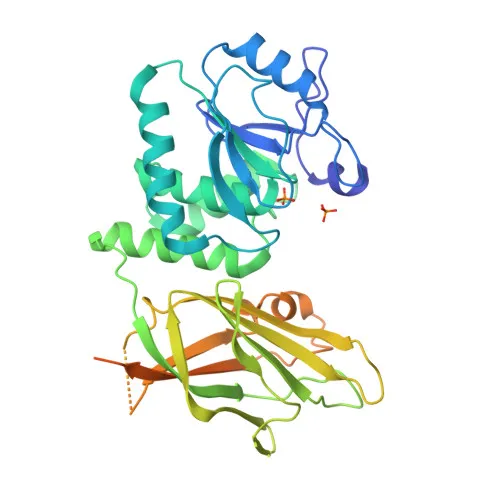
- PTEN (Phosphatase and tensin homolog), also known as MMAC1, TEP1, or BZS, is a 47-kDa dual-specificity phosphatase encoded by the PTEN gene, functioning as a critical tumor suppressor.
- PTEN exhibits both protein phosphatase activity, dephosphorylating tyrosine-, serine-, and threonine-phosphorylated proteins (PubMed:9187108, PubMed:9256433, PubMed:9616126), and lipid phosphatase activity, with a strong preference for PtdIns(3,4,5)P3 to antagonize the PI3K-AKT/PKB signaling pathway (PubMed:9593664, PubMed:16824732, PubMed:26504226, PubMed:31492966, PubMed:37279284).
Related references:
PMID:9187108
PMID:9256433
PMID:9616126
PMID:9593664
PMID:16824732
PMID:26504226
PMID:31492966
PMID:37279284 - Beyond lipid substrates, PTEN can act as a cytosolic inositol 3-phosphatase on Ins(1,3,4,5,6)P5 and possibly Ins(1,3,4,5)P4 (PubMed:11418101, PubMed:15979280).
Related references:
PMID:11418101
PMID:15979280 - In motile cells, PTEN suppresses lateral pseudopod formation and dephosphorylates focal adhesion kinase (FAK) to inhibit cell migration and promote directed movement (PubMed:22279049). Growth factor stimulation induces PTEN phosphorylation, switching its binding from p85 to DLC1 and facilitating RHOA activation at the cell posterior (PubMed:26166433).
Related references:
PMID:22279049
PMID:26166433 - PTEN localizes to multiple subcellular compartments, including the cytoplasm, nucleus, PML nuclear bodies, and cell projections such as dendritic spines and postsynaptic densities; it can also be secreted.
- Post-translational modifications like phosphorylation and monoubiquitination regulate PTEN localization and function; nuclear monoubiquitinated PTEN exhibits greater apoptotic potential than the cytoplasmic form (PubMed:10468583, PubMed:18716620).
Related references:
PMID:10468583
PMID:18716620 - Alternative initiation and splicing generate distinct PTEN isoforms, including PTENbeta and a kinase-competent isoform that collaborates with canonical PTEN in mitochondrial energy metabolism and PI3K-AKT pathway suppression.
- PTEN is expressed ubiquitously at relatively high levels across adult human tissues, including heart, brain, placenta, lung, liver, muscle, kidney, and pancreas. Its loss or mutation is associated with multiple cancers and PTEN hamartoma tumor syndromes.
Experimental Guidance and Technical Tips
- The immunogen encompasses amino acids 204–403 of human PTEN, covering the C-terminal region; this antibody is suitable for Western blot (target band ~47 kDa) and ELISA.
- Cross-reactivity with mouse and rat PTEN is indicated; validate performance in your specific experimental system using appropriate species-matched controls.
- For Western blot, consider using phosphatase inhibitors in lysis buffers to preserve PTEN phosphorylation status, and include PTEN knockdown or knockout cell lysates as negative controls.
- For ELISA applications, optimize antigen coating and antibody concentrations; consider pairing with a PTEN detection antibody for sandwich ELISA development.
CamelBio: Your One-Stop Sourcing Bridge
CamelBio provides a comprehensive one-stop platform that supplies IVD manufacturers and research laboratories with high-quality antibody reagents, including validated monoclonal antibodies, antibody pairs, and bulk ancillary materials. This anti-PTEN clone supports cancer and signaling research, and our sourcing capabilities extend to rare targets, ensuring a seamless transition from concept to clinical application.
REQUEST A QUOTE
Our professional team will reply to you within one business day. Please feel free to contact us!