Polyclonal Antibodies
Anti-PTCH1 Polyclonal Antibody for WB, IF-P, IHC-P, ELISA - Q13635
Item Number : CM0013757
Price varies based on specs and customizations
- Application
- WB, IF-P, IHC-P, ELISA
- Cross Reactivity
- Human, Mouse, Rat
- Protein Weight
- 161kDa

Shipping:
Contact us to get shipping details Enjoy On-time Dispatch Guarantee.
Why Choose Us
Easy ordering process, quality products, and dedicated support for your business success.
Core Product Specifications and Parameters
| Parameter | Value |
|---|---|
| Product Name | PTCH1 Rabbit pAb |
| Remarks/Alias | PTC; BCNS; PTC1; PTCH; NBCCS; PTCH1 |
| Species | Human |
| GeneID (Human) | 5727 |
| Immunogen | Recombinant fusion protein containing a sequence corresponding to amino acids 1214-1312 of human PTCH1 (NP_000255.2) |
| Source | Rabbit |
| Category | Polyclonal Antibodies |
| Application | WB, IF-P, IHC-P, ELISA |
| Cross Reactivity | Human, Mouse, Rat |
| SWISS | Q13635 |
| Protein Weight | 161kDa |
| Shipping | Ice bag |
Biological Background: PTCH1 Function and Localization
-
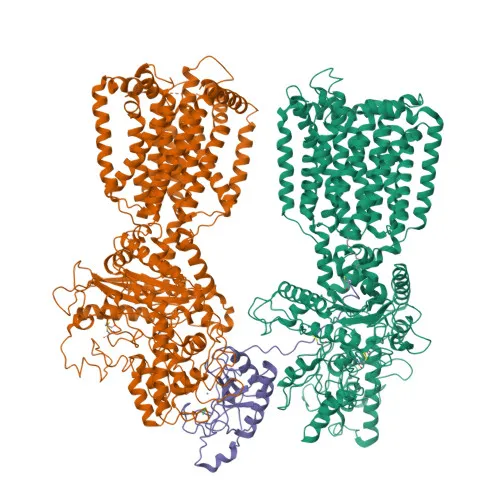
Protein patched homolog 1 (PTCH1) acts as a receptor for hedgehog morphogens (SHH, IHH, DHH) and negatively regulates smoothened (SMO) signaling by preventing SMO access to cholesterol. Related references: PMID:21537345, PMID:29954986, PMID:29995851
-
Functions as a cholesterol transporter, depleting cholesterol from the outer leaflet of the plasma membrane to inhibit SMO activation. Hedgehog binding inhibits this transporter activity, thereby promoting SMO signaling. Related references: PMID:31555730, PMID:37611095, PMID:31548691
-
Possesses tumor suppressor activity; its inactivation is considered a necessary step for tumorigenesis. Related references: PMID:8658145
-
Widely expressed in adult tissues including brain, lung, liver, heart, placenta, skeletal muscle, pancreas, and kidney; detected in tumor cells but not in normal skin.
-
Localizes to the cell membrane and primary cilium membrane, consistent with its role in cilium-dependent hedgehog signaling.
-
Undergoes post-translational modifications such as glycosylation, phosphorylation, and ubiquitination. Alternative splicing generates multiple isoforms, and mutations are associated with holoprosencephaly and basal cell nevus syndrome.
Experimental Guidance and Technical Tips
- The antibody was raised against a recombinant fragment spanning the C-terminal region (aa 1214–1312), which may recognize full-length PTCH1 (~161 kDa) in Western blotting.
- For immunohistochemistry (IHC) and immunofluorescence (IF), consider verifying specificity using positive control tissues such as brain, lung, or tumor samples where PTCH1 is known to be expressed.
- Cross-reactivity with mouse and rat allows application in rodent model studies; however, validation in the desired species and experimental system is recommended.
- As a polyclonal antibody, lot-to-lot consistency should be confirmed for quantitative assays.
CamelBio: Your One-Stop Sourcing Bridge
CamelBio provides diagnostic manufacturers, laboratories, and research institutes with comprehensive access to IVD raw materials, technical services, and consulting—supporting projects from concept to clinic. This anti-PTCH1 polyclonal antibody supports research into hedgehog signaling and cancer biology. Beyond single antibodies, we offer validated antibody pairs, optimized monoclonal/polyclonal reagents, bulk ancillary reagents, and expert sourcing for rare target raw materials to accelerate your assay development and manufacturing.
REQUEST A QUOTE
Our professional team will reply to you within one business day. Please feel free to contact us!