Polyclonal Antibodies
Anti-PTCH1 Polyclonal Antibody for WB, IF-P, ELISA - Q13635
Item Number : CM0017882
Price varies based on specs and customizations
- Application
- WB, IF-P, ELISA
- Cross Reactivity
- Mouse, Rat
- Protein Weight
- 161kDa

Shipping:
Contact us to get shipping details Enjoy On-time Dispatch Guarantee.
Why Choose Us
Easy ordering process, quality products, and dedicated support for your business success.
Core Product Specifications and Parameters
| Parameter | Value |
|---|---|
| Product Name | PTCH1 Rabbit pAb |
| Remarks/Alias | PTC; BCNS; PTC1; PTCH; NBCCS; PTCH1 |
| Species | Human |
| GeneID (Human) | 5727 |
| GeneID | 5727 |
| Immunogen | Recombinant fusion protein containing a sequence corresponding to amino acids 770-970 of human PTCH1 (NP_000255.2) |
| Source | Rabbit |
| Category | Polyclonal Antibodies |
| Application | WB, IF-P, ELISA |
| Cross Reactivity | Mouse, Rat |
| SWISS | Q13635 |
| Protein Weight | 161kDa |
| Shipping | Ice bag |
Biological Background: PTCH1 Function and Localization
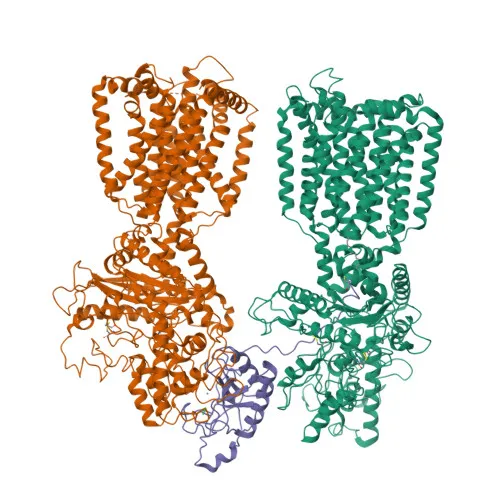
- PTCH1 is a receptor for hedgehog morphogens (SHH, IHH, DHH) and a negative regulator of the smoothened signaling pathway. Related references: PMID:21537345 PMID:29954986 PMID:29995851
- In the absence of hedgehog, PTCH1 inhibits SMO by depleting cholesterol from the outer leaflet of the plasma membrane, preventing cholesterol from binding to SMO's CRD region. Related references: PMID:31555730 PMID:37611095
- Hedgehog binding inhibits PTCH1's cholesterol transporter activity, enabling SMO activation and downstream signal transduction. Related references: PMID:31548691
- PTCH1 acts as a tumor suppressor; its inactivation is a crucial step in tumorigenesis. Related references: PMID:8658145
- It localizes to the cell membrane and the primary cilium membrane, consistent with its role in hedgehog signaling.
- Expression is observed in adult brain, lung, liver, heart, placenta, skeletal muscle, pancreas, and kidney, and in tumor cells but not normal skin.
- PTCH1 undergoes alternative splicing and post-translational modifications, including glycosylation, phosphorylation, and ubiquitination.
- Mutations in PTCH1 are associated with holoprosencephaly and other developmental disorders.
Experimental Guidance and Technical Tips
- This antibody was raised against a recombinant fragment corresponding to amino acids 770-970 of human PTCH1. Consider the immunogen region when evaluating epitope accessibility.
- For Western blotting, the predicted band size is ~161 kDa. Validate the antibody in a relevant cell or tissue lysate and use appropriate molecular weight markers.
- In immunofluorescence, PTCH1 localizes to the cell membrane and primary cilium. Ensure proper fixation and permeabilization protocols for membrane and cilium proteins.
- Cross-reactivity with mouse and rat allows the antibody to be used in those species; however, validate specificity in the target species.
- For ELISA, optimize coating conditions and antibody concentrations using the recombinant protein as a positive control.
CamelBio: Your One-Stop Sourcing Bridge
CamelBio serves as a comprehensive one-stop sourcing partner for IVD raw materials, supporting researchers and diagnostic manufacturers from early discovery to clinical application. This anti-PTCH1 antibody is ideal for investigations into hedgehog signaling, tumor biology, and developmental disorders. Through our global supply network, we can provide validated antibody pairs, optimized monoclonal/polyclonal antibodies, bulk ancillary reagents, and assistance in sourcing rare-target raw materials to streamline your assay development.
REQUEST A QUOTE
Our professional team will reply to you within one business day. Please feel free to contact us!