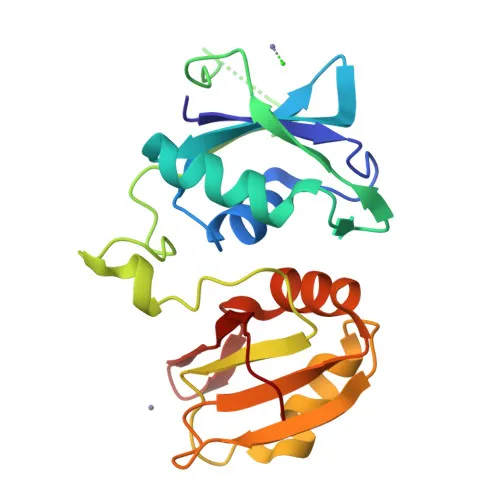
Monoclonal Antibodies
Anti-PTBP2 Rabbit Monoclonal Antibody for WB, IP, IF and IHC - Q9UKA9
Item Number : CM0005638
Price varies based on specs and customizations
- Application
- WB, IP, IF/ICC, IF-P, IHC-P, ELISA
- Cross Reactivity
- Human, Mouse, Rat
- Protein Weight
- 57kDa

Shipping:
Contact us to get shipping details Enjoy On-time Dispatch Guarantee.
Why Choose Us
Easy ordering process, quality products, and dedicated support for your business success.
Core Product Specifications and Parameters
| Parameter | Value |
|---|---|
| Product Name | PTBP2 Rabbit mAb |
| Remarks/Alias | nPTB; PTBLP; brPTB; PTBP2 |
| Species | Human |
| Gene ID (Human) | 58155 |
| Gene ID | 58155 |
| Immunogen | A synthetic peptide corresponding to a sequence within amino acids 1-100 of human PTBP2 (Q9UKA9) |
| Source | Rabbit |
| Category | Monoclonal Antibodies |
| Application | WB, IP, IF/ICC, IF-P, IHC-P, ELISA |
| Cross Reactivity | Human, Mouse, Rat |
| SWISS | Q9UKA9 |
| Protein Weight | 57kDa |
| Shipping | Ice bag |
Biological Background: PTBP2 Function and Localization
- PTBP2 (polypyrimidine tract-binding protein 2) is an RNA-binding protein also known as neural PTB (nPTB), PTB-like protein (PTBLP), or brPTB. It belongs to the hnRNP family and is the neural/neuronal-enriched homologue of the ubiquitous PTBP1.
- Binds to intronic polypyrimidine tracts and mediates negative regulation of exon splicing. In neuronal tissues, it may antagonize the splicing activator NOVA1 to fine-tune alternative exon selection.
- Plays additional roles in translation regulation, linking post-transcriptional control to gene expression outcomes.
- Localizes predominantly to the nucleus, consistent with its primary role in pre-mRNA processing.
- PTBP2 undergoes several post-translational modifications, including acetylation and phosphorylation, which may modulate its activity, subcellular dynamics, or protein interactions.
- The protein is mainly expressed in the brain, but is also detected in heart and skeletal muscle. Multiple isoforms exist: isoforms 1 and 2 are neuronal-specific, isoforms 3 and 4 are present in non-neuronal tissues, and isoforms 5 and 6 are truncated forms in non-neuronal cells.
- Exhibits reduced inherent RNA-binding affinity compared to PTBP1, a property that may influence its regulatory roles in different cellular contexts.
Experimental Guidance and Technical Tips
- The immunogen is an N-terminal peptide (aa 1–100) of human PTBP2, a region highly conserved among human, mouse, and rat. This conservation likely underlies the cross-reactivity reported.
- For Western blot analysis, a predominant band near 57 kDa corresponding to full-length PTBP2 is anticipated. Additional bands may arise from alternative isoforms or post-translational modifications; verify the specificity using appropriate controls.
- In immunoprecipitation, consider covalently crosslinking the antibody to protein A/G beads to minimize heavy/light chain co-elution if these interfere with downstream detection.
- For immunofluorescence (IF/ICC) and immunohistochemistry (IHC-P), the nuclear localization of PTBP2 should be confirmed. Optimize fixation (e.g., 4% PFA for IF, formalin-fixed paraffin-embedded sections for IHC) and permeabilization (e.g., 0.1–0.2% Triton X-100) to achieve adequate epitope retrieval and signal clarity.
- As PTBP2 expression is highest in neuronal tissues, use brain tissue or neuronal cell lines as positive controls; non-neuronal cells may express lower levels or distinct isoforms.
- When using ELISA, ensure that the coating antigen preserves the native conformation of the N-terminal region to maintain antibody binding.
CamelBio: Your One-Stop Sourcing Bridge
CamelBio offers a streamlined sourcing platform for IVD manufacturers and research laboratories seeking high-quality raw materials like this PTBP2 monoclonal antibody. In addition to validated PTBP2 detection reagents, we can supply optimized antibody pairs, recombinant proteins, and ancillary reagents for splicing and neurodegenerative disease research. Our network also accommodates custom sourcing for rare targets and bulk-scale reagent needs, supporting your projects from discovery to diagnostic development.
REQUEST A QUOTE
Our professional team will reply to you within one business day. Please feel free to contact us!