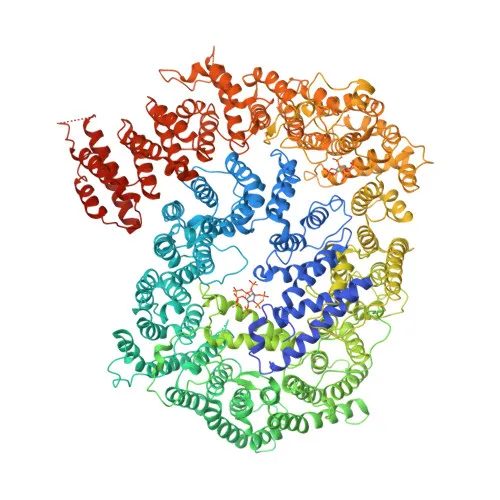
Polyclonal Antibodies
Anti-PSME4 Polyclonal Antibody for WB, IHC-P, ELISA - Q14997
Item Number : CM0016748
Price varies based on specs and customizations
- Application
- WB, IHC-P, ELISA
- Cross Reactivity
- Human, Mouse, Rat
- Protein Weight
- 211kDa

Shipping:
Contact us to get shipping details Enjoy On-time Dispatch Guarantee.
Why Choose Us
Easy ordering process, quality products, and dedicated support for your business success.
Core Product Specifications and Parameters
| Parameter | Specification |
|---|---|
| Product Name | PSME4 Rabbit pAb |
| Remarks/Alias | PA200; PSME4 |
| Species | Human |
| Gene ID (Human) | 23198 |
| Gene ID | 23198 |
| Immunogen | Recombinant fusion protein containing a sequence corresponding to amino acids 1634-1843 of human PSME4 (NP_055429.2). |
| Source | Rabbit |
| Category | Polyclonal Antibodies |
| Application | WB, IHC-P, ELISA |
| Cross Reactivity | Human, Mouse, Rat |
| SWISS | Q14997 |
| Protein Weight | 211kDa |
| Shipping | Ice bag |
Biological Background: PSME4 Function and Localization
- PSME4, also known as PA200 or BLM10 (hBlm10), is an associated component of the proteasome that specifically recognizes acetylated histones via its bromodomain-like (BRDL) region.
- It activates the proteasome by opening the gated channel for substrate entry; its C-terminus binds the core proteasome, occupying the same sites as proteasomal ATPases.
- PSME4 promotes ATP- and ubiquitin-independent degradation of core histones, a process critical for histone exchange during spermatogenesis and chromatin remodeling after DNA double-strand breaks. Related references: PMID:12097147, PMID:18025086, PMID:24829294, PMID:37766014, PMID:37994417
- In testis, PSME4 is a component of the spermatoproteasome, where it mediates degradation of acetylated histones to facilitate histone-to-protamine exchange.
- In somatic cells, it participates in the DNA damage response by promoting histone degradation following double-strand breaks.
- Subcellularly, PSME4 localizes to the cytoplasm, cytosol, nucleus, and nuclear speckles.
- The protein undergoes phosphorylation and alternative splicing, and contains repeat regions; it is associated with development, differentiation, DNA repair, and spermatogenesis.
Experimental Guidance and Technical Tips
- The immunogen corresponds to a C-terminal fragment (aa 1634–1843) that includes the proteasome-binding region; this design may preferentially detect the proteasome-interacting conformation.
- For western blotting, the predicted molecular weight is ~211 kDa; ensure adequate gel separation (e.g., low-percentage SDS-PAGE) and optimized transfer conditions for high-molecular-weight proteins.
- IHC-P: Given PSME4’s dual cytoplasmic and nuclear localization, validate staining patterns in testis tissue, where expression is robust and the spermatoproteasome is well-characterized.
- ELISA: The antibody can be considered as a capture or detection reagent when paired with validated antibody clones targeting different epitopes for proteasome complex studies.
CamelBio: Your One-Stop Sourcing Bridge
CamelBio provides diagnostic manufacturers, labs, and research institutes with one-stop access to IVD raw materials, technical services, and consulting—covering every stage from concept to clinic. This anti-PSME4 polyclonal antibody supports research into proteasome biology, histone turnover, spermatogenesis, and DNA repair. Our supply capabilities include validated antibody pairs for proteasome targets, bulk ancillary reagents, and custom sourcing of rare-target raw materials to streamline your assay development.
REQUEST A QUOTE
Our professional team will reply to you within one business day. Please feel free to contact us!