Polyclonal Antibodies
Anti-PSMD7 Rabbit Polyclonal Antibody - P51665
Item Number : CM0026777
Price varies based on specs and customizations
- Application
- WB, IHC-P, IF/ICC, ELISA
- Cross Reactivity
- Human, Mouse
- Protein Weight
- 37kDa

Shipping:
Contact us to get shipping details Enjoy On-time Dispatch Guarantee.
Why Choose Us
Easy ordering process, quality products, and dedicated support for your business success.
Core Product Specifications and Parameters
| Parameter | Value |
|---|---|
| Product Name | PSMD7 Rabbit pAb |
| Remarks/Alias | P40; S12; Rpn8; MOV34; PSMD7 |
| Species | Human |
| GeneID (Human) | 5713 |
| GeneID | 5713 |
| Immunogen | Recombinant fusion protein containing a sequence corresponding to amino acids 1-324 of human PSMD7 (NP_002802.2) |
| Source | Rabbit |
| Category | Polyclonal Antibodies |
| Application | WB, IHC-P, IF/ICC, ELISA |
| Cross Reactivity | Human, Mouse |
| SWISS | P51665 |
| Protein Weight | 37kDa |
| Shipping | Ice bag |
Biological Background: PSMD7 Function and Localization
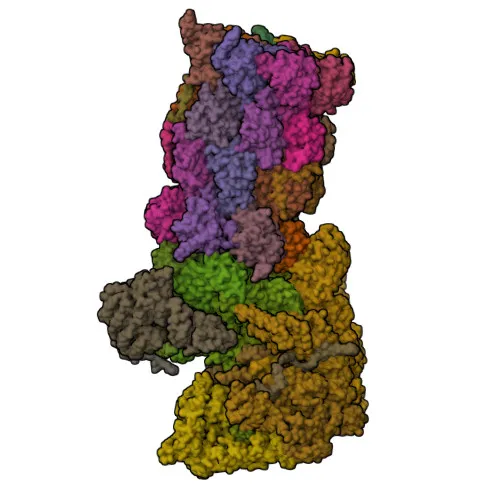
- PSMD7, also known as Rpn8, S12, MOV34, and proteasome subunit p40, is the 26S proteasome non-ATPase regulatory subunit 7, a core component of the 19S regulatory particle.
- It functions within the 26S proteasome to mediate ATP-dependent degradation of ubiquitinated proteins, crucial for maintaining protein homeostasis by removing misfolded, damaged, or temporally regulated proteins.
- Through targeted proteolysis, PSMD7 contributes to key cellular processes including cell cycle progression, apoptosis, and DNA damage repair.
- As a non-ATPase subunit, PSMD7 likely participates in substrate recognition and processing prior to translocation into the proteolytic 20S core.
- The protein features multiple post-translational modifications (acetylation, isopeptide bond/ubiquitin-like conjugation) and has experimentally resolved 3D structures, as annotated by UniProt.
Experimental Guidance and Technical Tips
- The immunogen spans amino acids 1–324 of human PSMD7, covering the majority of the protein; this broad coverage may support recognition of both native and denatured forms, making it suitable for WB and IHC-P applications.
- When performing IF/ICC, consider validating the expected nuclear and cytoplasmic distribution of the 26S proteasome and use appropriate fixation/permeabilization conditions to preserve epitopes.
- Cross-reactivity with mouse is indicated; verify signal specificity and intensity in mouse-derived samples, as sequence homology may influence detection.
- As a polyclonal antibody, lot-to-lot consistency should be monitored, and optimal working dilutions should be determined empirically for each application and sample type.
CamelBio: Your One-Stop Sourcing Bridge
CamelBio offers diagnostic manufacturers, research institutes, and laboratories a streamlined, single-supplier solution for IVD raw materials and technical support—covering the entire journey from concept to clinic. This anti-PSMD7 polyclonal antibody exemplifies our capability to source validated research- and assay-grade antibodies targeting key proteasome components. Our comprehensive portfolio includes validated antibody pairs, optimized monoclonal and polyclonal antibodies, bulk ancillary reagents, and custom sourcing for rare targets to accelerate your proteostasis and oncology assay development.
REQUEST A QUOTE
Our professional team will reply to you within one business day. Please feel free to contact us!