Polyclonal Antibodies
Anti-PSMD2 Rabbit Polyclonal Antibody for WB, IF/ICC, ELISA - Q13200
Item Number : CM0019119
Price varies based on specs and customizations
- Application
- WB, IF/ICC, ELISA
- Cross Reactivity
- Human, Mouse
- Protein Weight
- 100kDa

Shipping:
Contact us to get shipping details Enjoy On-time Dispatch Guarantee.
Why Choose Us
Easy ordering process, quality products, and dedicated support for your business success.
Core Product Specifications and Parameters
| Parameter | Value |
|---|---|
| Product Name | PSMD2 Rabbit pAb |
| Remarks/Alias | S2, P97, RPN1, TRAP2, PSMD2 |
| Species | Human |
| GeneID (Human) | 5708 |
| GeneID | 5708 |
| Immunogen | Recombinant fusion protein containing a sequence corresponding to amino acids 1-260 of human PSMD2 (NP_002799.3) |
| Source | Rabbit |
| Category | Polyclonal Antibodies |
| Application | WB, IF/ICC, ELISA |
| Cross Reactivity | Human, Mouse |
| SWISS | Q13200 |
| Protein Weight | 100kDa |
| Shipping | Ice bag |
Biological Background: PSMD2 Function and Localization
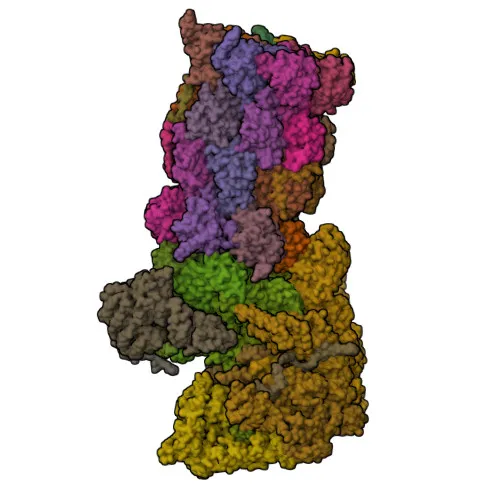
- PSMD2 (26S proteasome non-ATPase regulatory subunit 2), also known as S2, p97, RPN1, and TRAP2, is a key component of the 19S regulatory particle of the 26S proteasome.
- It is essential for the ATP-dependent degradation of ubiquitinated proteins, maintaining protein homeostasis by removing misfolded, damaged, or temporally unneeded proteins.
- Through its role in proteasomal degradation, PSMD2 participates in critical cellular processes including cell cycle progression, apoptosis, and DNA damage repair.
- PSMD2 binds directly to the intracellular domain of tumor necrosis factor type 1 receptor (TNFR1) via its TRAP2 domain, an interaction that may link proteasome function to TNF signaling; the binding site resides outside the death domain of TNFR1.
- It is ubiquitously expressed, with high levels detected in skeletal muscle, liver, heart, brain, kidney, pancreas, lung, and placenta.
- Post-translational modifications include phosphorylation and acetylation, and alternative splicing generates multiple isoforms.
- The protein has a predicted molecular weight of approximately 100.2 kDa (UniProt), consistent with the observed 100 kDa band.
Experimental Guidance and Technical Tips
- The immunogen corresponds to the N-terminal region (aa 1–260) of human PSMD2; thus, the antibody is expected to detect full-length PSMD2. Consider verifying cross-reactivity with mouse lysates, as this region shares significant homology.
- For Western blotting, a specific band near 100 kDa should be observed in human and mouse samples. Optimize blocking conditions and antibody titration to reduce background.
- In immunofluorescence/immunocytochemistry, PSMD2 localizes to both the nucleus and cytoplasm. Use appropriate permeabilization protocols, and include a nuclear counterstain to distinguish subcellular distribution.
- For ELISA applications, the antibody can be used as a capture or detection reagent; validate performance with recombinant PSMD2 protein or cell extracts under your specific assay conditions.
- Given its role in the ubiquitin-proteasome system, this antibody is a valuable tool for studying protein degradation dynamics. Including proteasome inhibitor-treated controls (e.g., MG132) in experiments may aid in result interpretation.
CamelBio: Your One-Stop Sourcing Bridge
CamelBio empowers diagnostic manufacturers and research labs with a comprehensive portfolio of IVD raw materials and customized sourcing support. This anti-PSMD2 polyclonal antibody is part of our select collection targeting the ubiquitin-proteasome pathway, suitable for applications in oncology, neurodegeneration, and cell biology. Beyond single reagents, we offer validated antibody pairs, bulk ancillary reagents, and assistance in securing rare-target materials—making us your streamlined partner from concept to clinical application.
REQUEST A QUOTE
Our professional team will reply to you within one business day. Please feel free to contact us!