Polyclonal Antibodies
Anti-PSMD13 Rabbit Polyclonal Antibody for WB, IHC-P, IF/ICC, ELISA - Q9UNM6
Item Number : CM0030052
Price varies based on specs and customizations
- Application
- WB, IHC-P, IF/ICC, ELISA
- Cross Reactivity
- Human, Mouse, Rat
- Protein Weight
- 43kDa

Shipping:
Contact us to get shipping details Enjoy On-time Dispatch Guarantee.
Why Choose Us
Easy ordering process, quality products, and dedicated support for your business success.
Core Product Specifications and Parameters
| Parameter | Value |
|---|---|
| Product Name | PSMD13 Rabbit pAb |
| Remarks/Alias | S11; Rpn9; p40.5; HSPC027; PSMD13 |
| Species | Human |
| Gene ID (Human) | 5719 |
| Gene ID | 5719 |
| Immunogen | Recombinant fusion protein containing a sequence corresponding to amino acids 1-250 of human PSMD13 (NP_002808.3). |
| Source | Rabbit |
| Category | Polyclonal Antibodies |
| Application | WB, IHC-P, IF/ICC, ELISA |
| Cross Reactivity | Human, Mouse, Rat |
| SWISS | Q9UNM6 |
| Protein Weight | 43kDa |
| Shipping | Ice bag |
Biological Background: PSMD13 Function and Localization
- PSMD13, also known as Rpn9, S11, or p40.5, is a component of the 26S proteasome, a large multiprotein complex responsible for ATP-dependent degradation of ubiquitinated proteins.
- The 26S proteasome plays a critical role in maintaining protein homeostasis by eliminating misfolded or damaged proteins and regulating the turnover of proteins involved in cell cycle progression, apoptosis, and DNA damage repair.
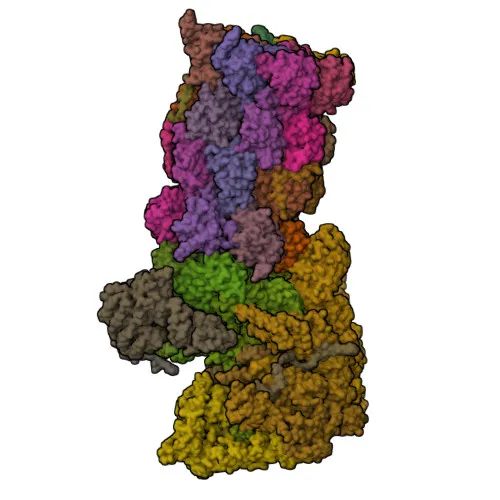
- PSMD13 belongs to the proteasome regulatory particle non-ATPase subunit family and is a stoichiometric subunit of the 19S regulatory complex, which recognizes polyubiquitinated substrates and deubiquitinates them before translocation into the 20S core particle for degradation.
- The protein is subject to acetylation and alternative splicing, generating multiple isoforms that may have tissue-specific or functional differences.
- Subcellularly, PSMD13 localizes to both the cytoplasm and nucleus, consistent with the distribution of proteasomes throughout the cell.
- Genetic and biochemical studies have identified PSMD13 as a conserved proteasome subunit, with structural data available (3D-structure keyword) providing insights into its role in substrate processing.
Experimental Guidance and Technical Tips
- The immunogen was designed against the N-terminal region (aa 1-250) of human PSMD13; consider verifying that this region is accessible in native or fixed conformations.
- For Western blot (WB), a single band at approximately 43 kDa is expected; however, post-translational modifications or isoform variants may produce additional bands.
- In immunohistochemistry (IHC-P), test various antigen retrieval methods (e.g., citrate buffer, pH 6.0) and antibody dilutions to optimize signal-to-noise ratio.
- For immunofluorescence (IF/ICC), co-stain with a cytoplasmic or nuclear marker to confirm localization, and use appropriate fixation (e.g., 4% PFA) to preserve epitope.
- ELISA protocols can be developed using this polyclonal as either capture or detection antibody; pair with a validated monoclonal for sandwich ELISA.
CamelBio: Your One-Stop Sourcing Bridge
CamelBio is a one-stop sourcing platform for IVD raw materials, offering validated monoclonal and polyclonal antibodies, antigen pairs, and bulk ancillary reagents. This anti-PSMD13 polyclonal antibody supports research into the ubiquitin-proteasome system and protein degradation pathways. For your diagnostic development needs, CamelBio can also assist in sourcing rare-target raw materials and provide technical consulting to accelerate your project from concept to clinic.
Product Datasheet
Anti-PSMD13 Rabbit Polyclonal Antibody for WB, IHC-P, IF/ICC, ELISA - Q9UNM6
REQUEST A QUOTE
Our professional team will reply to you within one business day. Please feel free to contact us!