Polyclonal Antibodies
Anti-PSMD11 Rabbit Polyclonal Antibody for WB, IF/ICC, ELISA - O00231
Item Number : CM0015911
Price varies based on specs and customizations
- Application
- WB, IF/ICC, ELISA
- Cross Reactivity
- Human, Mouse, Rat
- Protein Weight
- 47kDa

Shipping:
Contact us to get shipping details Enjoy On-time Dispatch Guarantee.
Why Choose Us
Easy ordering process, quality products, and dedicated support for your business success.
Core Product Specifications and Parameters
| Parameter | Value |
|---|---|
| Product Name | PSMD11 Rabbit pAb |
| Remarks/Alias | S9; Rpn6; p44.5; PSMD11 |
| Species | Human |
| Gene ID (Human) | 5717 |
| Gene ID | 5717 |
| Immunogen | Recombinant fusion protein containing a sequence corresponding to amino acids 253-422 of human PSMD11 (NP_002806.2). |
| Source | Rabbit |
| Category | Polyclonal Antibodies |
| Application | WB, IF/ICC, ELISA |
| Cross Reactivity | Human, Mouse, Rat |
| SWISS | O00231 |
| Protein Weight | 47kDa |
| Shipping | Ice bag |
Biological Background: PSMD11 Function and Localization
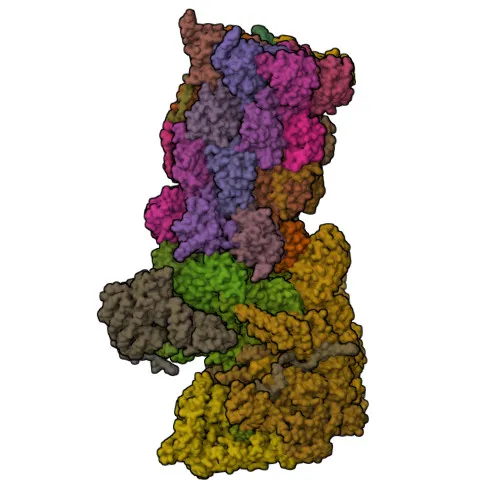
- PSMD11 is also known as Rpn6, S9, and p44.5. It is a subunit of the 26S proteasome regulatory particle, a large multiprotein complex that degrades ubiquitinated proteins in an ATP-dependent manner.
- It is essential for the assembly of the 26S proteasome. PSMD11 facilitates the incorporation of the 19S regulatory particle onto the 20S core particle.
- The 26S proteasome maintains protein homeostasis by eliminating misfolded, damaged, or unneeded proteins, thereby participating in cell cycle progression, apoptosis, and DNA damage repair.
- PSMD11 is highly expressed in embryonic stem cells (ESCs) and drives increased proteasome assembly and activity, which is critical for ESC identity. Its expression decreases as ESCs differentiate.
- Subcellularly, PSMD11 localizes to both the nucleus and the cytoplasm, primarily in the cytosol, consistent with the widespread distribution of proteasomes.
- Post-translational modifications of PSMD11 include acetylation, phosphorylation, and ubiquitin conjugation (isopeptide bond formation), which may regulate its function or interactions.
- Alternative splicing of the PSMD11 gene yields multiple transcript variants, potentially producing isoforms with distinct properties.
Experimental Guidance and Technical Tips
- The immunogen used to generate this antibody corresponds to residues 253-422 of human PSMD11. This region is part of the PCI domain, which is involved in protein-protein interactions within the proteasome lid.
- Expected molecular weight for human PSMD11 is approximately 47 kDa. A band near this size should be observed in Western blotting of lysates from human, mouse, or rat cells.
- For immunofluorescence/ICC, anticipate a nuclear and cytoplasmic staining pattern. Permeabilization and fixation conditions should be optimized for your specific cell type.
- This polyclonal antibody may detect multiple epitopes, potentially leading to recognition of isoforms or degradation fragments. Specificity should be confirmed using appropriate controls (e.g., siRNA knockdown or peptide blocking).
- Compatibility with ELISA suggests utility in screening or quantifying PSMD11 levels in biological samples. Proper assay optimization, including coating and detection conditions, is recommended.
CamelBio: Your One-Stop Sourcing Bridge
CamelBio is your one-stop IVD raw-material sourcing partner, offering a comprehensive portfolio of validated antibodies, antigens, and ancillary reagents for diagnostic development. This anti-PSMD11 antibody fits into proteasome-related research and assay systems, and we provide additional support with complementary products such as purified proteins, antibody pairs, and bulk-grade materials. Should your project require rare target antibodies or customized raw materials, CamelBio’s sourcing network can bridge your needs from concept to clinic.
Product Datasheet
Anti-PSMD11 Rabbit Polyclonal Antibody for WB, IF/ICC, ELISA - O00231
REQUEST A QUOTE
Our professional team will reply to you within one business day. Please feel free to contact us!