Polyclonal Antibodies
Anti-PSMD1 Rabbit Polyclonal Antibody for WB, ELISA - Q99460
Item Number : CM0018910
Price varies based on specs and customizations
- Application
- WB, ELISA
- Cross Reactivity
- Human, Mouse, Rat
- Protein Weight
- 106kDa

Shipping:
Contact us to get shipping details Enjoy On-time Dispatch Guarantee.
Why Choose Us
Easy ordering process, quality products, and dedicated support for your business success.
Easy Process
Quality Assured
Dedicated Support
Core Product Specifications and Parameters
| Parameter | Details |
|---|---|
| Product Name | PSMD1 Rabbit pAb |
| Remarks/Alias | S1; P112; Rpn2; PSMD1 |
| Species | Human |
| GeneID (Human) | 5707 |
| GeneID | 5707 |
| Immunogen | Recombinant fusion protein containing a sequence corresponding to amino acids 794-953 of human PSMD1 (NP_002798.2) |
| Source | Rabbit |
| Category | Polyclonal Antibodies |
| Application | WB, ELISA |
| Cross Reactivity | Human, Mouse, Rat |
| SWISS | Q99460 |
| Protein Weight | 106kDa |
| Shipping | Ice bag |
Biological Background: PSMD1 Function and Localization
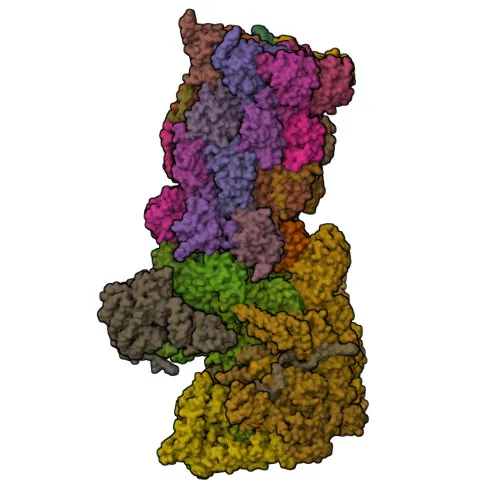
- PSMD1 (Proteasome 26S Subunit, Non-ATPase 1), also known as S1, Rpn2, or p112, is a core component of the 19S regulatory particle of the 26S proteasome complex.
- It functions as a non-ATPase regulatory subunit that is essential for the recognition and unfolding of ubiquitinated substrate proteins prior to their degradation by the 20S core particle.
- The 26S proteasome, containing PSMD1, is responsible for the ATP-dependent degradation of polyubiquitinated proteins, playing a central role in maintaining protein homeostasis by removing misfolded, damaged, or surplus proteins.
- This degradation pathway is critical for the regulation of numerous cellular processes, including cell cycle progression, apoptosis, and DNA damage repair.
- PSMD1 undergoes post-translational modifications such as acetylation and phosphorylation, which may modulate its activity and interactions within the proteasome complex.
- The protein features repeat domains that facilitate protein-protein interactions, and the gene is subject to alternative splicing, yielding multiple isoforms.
Experimental Guidance and Technical Tips
- The immunogen used to generate this antibody corresponds to a specific C-terminal region (amino acids 794–953) of human PSMD1. This region may influence reactivity against different isoforms or species variants.
- For Western blot analysis, PSMD1 typically migrates at a molecular weight of approximately 106 kDa (predicted ~105.8 kDa). Ensure appropriate molecular weight markers are used.
- When performing ELISA, consider optimizing coating antigen concentration and detection conditions based on the target protein abundance in your sample type.
- Validate the antibody’s performance in your specific experimental context, as cross-reactivity with mouse and rat proteins has been reported by the manufacturer.
CamelBio: Your One-Stop Sourcing Bridge
- CamelBio serves as a comprehensive sourcing partner for IVD raw materials, providing diagnostic manufacturers and research laboratories with access to reliable antibodies, antigens, and ancillary reagents. This anti-PSMD1 antibody is well-suited for proteasome and ubiquitin-related studies, and CamelBio can support your project with complementary raw materials such as validated antibody pairs, recombinant proteins, and assay buffers. Let us streamline your supply chain from discovery to clinical application.
REQUEST A QUOTE
Our professional team will reply to you within one business day. Please feel free to contact us!