Polyclonal Antibodies
Anti-PSMC5 Rabbit Polyclonal Antibody for WB, ELISA - P62195
Item Number : CM0013120
Price varies based on specs and customizations
- Application
- WB, ELISA
- Cross Reactivity
- Human, Mouse
- Protein Weight
- 46kDa

Shipping:
Contact us to get shipping details Enjoy On-time Dispatch Guarantee.
Why Choose Us
Easy ordering process, quality products, and dedicated support for your business success.
Core Product Specifications and Parameters
| Parameter | Description |
|---|---|
| Product Name | PSMC5 Rabbit pAb |
| Remarks/Alias | S8; p45; RPT6; SUG1; SUG-1; TBP10; TRIP1; p45/SUG; PSMC5 |
| Species | Human |
| GeneID (Human) | 5705 |
| GeneID | 5705 |
| Immunogen | Recombinant fusion protein containing a sequence corresponding to amino acids 127-406 of human PSMC5 (NP_002796.4). |
| Source | Rabbit |
| Category | Polyclonal Antibodies |
| Application | WB, ELISA |
| Cross Reactivity | Human, Mouse |
| SWISS | P62195 |
| Protein Weight | 46kDa |
| Shipping | Ice bag |
Biological Background: PSMC5 Function and Localization
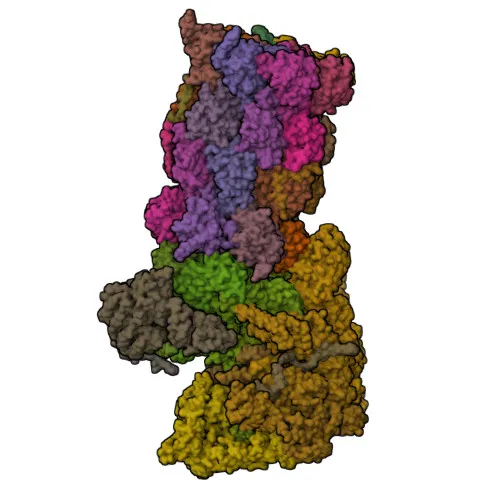
- PSMC5 (Proteasome 26S subunit ATPase 5) is also known as RPT6, SUG1, TRIP1, and p45. It is an essential AAA-ATPase component of the 19S regulatory particle of the 26S proteasome.
- The 26S proteasome is an ATP-dependent protease complex responsible for degrading polyubiquitinated proteins, thereby maintaining cellular protein homeostasis.
- PSMC5, along with five other AAA-ATPases, forms a heterohexameric ring that unfolds and translocates substrate proteins into the 20S core particle for degradation.
- The proteasome, through PSMC5 activity, regulates numerous cellular processes including cell cycle progression, apoptosis, and DNA damage repair.
- PSMC5 localizes to both the cytoplasm and the nucleus, consistent with its role in protein degradation throughout the cell.
- Post-translational modifications of PSMC5 include acetylation and phosphorylation, which may modulate its activity and interactions.
- The PSMC5 gene undergoes alternative splicing, generating multiple transcript variants that may encode different isoforms.
Experimental Guidance and Technical Tips
- The immunogen spans amino acids 127–406 of human PSMC5. The resulting antibody may recognize multiple isoforms arising from alternative splicing. Verify in the relevant sample system.
- For Western blotting (WB), consider using reducing conditions and loading a positive control such as HeLa or HEK293 cell lysate. The expected molecular weight is approximately 46 kDa.
- When using mouse samples, confirm cross-reactivity due to the reported human–mouse reactivity; however, perform validation as sequence differences may affect affinity.
- For ELISA, optimize coating antigen and antibody concentrations. Recombinant PSMC5 protein or cell extracts can be used as targets.
- This polyclonal antibody can be applied in experiments investigating proteasome-mediated degradation, cell cycle, or apoptosis pathways. Pair with appropriate inhibitors (e.g., MG132) to modulate proteasome activity when needed.
CamelBio: Your One-Stop Sourcing Bridge
CamelBio provides diagnostic manufacturers, labs, and research institutes with one-stop access to IVD raw materials, technical services, and consulting—covering every stage from concept to clinic. For PSMC5-related research or assay development, we supply validated antibody pairs, optimized monoclonal/polyclonal antibodies like this anti-PSMC5 reagent, and bulk ancillary reagents. Whether you need rare-target raw-material sourcing or a reliable supplier for proteasome pathway components, CamelBio streamlines your procurement process to accelerate your projects.
REQUEST A QUOTE
Our professional team will reply to you within one business day. Please feel free to contact us!