Polyclonal Antibodies
Anti-PSMB10 Rabbit Polyclonal Antibody for WB, IHC-P, IF/ICC, ELISA - P40306
Item Number : CM0030094
Price varies based on specs and customizations
- Application
- WB, IHC-P, IF/ICC, ELISA
- Cross Reactivity
- Human, Mouse, Rat
- Protein Weight
- 29kDa

Shipping:
Contact us to get shipping details Enjoy On-time Dispatch Guarantee.
Why Choose Us
Easy ordering process, quality products, and dedicated support for your business success.
Core Product Specifications and Parameters
| Parameter | Value |
|---|---|
| Product Name | PSMB10 Rabbit pAb |
| Remarks/Alias | LMP10; MECL1; PRAAS5; beta2i; PSMB10 |
| Species | Human |
| GeneID (Human) | 5699 |
| GeneID | 5699 |
| Immunogen | Recombinant fusion protein containing a sequence corresponding to amino acids 1-273 of human PSMB10 (NP_002792.1) |
| Source | Rabbit |
| Category | Polyclonal Antibodies |
| Application | WB, IHC-P, IF/ICC, ELISA |
| Cross Reactivity | Human, Mouse, Rat |
| SWISS | P40306 |
| Protein Weight | 29kDa |
| Shipping | Ice bag |
Biological Background: PSMB10 Function and Localization
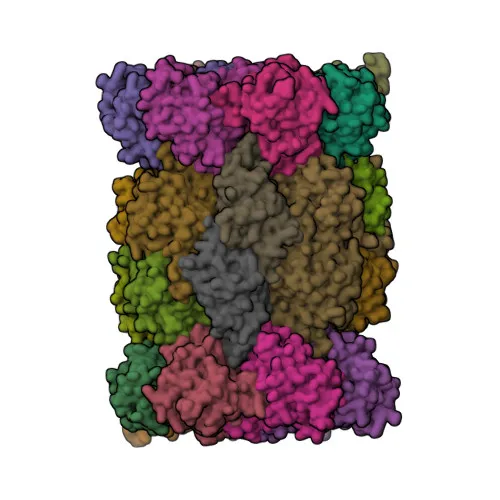
- PSMB10 encodes the proteasome subunit beta type-10, also known as LMP10, MECL1, or beta2i, a catalytic component of the immunoproteasome that replaces constitutive proteasome subunits upon immune stimulation.
- It exhibits chymotrypsin-like and trypsin-like activities, cleaving peptide bonds after hydrophobic and basic residues, and is essential for generating antigenic peptides presented by MHC class I molecules.
- PSMB10 is induced by interferon-gamma and incorporates into the immunoproteasome, altering cleavage specificity to favor production of peptides with higher affinity for MHC class I binding, thereby enhancing adaptive immune responses.
- The protein is localized in both the cytoplasm and nucleus, where it participates in ubiquitin-dependent and -independent proteolysis, contributing to protein quality control and cell cycle regulation.
- Post-translational modifications include acetylation and phosphorylation, and the protein is synthesized as an inactive zymogen that is activated by autocatalytic removal of its propeptide.
- Mutations in PSMB10 have been linked to proteasome-associated autoinflammatory syndromes (e.g., PRAAS5), underscoring the clinical importance of proper immunoproteasome function.
- PSMB10 interacts with viral proteins and its protease activity can be modulated during host-virus interactions, potentially influencing viral antigen processing and immune evasion.
Experimental Guidance and Technical Tips
- The immunogen used corresponds to the full-length human PSMB10 protein (amino acids 1-273), ensuring the polyclonal antibody recognizes multiple native epitopes; for WB, a band near 29 kDa is expected, though precursor forms may be visible.
- In IHC-P and IF/ICC, anticipate both cytoplasmic and nuclear staining patterns; co-staining with proteasome or immunoproteasome markers (e.g., PSMB8, PSMB9) can help confirm specificity.
- For ELISA applications, consider using recombinant immunoproteasome complexes or purified PSMB10 as coating antigens to establish assay sensitivity and dynamic range.
- Due to high sequence homology, the antibody is predicted to cross-react with mouse and rat PSMB10; however, always verify reactivity in your species and tissue of interest using appropriate controls (e.g., tissue lysates from wild-type and knockout models).
- When studying immunoproteasome dynamics, interferon-gamma treatment or other immune stimuli can be used to upregulate PSMB10 expression in cultured cells; include untreated controls to differentiate constitutive from inducible expression.
- For functional studies, proteasome inhibitors (e.g., epoxomicin, bortezomib) may be employed to validate antibody specificity by blocking catalytic activity, but note that inhibitor treatment can affect subunit composition.
CamelBio: Your One-Stop Sourcing Bridge
CamelBio supports diagnostic manufacturers, reference labs, and research institutes with comprehensive access to IVD raw materials, from validated antibody pairs and optimized polyclonal antibodies to bulk ancillary reagents and rare target sourcing. For projects involving immunoproteasome or antigen processing pathways, we can supply the PSMB10 antibody described here alongside complementary reagents such as anti-PSMB8, PSMB9, or other proteasome subunits. Our integrated capabilities help bridge concept-to-clinic workflows efficiently, ensuring you receive well-characterized, application-ready raw materials for diagnostic development.
Product Datasheet
Anti-PSMB10 Rabbit Polyclonal Antibody for WB, IHC-P, IF/ICC, ELISA - P40306
REQUEST A QUOTE
Our professional team will reply to you within one business day. Please feel free to contact us!