Polyclonal Antibodies
Anti-PSMA/FOLH1 Polyclonal Antibody for WB and ELISA - Q04609
Item Number : CM0020447
Price varies based on specs and customizations
- Application
- WB, ELISA
- Cross Reactivity
- Human, Mouse, Rat
- Protein Weight
- 84kDa

Shipping:
Contact us to get shipping details Enjoy On-time Dispatch Guarantee.
Why Choose Us
Easy ordering process, quality products, and dedicated support for your business success.
Core Product Specifications and Parameters
| Parameter | Value |
|---|---|
| Product Name | PSMA/FOLH1 Rabbit pAb |
| Remarks/Alias | PSM; FGCP; FOLH; GCP2; PSMA; mGCP; GCPII; NAALAD1; PSMA/FOLH1 |
| Species | Human |
| GeneID (Human) | 2346 |
| GeneID | 2346 |
| Immunogen | Synthetic peptide |
| Source | Rabbit |
| Category | Polyclonal Antibodies |
| Application | WB, ELISA |
| Cross Reactivity | Human, Mouse, Rat |
| SWISS | Q04609 |
| Protein Weight | 84kDa |
| Shipping | Ice bag |
Biological Background: PSMA/FOLH1 Function and Localization
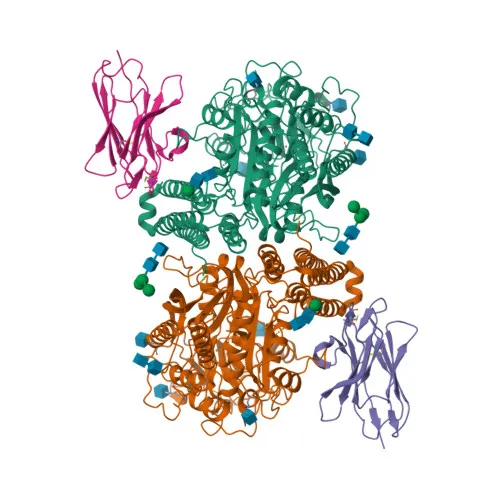
- PSMA/FOLH1 (Glutamate carboxypeptidase 2) is a multifunctional zinc metalloenzyme encoded by the FOLH1 gene, also known as GCPII, NAALADase I, or folate hydrolase 1. Multiple isoforms exist, with PSMA' predominant in normal prostate and PSMA-1/PSMA-9 associated with prostate tumors.
- Possesses dual enzymatic activities: folate hydrolase (cleaving folylpoly-γ-glutamate) and NAALADase (hydrolyzing N-acetylaspartylglutamate, NAAG). In the intestine, it facilitates dietary folate absorption; in the brain, it regulates glutamatergic neurotransmission by breaking down NAAG to release glutamate.
- Plays a well-documented role in prostate tumor progression; consistently highly expressed in prostate epithelium and significantly upregulated in primary and metastatic prostate cancers.
- Subcellular localization is primarily at the cell membrane as a type II transmembrane glycoprotein with a cytoplasmic tail, but it can also be detected in the cytoplasm.
- Tissue distribution is broad: highly expressed in prostate, brain (ventral striatum, brain stem), kidney, liver, and small intestine (jejunal brush border). Lower levels in urinary bladder, testis, ovary, and other organs. Isoform expression varies between normal and malignant tissues.
- Post-translational modifications include N‑glycosylation and phosphorylation; the enzyme requires two zinc ions and calcium for catalytic activity and structural stability.
- In vitro, exhibits an additional dipeptidyl‑peptidase IV‑type activity, cleaving substrates such as Gly‑Pro‑AMC, indicating versatility in peptide bond hydrolysis.
- Classified by UniProt as a multifunctional enzyme, metalloprotease, and carboxypeptidase; subject to alternative splicing, giving rise to functionally distinct isoforms.
Experimental Guidance and Technical Tips
- The immunogen is a synthetic peptide located within amino acids 50–150 of the human PSMA/FOLH1 extracellular domain. This region is conserved across human, mouse, and rat, supporting the observed cross‑reactivity.
- For Western blotting, a band near 84 kDa is expected in human prostate cancer cell lines (e.g., LNCaP, PC‑3) or prostate tissue homogenates. Verify specificity by including appropriate controls and consider antigen retrieval if using paraffin‑embedded sections in IHC (not validated here).
- In ELISA applications, the antibody may serve as a capture or detection reagent. Pairing with a monoclonal antibody against a non‑overlapping epitope could improve sensitivity in sandwich assays. Cross‑reactivity with rodent samples should be assessed empirically.
- Because polyclonal antibodies recognize multiple epitopes, lot‑to‑lot consistency should be monitored in quantitative assays. Pilot experiments with a reference standard are recommended before large‑scale studies.
CamelBio: Your One-Stop Sourcing Bridge
CamelBio is your integrated partner for IVD raw‑material procurement, offering validated antibodies, antigens, and ancillary reagents from concept to clinic. This anti‑PSMA/FOLH1 polyclonal antibody supports prostate cancer diagnostics and neuroscience research, and we can supply matched antibody pairs, bulk quantities, or custom formulations to meet your assay development needs. For rare targets or specialized sourcing, our team provides end‑to‑end procurement and technical consulting to accelerate your diagnostic pipeline.
REQUEST A QUOTE
Our professional team will reply to you within one business day. Please feel free to contact us!