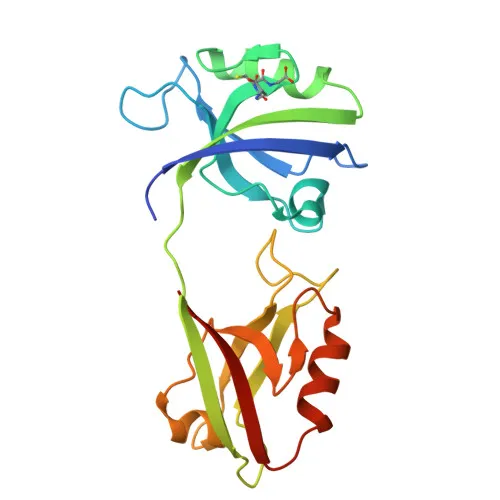
Monoclonal Antibodies
Anti-PSD95 Rabbit Monoclonal Antibody for WB, ELISA - P78352
Item Number : CM0002904
Price varies based on specs and customizations
- Application
- WB, ELISA
- Cross Reactivity
- Mouse, Rat
- Protein Weight
- 80 kDa

Shipping:
Contact us to get shipping details Enjoy On-time Dispatch Guarantee.
Why Choose Us
Easy ordering process, quality products, and dedicated support for your business success.
Core Product Specifications and Parameters
| Parameter | Value |
|---|---|
| Product Name | PSD95 Rabbit mAb |
| Remarks/Alias | MRD62; PSD95; SAP90; SAP-90 |
| Species | Human |
| Gene ID (Human) | 1742 |
| Gene ID | 1742 |
| Immunogen | A synthetic peptide corresponding to amino acids 1-100 of human PSD95 (P78352). |
| Source | Rabbit |
| Category | Monoclonal Antibodies |
| Application | WB, ELISA |
| Cross Reactivity | Mouse, Rat |
| SWISS | P78352 |
| Protein Weight | 80 kDa |
| Shipping | Ice bag |
Biological Background: PSD95 Function and Localization
- Disks large homolog 4 (DLG4), also known as postsynaptic density protein 95 (PSD-95) or synapse-associated protein 90 (SAP90), is a member of the membrane-associated guanylate kinase (MAGUK) family. It functions as a critical postsynaptic scaffolding protein.
- PSD95 clusters NMDA receptors and shaker-type potassium channels at the postsynaptic membrane, organizing the postsynaptic density (PSD) and regulating synaptic strength.
- It is required for synaptic plasticity associated with NMDA receptor signaling; overexpression or depletion of DLG4 alters the ratio of excitatory to inhibitory synapses in hippocampal neurons.
- PSD95 immobilizes AMPA-type glutamate receptors (AMPARs) at the PSD, maintaining them in an activated state and preventing synaptic depression.
- Under basal conditions, PSD95 cooperates with FYN to stabilize palmitoyltransferase ZDHHC5 at the synaptic membrane, inhibiting its endocytosis. Related references: PMID:26334723
- PSD95 is predominantly expressed in the brain and localizes to the cell membrane, postsynaptic density, dendritic spines, and presynaptic compartments.
- Post-translational modifications include palmitoylation, which anchors it to the membrane, and phosphorylation. Alternative splicing generates multiple isoforms, and mutations are associated with intellectual disability.
Experimental Guidance and Technical Tips
- The immunogen is a synthetic peptide spanning amino acids 1-100 of human PSD95, targeting the N-terminal region. Verify that your sample preparation maintains this epitope.
- For Western blotting, PSD95 migrates at approximately 80 kDa. Use an appropriate gel percentage (e.g., 8–10%) and optimise transfer conditions for high-molecular-weight proteins.
- Recommended starting dilutions for WB may range from 1:500 to 1:2000, but individual optimisation is necessary based on sample type and detection system.
- The antibody cross-reacts with mouse and rat, making it suitable for rodent brain lysates and tissue sections; validate in your specific model system.
- For ELISA, coat the immunising peptide or recombinant protein at 1–10 µg/mL and titrate the antibody to determine the optimal working concentration.
CamelBio: Your One-Stop Sourcing Bridge
CamelBio is your trusted partner for IVD raw material procurement, offering validated antibody pairs, optimized monoclonal/polyclonal antibodies, and bulk ancillary reagents for diagnostic and research applications. Our portfolio includes rare-target sourcing for neuroscience, such as synaptic proteins like PSD95, ensuring continuity and scalability from early development to commercial production. Let CamelBio bridge your concept to clinic with reliable supply and technical support.
REQUEST A QUOTE
Our professional team will reply to you within one business day. Please feel free to contact us!