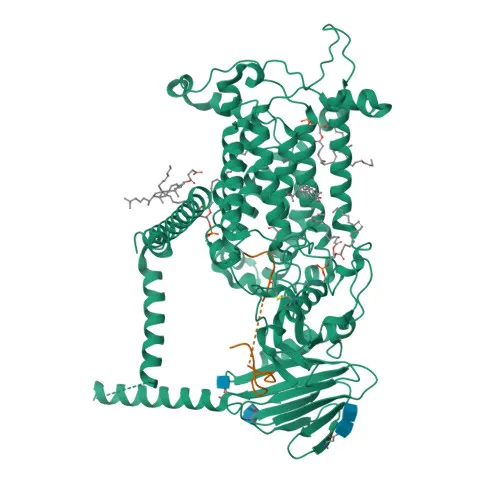
Polyclonal Antibodies
Anti-PROS1 Rabbit Polyclonal Antibody for WB, ELISA - P07225
Item Number : CM0014694
Price varies based on specs and customizations
- Application
- WB, ELISA
- Cross Reactivity
- Human, Mouse, Rat
- Protein Weight
- 75kDa

Shipping:
Contact us to get shipping details Enjoy On-time Dispatch Guarantee.
Why Choose Us
Easy ordering process, quality products, and dedicated support for your business success.
Core Product Specifications and Parameters
| Parameter | Value |
|---|---|
| Product Name | PROS1 Rabbit pAb |
| Remarks/Alias | PSA; PROS; PS21; PS22; PS23; PS24; PS25; THPH5; THPH6; PROS1 |
| Species | Human |
| GeneID (Human) | 5627 |
| GeneID | 5627 |
| Immunogen | Recombinant fusion protein containing a sequence corresponding to amino acids 405-676 of human PROS1 (NP_000304.2) |
| Source | Rabbit |
| Category | Polyclonal Antibodies |
| Application | WB, ELISA |
| Cross Reactivity | Human, Mouse, Rat |
| SWISS | P07225 |
| Protein Weight | 75kDa |
| Shipping | Ice bag |
Biological Background: PROS1 Function and Localization
- Vitamin K-dependent protein S (PROS1) is a secreted plasma protein that functions as a critical anticoagulant cofactor.
- It acts as a cofactor for activated protein C (APC) in the proteolytic degradation of coagulation factors Va and VIIIa, thereby downregulating thrombin generation.
- PROS1 also stimulates fibrinolysis, contributing to the balance between coagulation and clot dissolution.
- The protein is primarily synthesized in the liver and secreted into blood plasma.
- PROS1 contains several structural domains, including a gamma-carboxyglutamic acid (Gla) domain, EGF-like repeats, and a C-terminal sex hormone-binding globulin (SHBG)-like domain.
- Post-translational modifications include vitamin K-dependent gamma-carboxylation of specific glutamic acid residues, which is essential for calcium binding and membrane interaction.
- Mutations in PROS1 are associated with thrombophilia due to protein S deficiency, highlighting its role in hemostasis.
Experimental Guidance and Technical Tips
- The immunogen used to raise this antibody corresponds to amino acids 405–676, mapping to the C-terminal SHBG-like domain of human PROS1. This region is relatively conserved across species, supporting the observed cross-reactivity with mouse and rat.
- In Western blotting, a specific band at approximately 75 kDa is expected under reducing conditions. Pre-adsorption with the immunogen protein may be used to confirm band specificity.
- For ELISA applications, direct or sandwich formats can be employed; however, optimal coating concentration and detection conditions should be empirically determined.
- Given the secreted nature of PROS1, cell lysates may not be the ideal sample type; consider using plasma, serum, or conditioned medium from hepatocyte-derived cell lines.
- When analyzing samples from mouse or rat, validate the antibody's reactivity with appropriate positive controls, as the affinity to non-human species may differ.
CamelBio: Your One-Stop Sourcing Bridge
As a dedicated partner for diagnostic manufacturers and research labs, CamelBio provides reliable access to IVD raw materials like this anti-PROS1 polyclonal antibody. We support coagulation and thrombophilia research with validated antibody pairs, optimized monoclonals, and ancillary reagents. Whether you need bulk quantities, rare target sourcing, or custom conjugation, CamelBio bridges the gap from discovery to diagnostic application.
REQUEST A QUOTE
Our professional team will reply to you within one business day. Please feel free to contact us!