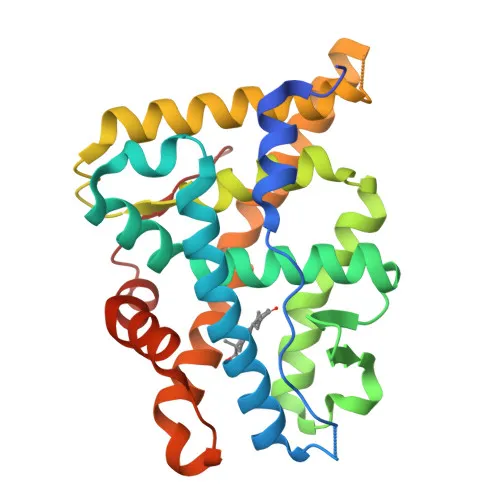
Polyclonal Antibodies
Anti-Progesterone Receptor Rabbit Polyclonal Antibody for WB, IHC-P, ELISA - P06401
Item Number : CM0017355
Price varies based on specs and customizations
- Application
- WB, IHC-P, ELISA
- Cross Reactivity
- Human, Mouse, Rat
- Protein Weight
- 99kDa

Shipping:
Contact us to get shipping details Enjoy On-time Dispatch Guarantee.
Why Choose Us
Easy ordering process, quality products, and dedicated support for your business success.
Core Product Specifications and Parameters
| Parameter | Value |
|---|---|
| Product Name | Progesterone Receptor Rabbit pAb |
| Remarks/Alias | PR; NR3C3; Progesterone Receptor |
| Species | Human |
| Gene ID (Human) | 5241 |
| Gene ID | 5241 |
| Immunogen | Recombinant fusion protein containing a sequence corresponding to amino acids 1-250 of human Progesterone Receptor (NP_000917.3). |
| Source | Rabbit |
| Category | Polyclonal Antibodies |
| Application | WB, IHC-P, ELISA |
| Cross Reactivity | Human, Mouse, Rat |
| SWISS | P06401 |
| Protein Weight | 99kDa |
| Shipping | Ice bag |
Biological Background: Progesterone Receptor Function and Localization
- The progesterone receptor (PR), encoded by the PGR/NR3C3 gene, belongs to the nuclear receptor superfamily and is a ligand-activated transcription factor that regulates target gene expression in response to progesterone.
- PR exists as two major isoforms, PR-A and PR-B, produced via alternative promoter usage and alternative splicing. PR-B contains an additional N-terminal activation function domain (AF3) absent in PR-A, enabling isoform-specific transcriptional outcomes.
- Depending on the isoform, PR functions as a transcriptional activator or repressor. PR-B is generally a stronger activator of progesterone-responsive promoters, while PR-A can act as a transdominant repressor of other steroid hormone receptors, including PR-B, mineralocorticoid receptor (MR), and estrogen receptor (ER).
- Upon hormone stimulation, PR is involved in the activation of SRC-dependent MAPK signaling, linking progesterone action to rapid non-genomic signaling cascades.
- PR has been implicated in mitochondrial function; progesterone-bound PR increases mitochondrial membrane potential and cellular respiration, suggesting a role in energy metabolism.
- Subcellular localization of PR spans the nucleus, cytoplasm, and mitochondrial outer membrane, with dynamic shuttling influenced by hormone binding and post-translational modifications.
- Tissue-specific expression is highly regulated in reproductive tissues: in uterine epithelium, isoform B predominates during the proliferative phase, while isoform A is the major form in the stroma. The balance between PR isoforms is critical for normal menstrual cycle progression and endometrial function.
- PR is subject to multiple post-translational modifications including phosphorylation, palmitoylation, and SUMOylation (ubl conjugation), which modulate its activity, stability, and subcellular trafficking.
Experimental Guidance and Technical Tips
- The immunogen corresponds to amino acids 1–250 of human PR (NP_000917.3), a region that spans the N-terminal domain unique to isoform B and a portion shared with isoform A. While the antibody may recognize both isoforms, consider isoform-specific detection by verifying band patterns (predicted molecular weights: PR-B ~116 kDa, PR-A ~94 kDa; however, observed bands may shift due to modifications) in the relevant sample system.
- For Western blotting, use appropriate positive controls such as T47D or MCF-7 breast cancer cell lines, or uterine/endometrial tissue lysates. The predicted protein weight is 99 kDa based on the UniProt entry, but post-translational modifications and isoform differences can result in multiple bands.
- In immunohistochemistry (paraffin-embedded sections, IHC-P), optimize antigen retrieval and antibody dilution using tissues with known PR expression (e.g., human endometrium, breast carcinoma). Nuclear staining is expected; cytoplasmic or mitochondrial staining may also be observed.
- For ELISA, ensure the coating antigen or capture antibody configuration is compatible with polyclonal detection; validate with recombinant PR protein or cell lysates.
- Cross-reactivity with mouse and rat is reported; however, due to species-specific sequence variations, confirm reactivity in your experimental model.
CamelBio: Your One-Stop Sourcing Bridge
CamelBio is dedicated to supporting diagnostic manufacturers, laboratories, and research institutes by offering a comprehensive portfolio of IVD raw materials, including validated antibody pairs, monoclonal and polyclonal antibodies, bulk ancillary reagents, and rare target sourcing. The progesterone receptor antibody is supplied for research and assay development in reproductive biology, endocrinology, and oncology applications. Whether you need custom scale-up, technical consultation, or seamless transition from concept to clinic, CamelBio provides reliable raw-material supply to accelerate your project.
Product Datasheet
Anti-Progesterone Receptor Rabbit Polyclonal Antibody for WB, IHC-P, ELISA - P06401
REQUEST A QUOTE
Our professional team will reply to you within one business day. Please feel free to contact us!