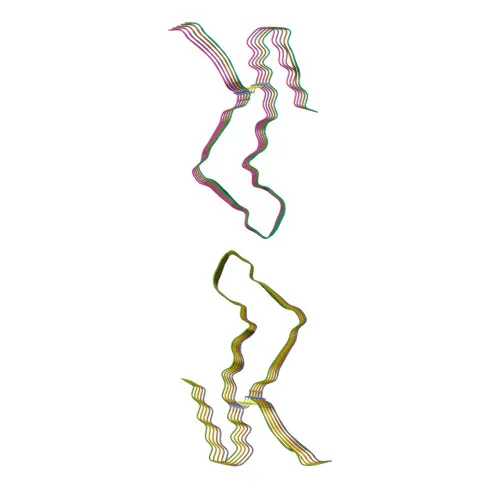
Polyclonal Antibodies
Anti-Prion Protein Rabbit Polyclonal Antibody for WB, ELISA - P04156
Item Number : CM0023536
Price varies based on specs and customizations
- Application
- WB, ELISA
- Cross Reactivity
- Human, Mouse, Rat
- Protein Weight
- 28kDa

Shipping:
Contact us to get shipping details Enjoy On-time Dispatch Guarantee.
Why Choose Us
Easy ordering process, quality products, and dedicated support for your business success.
Core Product Specifications and Parameters
| Parameter | Value |
|---|---|
| Product Name | [KO Validated] Prion Protein Rabbit pAb |
| Remarks/Alias | CJD; GSS; PrP; ASCR; KURU; PRIP; PrPc; CD230; AltPrP; p27-30; PrP27-30; PrP33-35C; in |
| Species | Human |
| GeneID (human) | 5621 |
| GeneID | 5621 |
| Immunogen | Recombinant fusion protein containing a sequence corresponding to amino acids 23-230 of human Prion Protein (NP_001073592.1). |
| Source | Rabbit |
| Category | Polyclonal Antibodies |
| Application | WB, ELISA |
| Cross Reactivity | Human, Mouse, Rat |
| SWISS | P04156 |
| Protein Weight | 28kDa |
| Shipping | Ice bag |
Biological Background: Major prion protein Function and Localization
- Major prion protein (PRNP) is encoded by the PRNP gene and is also known as CD230, PrP, PrPc, ASCR, and other aliases.
- Its physiological function remains unclear, but it may play roles in neuronal development, synaptic plasticity, and myelin sheath maintenance.
- The protein may promote myelin homeostasis by acting as an agonist for the ADGRG6 receptor.
- PRNP may be involved in iron uptake and homeostasis, and soluble oligomers have been shown to be toxic in vitro, inducing apoptosis in neuroblastoma cells.
- Subcellular localization includes the cell membrane and Golgi apparatus, with a GPI-anchor tethering it to lipid rafts.
- The protein binds copper and zinc ions and may participate in metal-dependent processes, including ascorbate-mediated degradation of heparan sulfate chains on GPC1.
- It is a glycoprotein with a disulfide bond and belongs to the prion family; disease-associated isoforms are linked to amyloidosis and neurodegeneration.
- Alternative initiation yields different isoforms, and the protein is subject to proteolytic cleavage, generating fragments like PrP27-30 and PrP33-35C.
Experimental Guidance and Technical Tips
- The immunogen used is a recombinant fragment spanning amino acids 23–230 of human Prion Protein (NP_001073592.1), covering the mature protein after signal peptide cleavage.
- For Western blot, the predicted molecular weight is approximately 28 kDa, but glycosylation and other modifications may result in higher apparent molecular weight bands; validate band patterns in your sample system.
- Given the antibody's reactivity with human, mouse, and rat, it is suitable for cross-species studies; consider validating in your specific model organism.
- ELISA applications may require coating with the recombinant immunogen or native protein; optimize conditions as recommended.
CamelBio: Your One-Stop Sourcing Bridge
CamelBio supports diagnostic manufacturers and research institutes with a comprehensive portfolio of IVD raw materials. For neurodegeneration research, we offer validated antibodies targeting prion protein and related biomarkers, along with optimized antibody pairs and bulk reagents. Our supply chain ensures rapid access to rare and specialized raw materials, accelerating your assay development from concept to clinic.
REQUEST A QUOTE
Our professional team will reply to you within one business day. Please feel free to contact us!
Related Articles
qPCR Primer Design: The Small Decisions That Determine Assay Reliability
A practical guide to qPCR primer design, from amplicon length and 3' stability to validation for efficient, reproducible diagnostics.
Why Minor Groove Binders Turn Short Hydrolysis Probes into Precision Diagnostic Tools
MGB chemistry improves probe stability, SNP discrimination, signal-to-noise ratio, and low-copy detection in demanding molecular assays.
The Signal You Lose Before the qPCR Run Begins: A Practical System for Protecting Primers and Fluorogenic Probes
Learn how aliquoting, dark storage, controlled thawing, and buffer choice protect qPCR fluorescence, Cq reproducibility, and assay sensitivity.
qPCR Efficiency: The Mathematical Foundation of Reliable Molecular Diagnostics
Learn how qPCR efficiency is calculated, why the 90–100% range matters, and how it protects diagnostic accuracy, sensitivity, and compliance.