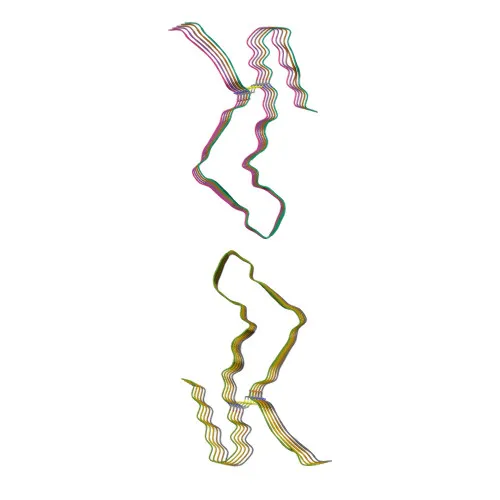
Monoclonal Antibodies
Anti-Prion Protein Monoclonal Antibody for WB, ELISA - P04156
Item Number : CM0008615
Price varies based on specs and customizations
- Application
- WB, ELISA
- Cross Reactivity
- Mouse, Rat
- Protein Weight
- 28kDa

Shipping:
Contact us to get shipping details Enjoy On-time Dispatch Guarantee.
Why Choose Us
Easy ordering process, quality products, and dedicated support for your business success.
Core Product Specifications and Parameters
| Parameter | Value |
|---|---|
| Product Name | Prion Protein Rabbit mAb |
| Remarks/Alias | CJD; GSS; PrP; ASCR; KURU; PRIP; PrPc; CD230; AltPrP; p27-30; PrP27-30; PrP33-35C; Prion Protein |
| Species | Human |
| Gene ID (Human) | 5621 |
| Immunogen | Synthetic Peptide: A synthetic peptide corresponding to a sequence within amino acids 154-253 of human Prion Protein (P04156). |
| Source | Rabbit |
| Category | Monoclonal Antibodies |
| Application | WB, ELISA |
| Cross Reactivity | Mouse, Rat |
| SWISS | P04156 |
| Protein Weight | 28kDa |
| Shipping | Ice bag |
Biological Background: Prion Protein Function and Localization
- Major prion protein (PrP), also known as PrPc, CD230, and prion protein (PrP27-30, PrP33-35C), is encoded by the PRNP gene in humans. It exists in multiple isoforms due to alternative initiation.
- PrP is anchored to the outer leaflet of the cell membrane via a glycosylphosphatidylinositol (GPI) anchor and is also localized to the Golgi apparatus.
- The physiological function of PrP is not fully understood, but it may contribute to neuronal development and synaptic plasticity, and is required for neuronal myelin sheath maintenance.
- PrP may promote myelin homeostasis by acting as an agonist for the ADGRG6 receptor, and it may also play a role in iron uptake and homeostasis.
- Soluble oligomers of PrP can be toxic to neuroblastoma cells and induce apoptosis in vitro, suggesting a role in neurodegeneration under pathological conditions.
- PrP undergoes key post-translational modifications, including N-linked glycosylation, disulfide bond formation, and copper/zinc binding, which are important for its structure and function.
- The protein is associated with several neurodegenerative diseases known as prion diseases or transmissible spongiform encephalopathies (e.g., Creutzfeldt-Jakob disease, Gerstmann-Sträussler-Scheinker syndrome, fatal familial insomnia, and kuru).
Experimental Guidance and Technical Tips
- The immunogen used is a synthetic peptide corresponding to the C-terminal region (amino acids 154-253) of human PrP, which encompasses part of the proteinase K-resistant core (PrP27-30). This region is conserved across species, supporting the observed cross-reactivity with mouse and rat.
- In Western blot (WB) analysis, the antibody is expected to detect a band at approximately 28 kDa for the unglycosylated monomer; however, due to glycosylation, additional bands at higher molecular weights (e.g., 35-40 kDa) may be observed. For accurate interpretation, consider deglycosylation or compare with known glycosylation patterns.
- For ELISA applications, ensure proper coating and blocking conditions, and validate the antibody's performance with relevant positive and negative controls in your specific sample matrix.
- Given the antibody’s ability to recognize the conserved C-terminal domain, it may detect both normal cellular PrP (PrPc) and disease-associated scrapie isoforms (PrPSc). For discrimination between these forms, proteinase K treatment prior to WB or specific conformational antibodies may be necessary.
CamelBio: Your One-Stop Sourcing Bridge
CamelBio provides diagnostic manufacturers, laboratories, and research institutes with one-stop access to IVD raw materials, technical services, and consulting—covering every stage from concept to clinic. This anti-Prion Protein monoclonal antibody is well suited for neurodegenerative disease research and prion detection assay development. As your sourcing partner, we can supply validated antibody pairs, optimized monoclonal/polyclonal antibodies, bulk ancillary reagents, and assist with rare target raw-material sourcing to accelerate your IVD project.
REQUEST A QUOTE
Our professional team will reply to you within one business day. Please feel free to contact us!