Polyclonal Antibodies
Anti-Prdm9 Polyclonal Antibody for IF-P, ELISA - Q96EQ9
Item Number : CM0024664
Price varies based on specs and customizations
- Application
- IF-P, ELISA
- Cross Reactivity
- Mouse, Rat
- Protein Weight
- 97kDa

Shipping:
Contact us to get shipping details Enjoy On-time Dispatch Guarantee.
Why Choose Us
Easy ordering process, quality products, and dedicated support for your business success.
Core Product Specifications and Parameters
| Parameter | Specification |
|---|---|
| Product Name | Prdm9 Rabbit pAb |
| Remarks/Alias | Rcr1; Dsbc1; repro7; Meisetz; PRDM9-B; G1-419-29; Prdm9 |
| Species | Mouse |
| GeneID | 213389 |
| Immunogen | Recombinant fusion protein containing a sequence corresponding to amino acids 87-370 of mouse Prdm9 (NP_659058.3) |
| Source | Rabbit |
| Category | Polyclonal Antibodies |
| Application | IF-P, ELISA |
| Cross Reactivity | Mouse, Rat |
| SWISS | Q96EQ9 |
| Protein Weight | 97kDa |
| Shipping | Ice bag |
Biological Background: Prdm9 Function and Localization
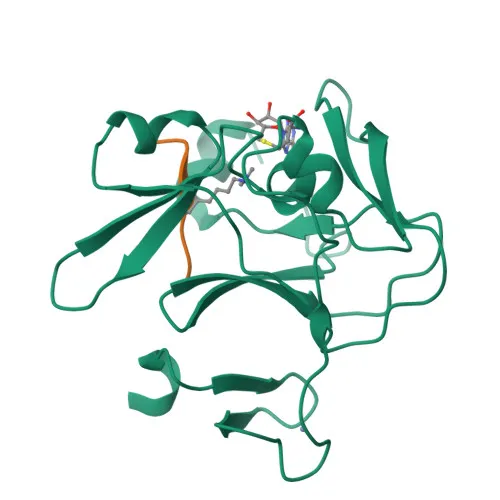
- PRDM9 (PR domain-containing protein 9) is a meiosis-specific histone methyltransferase, also known as Meisetz, which contains a PR/SET domain and multiple zinc-finger motifs.
- It sequentially mono-, di-, and tri-methylates histone H3 at lysine-4 (H3K4me3) and lysine-36 (H3K36me3) on the same nucleosomes, thereby marking meiotic recombination hotspots. Related references: PMID:16292313 PMID:24095733 PMID:24785241
- PRDM9 binds specific DNA sequences via its zinc-finger domains to determine hotspot localization and promotes double-strand break formation, essential for proper meiotic progression.
- It is specifically expressed in germ cells entering meiotic prophase in female fetal gonads and postnatal testis, and localizes to the nucleus and chromosomes. Related references: PMID:16292313 PMID:27932493
- The enzyme can also mono- and di-methylate histone H4 at lysine-20 and tri-methylate H3K9, with histone H3 being the most highly modified substrate. Related references: PMID:24785241 PMID:27362481
- PRDM9 interacts with several complexes during meiotic progression, including CDYL-EHMT2, EWSR1, and CXXC1, linking it to the chromosomal axis and influencing DSB repair and homologous pairing. Related references: PMID:27932493 PMID:25894966
- Automethylation and attenuation of its activity by histone H3 acetylation or phosphorylation represent additional regulatory layers. Related references: PMID:28126738 PMID:27362481
Experimental Guidance and Technical Tips
- The immunogen corresponds to the N-terminal region (residues 87–370) of mouse Prdm9, which includes the PR/SET domain and flanking sequences involved in methyltransferase activity and substrate recognition.
- For immunoprecipitation (IF-P) and ELISA, consider using appropriate positive controls (e.g., mouse testis lysates or cell lines expressing Prdm9) and validate specificity in the relevant sample system.
- Due to the zinc-finger domain variability among species, confirm cross-reactivity for species other than mouse and rat experimentally.
CamelBio: Your One-Stop Sourcing Bridge
CamelBio provides diagnostic manufacturers, labs, and research institutes with one-stop access to validated raw materials for IVD development. For targets like PRDM9, which is central to reproductive biology and meiotic recombination studies, we supply optimized polyclonal and monoclonal antibodies, antibody pairs, and bulk ancillary reagents. From rare target sourcing to scale-up, CamelBio bridges your concept-to-clinic needs with reliable procurement support.
REQUEST A QUOTE
Our professional team will reply to you within one business day. Please feel free to contact us!