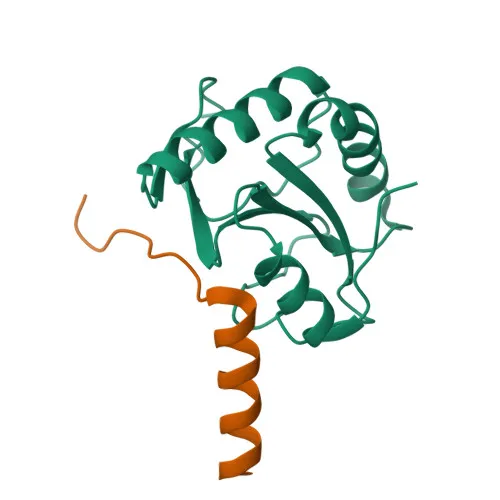
Polyclonal Antibodies
Anti-PQBP1 Rabbit Polyclonal Antibody for WB and ELISA - O60828
Item Number : CM0027563
Price varies based on specs and customizations
- Application
- WB, ELISA
- Cross Reactivity
- Human, Mouse, Rat
- Protein Weight
- 30kDa

Shipping:
Contact us to get shipping details Enjoy On-time Dispatch Guarantee.
Why Choose Us
Easy ordering process, quality products, and dedicated support for your business success.
Core Product Specifications and Parameters
| Parameter | Value |
|---|---|
| Product Name | PQBP1 Rabbit pAb |
| Remarks/Alias | SHS; MRX2; MRX55; MRXS3; MRXS8; NPW38; RENS1; PQBP1 |
| Species | Human |
| GeneID | 10084 (Human) |
| Immunogen | Recombinant fusion protein containing a sequence corresponding to amino acids 1-265 of human PQBP1 (NP_005701.1) |
| Source | Rabbit |
| Category | Polyclonal Antibodies |
| Application | WB, ELISA |
| Cross Reactivity | Human, Mouse, Rat |
| SWISS | O60828 |
| Protein Weight | 30kDa |
| Shipping | Ice bag |
Biological Background: PQBP1 Function and Localization
- PQBP1 is a multifunctional intrinsically disordered scaffold protein implicated in pre‑mRNA splicing, transcription regulation, innate immunity, and neuronal development.
- Through its disordered region, PQBP1 binds splicing factors and modulates alternative splicing of target pre‑mRNAs, influencing gene expression patterns. Related references: PMID:10332029, PMID:12062018, PMID:20410308
- PQBP1 can activate transcription directly or via association with the transcription machinery; it also suppresses POU3F2‑mediated transactivation of the DRD1 gene. Related references: PMID:10198427
- The protein acts as a cytosolic innate immune sensor of retroviruses by directly binding reverse‑transcribed DNA and activating the cGAS‑STING pathway to induce type‑I interferon. Related references: PMID:26046437
- PQBP1 may contribute to ATXN1 mutant‑induced cell death by reducing levels of phosphorylated RNA polymerase II large subunit. Related references: PMID:12062018
- It localizes predominantly to the nucleus and nuclear speckles, but can also be found in cytoplasmic stress granules, consistent with its roles in RNA metabolism and stress responses.
- Widely expressed across human tissues, with the highest levels in heart, skeletal muscle, pancreas, spleen, thymus, prostate, ovary, small intestine, and peripheral blood leukocytes; mutations cause X‑linked intellectual disability (Renpenning syndrome).
Experimental Guidance and Technical Tips
- The immunogen spans the N‑terminal 265 amino acids of human PQBP1; cross‑reactivity with mouse and rat suggests conserved epitopes that may broadly detect PQBP1 orthologs.
- For Western blotting, a band near 30 kDa is expected; consider validating antibody specificity using knockout or knockdown controls in your sample system.
- For ELISA, the antibody can be titrated against recombinant PQBP1 protein or native cell lysates; performance should be confirmed under your specific assay conditions.
- Because PQBP1 is involved in stress granule assembly, consider testing its localization under various cellular stress conditions if performing immunocytochemistry.
CamelBio: Your One-Stop Sourcing Bridge
CamelBio provides a one‑stop sourcing platform for IVD raw materials, supporting diagnostic manufacturers and researchers with validated antibodies and ancillary reagents for transcription, splicing, and innate immunity targets like PQBP1. Whether your program requires bulk polyclonal antibodies, optimized matched pairs, or assistance with rare‑target reagent development, our dedicated supply chain is positioned to help bridge your diagnostic needs from concept to clinic.
REQUEST A QUOTE
Our professional team will reply to you within one business day. Please feel free to contact us!