Polyclonal Antibodies
Anti-PPP1R13L Rabbit Polyclonal Antibody for WB, ELISA - Q8WUF5
Item Number : CM0014614
Price varies based on specs and customizations
- Application
- WB, ELISA
- Cross Reactivity
- Human
- Protein Weight
- 89kDa

Shipping:
Contact us to get shipping details Enjoy On-time Dispatch Guarantee.
Why Choose Us
Easy ordering process, quality products, and dedicated support for your business success.
Core Product Specifications and Parameters
| Parameter | Value |
|---|---|
| Product Name | PPP1R13L Rabbit pAb |
| Remarks/Alias | RAI; RAI4; IASPP; NKIP1; PPP1R13L |
| Species | Human |
| GeneID (Human) | 10848 |
| Immunogen | Recombinant fusion protein containing a sequence corresponding to amino acids 589-828 of human PPP1R13L (NP_006654.2) |
| Source | Rabbit |
| Category | Polyclonal Antibodies |
| Application | WB, ELISA |
| Cross Reactivity | Human |
| SWISS | Q8WUF5 |
| Protein Weight | 89kDa |
| Shipping | Ice bag |
Biological Background: PPP1R13L Function and Localization
- PPP1R13L, also known as iASPP, RAI, or NKIP1, is an inhibitor of ASPP proteins and a RelA-associated factor.
- It functions as a central regulator of apoptosis and transcription by interacting with NF-kappa-B and p53/TP53 proteins (PubMed:12524540). Related references: PMID:12524540
- PPP1R13L blocks HIV-1 virus transcription by inhibiting the action of NF-kappa-B and SP1 (PubMed:12524540). Related references: PMID:12524540
- The protein suppresses p53/TP53-mediated apoptosis, likely by preventing association between p53/TP53 and ASPP1 or ASPP2 (PubMed:12524540). Related references: PMID:12524540
- It is involved in NF-kappa-B-dependent negative regulation of inflammatory response (PubMed:28069640). Related references: PMID:28069640
- Subcellular localization includes both cytoplasm and nucleus.
- Tissue expression is highest in heart, placenta, and prostate, with weaker expression in brain, liver, skeletal muscle, testis, and peripheral blood leukocytes.
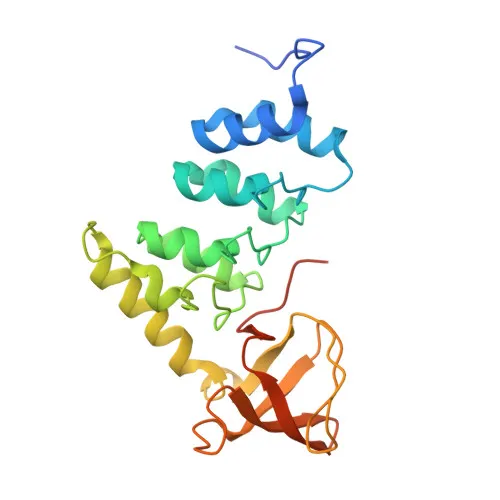
- Post-translational modifications include phosphorylation, acetylation, and methylation; the protein contains ANK repeats and an SH3 domain.
Experimental Guidance and Technical Tips
- The immunogen corresponds to the C-terminal region (amino acids 589-828) of human PPP1R13L; consider that epitope recognition may be influenced by protein conformation or post-translational modifications.
- For Western blotting, a band at approximately 89 kDa is expected. Validate antibody performance using relevant human cell lines (e.g., HeLa, HEK293) or tissues with high PPP1R13L expression, such as heart or placenta.
- For ELISA, optimize coating antigen and detection conditions; the antibody may detect recombinant or endogenous PPP1R13L depending on assay design.
- Cross-reactivity with species other than human has not been determined; if using samples from other species, perform validation experiments.
- PPP1R13L contains functional domains (ANK repeats, SH3 domain); for functional studies, evaluate whether antibody binding interferes with these domains.
CamelBio: Your One-Stop Sourcing Bridge
CamelBio serves as a comprehensive one-stop sourcing partner for IVD raw materials, supporting diagnostic manufacturers and research laboratories from early-stage development to clinical deployment. This anti-PPP1R13L polyclonal antibody is part of our broad portfolio targeting apoptosis, transcription regulation, and inflammatory pathways. Beyond individual antibodies, we supply validated antibody pairs, optimized monoclonal/polyclonal reagents, bulk ancillary materials, and offer tailored sourcing for rare-target raw materials to streamline your assay development and manufacturing workflows.
REQUEST A QUOTE
Our professional team will reply to you within one business day. Please feel free to contact us!