Polyclonal Antibodies
Anti-PPARγ Rabbit Polyclonal Antibody for IHC-P, IF/ICC, ELISA - P37231
Item Number : CM0013399
Price varies based on specs and customizations
- Application
- IHC-P, IF/ICC, ELISA
- Cross Reactivity
- Human, Mouse, Rat
- Protein Weight
- 58kDa

Shipping:
Contact us to get shipping details Enjoy On-time Dispatch Guarantee.
Why Choose Us
Easy ordering process, quality products, and dedicated support for your business success.
Core Product Specifications and Parameters
| Parameter | Value |
|---|---|
| Product Name | PPARγ Rabbit pAb |
| Remarks/Alias | GLM1; CIMT1; NR1C3; PPARG1; PPARG2; PPARG5; PPARgamma; PPARγ |
| Species | Human |
| GeneID (human) | 5468 |
| GeneID | 5468 |
| Immunogen | Synthetic peptide: A synthetic peptide corresponding to a sequence within amino acids 100-200 of human PPARγ (NP_056953.2) |
| Source | Rabbit |
| Category | Polyclonal Antibodies |
| Application | IHC-P, IF/ICC, ELISA |
| Cross Reactivity | Human, Mouse, Rat |
| SWISS | P37231 |
| Protein Weight | 58kDa |
| Shipping | Ice bag |
Biological Background: PPARγ Function and Localization
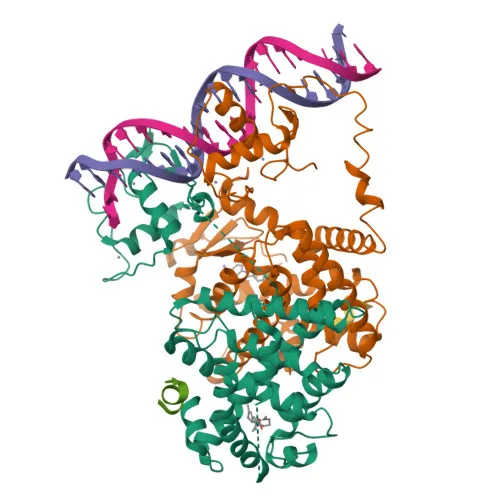
- Peroxisome proliferator-activated receptor gamma (PPARγ) is a ligand-activated transcription factor that forms obligate heterodimers with retinoic acid receptor; plays a central role in adipocyte differentiation, lipid metabolism, glucose homeostasis, and fatty acid beta-oxidation. Related references: PMID:16150867 PMID:20829347 PMID:23525231
- Acts as a key determinant of adipocyte development, driving differentiation of white, beige, and brown adipocytes; cooperates with RXRA to regulate the tissue-specific adipocyte P2 enhancer.
- Binds peroxisome proliferators (e.g., hypolipidemic drugs) and endogenous lipid ligands such as 15-deoxy-delta12,14-prostaglandin J2, leading to conformational changes, corepressor dissociation, coactivator recruitment, and target gene activation.
- Specifically binds DNA PPAR response elements (PPRE) to modulate transcription of target genes like acyl-CoA oxidase; suppresses NF-kappa-B-mediated pro-inflammatory responses, crucial for gut homeostasis.
- Subcellular localization: predominantly nuclear, also reported in cytoplasm; found in adipose tissue (highest expression), skeletal muscle, spleen, heart, liver, placenta, lung, and ovary.
- Subject to post-translational modifications including glycosylation, phosphorylation, isopeptide bond formation, and ubiquitin-like conjugation; contains zinc-finger domains for DNA binding.
- Involved in regulation of cardiovascular circadian rhythms by modulating BMAL1 transcription in blood vessels.
Experimental Guidance and Technical Tips
- The immunogen is a synthetic peptide spanning amino acids 100–200 of human PPARγ; consider validating antibody specificity in your target sample system.
- For IHC-P, antigen retrieval protocols may be required; optimize conditions based on tissue type and fixation method.
- In IF/ICC, appropriate fixation and permeabilization steps are critical; pilot experiments are recommended to determine optimal working dilutions.
- For ELISA, the antibody may serve as detection or capture reagent; pairing with other clones and validation of assay conditions are advised.
- Cross-reactivity with mouse and rat allows translational studies in rodent models; confirm reactivity in the chosen model.
CamelBio: Your One-Stop Sourcing Bridge
CamelBio provides diagnostic manufacturers, laboratories, and research institutes with end-to-end access to IVD raw materials, technical services, and consulting—from concept to clinic. This high-quality anti-PPARγ polyclonal antibody exemplifies our supply capabilities in nuclear receptor and metabolic disease targets. We offer validated antibody pairs, optimized monoclonal/polyclonal antibodies, bulk ancillary reagents, and rare target raw-material sourcing to accelerate your assay development and production needs.
Product Datasheet
Anti-PPARγ Rabbit Polyclonal Antibody for IHC-P, IF/ICC, ELISA - P37231
REQUEST A QUOTE
Our professional team will reply to you within one business day. Please feel free to contact us!