Monoclonal Antibodies
Anti-PPARα Rabbit Monoclonal Antibody for WB and ELISA - Q07869
Item Number : CM0011647
Price varies based on specs and customizations
- Application
- WB, ELISA
- Cross Reactivity
- Mouse, Rat
- Protein Weight
- 52kDa

Shipping:
Contact us to get shipping details Enjoy On-time Dispatch Guarantee.
Why Choose Us
Easy ordering process, quality products, and dedicated support for your business success.
Core Product Specifications and Parameters
| Parameter | Value |
|---|---|
| Product Name | PPARα Rabbit mAb |
| Remarks/Alias | PPAR; NR1C1; hPPAR; PPARalpha; PPAR-alpha; PPARα |
| Species | Human |
| GeneID (Human) | 5465 |
| GeneID | 5465 |
| Immunogen | Synthetic peptide |
| Source | Rabbit |
| Category | Monoclonal Antibodies |
| Application | WB, ELISA |
| Cross Reactivity | Mouse, Rat |
| SWISS | Q07869 |
| Protein Weight | 52kDa |
| Shipping | Ice bag |
Biological Background: PPARα Function and Localization
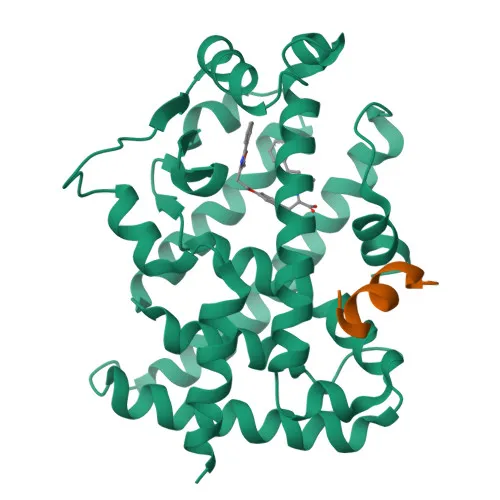
- Peroxisome proliferator-activated receptor alpha (PPARα), also known as nuclear receptor subfamily 1 group C member 1 (NR1C1), is a ligand-activated transcription factor and nuclear receptor.
- PPARα serves as a key regulator of lipid metabolism, controlling the expression of genes involved in peroxisomal beta-oxidation of fatty acids, such as ACOX1 and P450.
- The receptor is activated by endogenous ligands, including 1-palmitoyl-2-oleoyl-sn-glycerol-3-phosphocholine (16:0/18:1-GPC) and oleoylethanolamide, as well as by hypolipidemic drugs like fibrates.
- Its transactivation activity requires heterodimerization with retinoid X receptor alpha (RXRA) and is antagonized by nuclear receptor subfamily 2 group C member 2 (NR2C2).
- PPARα may link circadian clock signals to metabolic pathways through interaction with period circadian regulator 2 (PER2).
- The protein is predominantly localized in the nucleus and is highly expressed in metabolically active tissues, including skeletal muscle, liver, heart, and kidney, and is also detected in monocytes. Related references: PMID:28167758
- PPARα contains zinc-finger domains that facilitate DNA binding and participates in metal-ion coordination, reflecting its classification as a DNA-binding, metal-binding, and transcription-regulating factor.
Experimental Guidance and Technical Tips
- For Western blot (WB) analysis, the predicted molecular weight of human PPARα is approximately 52 kDa; select an appropriate gel percentage and transfer conditions, and validate detection in relevant lysates such as HepG2 cells or mouse liver tissue.
- When using this antibody in ELISA, consider titrating the antibody and using a matched detection system; the synthetic peptide immunogen may aid in competitive assay designs.
- Since this monoclonal antibody cross-reacts with mouse and rat PPARα, it is suitable for translational studies in rodent models; however, standard validation in each species is recommended.
- The monoclonal nature of this antibody generally ensures high lot-to-lot consistency, but always include positive and negative controls in your experiments.
CamelBio: Your One-Stop Sourcing Bridge
CamelBio offers a comprehensive one-stop sourcing platform for IVD raw materials, supporting diagnostic manufacturers and research laboratories worldwide. As illustrated by this high-quality PPARα rabbit monoclonal antibody, we supply validated antibody pairs, optimized monoclonals, bulk ancillary reagents, and rare target sourcing to accelerate your lipid metabolism and nuclear receptor projects. From concept to clinic, CamelBio bridges the gap between your research needs and reliable raw-material supply.
REQUEST A QUOTE
Our professional team will reply to you within one business day. Please feel free to contact us!