Polyclonal Antibodies
Anti-PPAN Rabbit Polyclonal Antibody for WB, IHC-P, IF/ICC, ELISA - Q9NQ55
Item Number : CM0029719
Price varies based on specs and customizations
- Application
- WB, IHC-P, IF/ICC, ELISA
- Cross Reactivity
- Human, Mouse
- Protein Weight
- 53kDa

Shipping:
Contact us to get shipping details Enjoy On-time Dispatch Guarantee.
Why Choose Us
Easy ordering process, quality products, and dedicated support for your business success.
Core Product Specifications and Parameters
| Parameter | Value |
|---|---|
| Product Name | PPAN Rabbit pAb |
| Remarks/Alias | SSF; SSF1; SSF2; BXDC3; SSF-1; PPAN |
| Species | Human |
| Gene ID (Human) | 56342 |
| Gene ID | 56342 |
| Immunogen | Recombinant protein|Recombinant fusion protein containing a sequence corresponding to amino acids 1-300 of human PPAN (NP_064615.3). |
| Source | Rabbit |
| Category | Polyclonal Antibodies |
| Application | WB, IHC-P, IF/ICC, ELISA |
| Cross Reactivity | Human, Mouse |
| SWISS | Q9NQ55 |
| Protein Weight | 53kDa |
| Shipping | Ice bag |
Biological Background: PPAN Function and Localization
- PPAN (Suppressor of SWI4 1 homolog, also known as Brix domain-containing protein 3 or Peter Pan homolog) is encoded by the PPAN gene (alias BXDC3, SSF1).
- It localizes to the nucleus, specifically the nucleolus, suggesting involvement in ribosome biogenesis or nucleolar processes.
- The protein is widely expressed across human tissues.
- May have a role in cell growth, though its precise molecular function is not fully characterized.
- PPAN undergoes phosphorylation and acetylation, indicating regulation by post-translational modifications.
- Alternative splicing generates multiple transcript variants, potentially yielding protein isoforms with distinct properties.
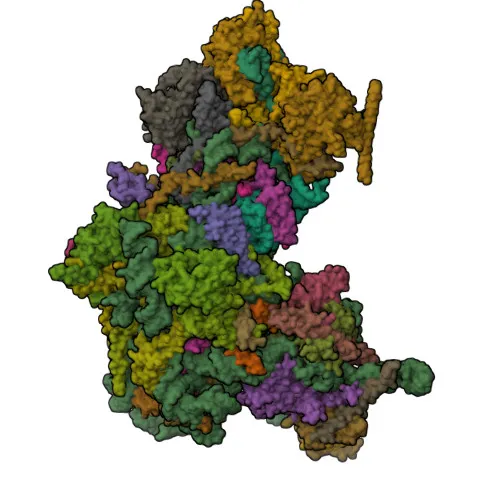
- The three-dimensional structure of PPAN has been solved, contributing to structural biology databases.
- It is part of the human reference proteome, reflecting its significance in proteomic studies.
Experimental Guidance and Technical Tips
- The immunogen corresponds to the N-terminal region (amino acids 1-300) of human PPAN. This region may target conserved functional domains; consider validating specificity if cross-reactivity with mouse is critical.
- For western blotting (WB), the predicted molecular weight is approximately 53 kDa. Verify the band size in your sample system, as post-translational modifications or alternative splicing may shift migration.
- In immunofluorescence (IF/ICC), anticipate nucleolar staining. Appropriate fixation and permeabilization conditions should be optimized to preserve nucleolar morphology.
- For immunohistochemistry (IHC-P), test antigen retrieval methods on positive control tissues known to express PPAN (e.g., widely expressed tissues).
- The antibody is recommended for ELISA; however, appropriate coating and detection conditions should be determined experimentally.
CamelBio: Your One-Stop Sourcing Bridge
CamelBio is a dedicated IVD raw-material partner providing one-stop access to validated antibodies, bulk reagents, and custom sourcing for diagnostic development. Complementing this anti-PPAN polyclonal antibody—ideal for studying cell growth and nucleolar biology—we offer optimized monoclonal and polyclonal formats, matched antibody pairs, and ancillary reagents to accelerate your assay development and scale-up. Our team can also source rare or emerging targets, ensuring a seamless supply chain from concept to clinic.
Product Datasheet
Anti-PPAN Rabbit Polyclonal Antibody for WB, IHC-P, IF/ICC, ELISA - Q9NQ55
REQUEST A QUOTE
Our professional team will reply to you within one business day. Please feel free to contact us!