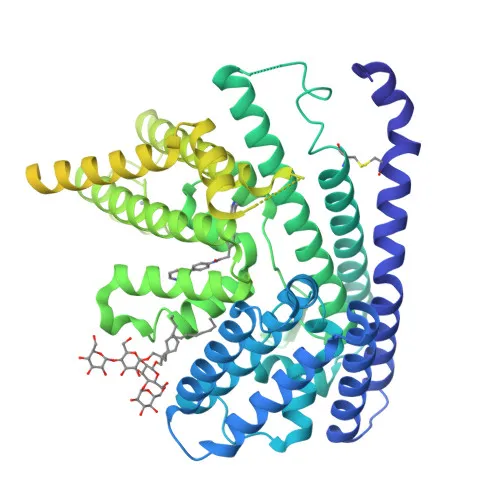
Polyclonal Antibodies
Anti-PORCN Rabbit Polyclonal Antibody for WB and ELISA - Q9H237
Item Number : CM0015662
Price varies based on specs and customizations
- Application
- WB, ELISA
- Cross Reactivity
- Mouse, Rat
- Protein Weight
- 52kDa

Shipping:
Contact us to get shipping details Enjoy On-time Dispatch Guarantee.
Why Choose Us
Easy ordering process, quality products, and dedicated support for your business success.
Core Product Specifications and Parameters
| Parameter | Value |
|---|---|
| Product Name | PORCN Rabbit pAb |
| Remarks/Alias | PPN; DHOF; FODH; MG61; PORC; PORCN |
| Species | Human |
| Gene ID (Human) | 64840 |
| Gene ID | 64840 |
| Immunogen | Recombinant fusion protein containing a sequence corresponding to amino acids 220-320 of human PORCN (NP_982299.1) |
| Source | Rabbit |
| Category | Polyclonal Antibodies |
| Application | WB, ELISA |
| Cross Reactivity | Mouse, Rat |
| SWISS | Q9H237 |
| Protein Weight | 52kDa |
| Shipping | Ice bag |
Biological Background: PORCN Function and Localization
- PORCN, also known as Protein-serine O-palmitoleoyltransferase porcupine or Protein MG61, is encoded by the PORCN gene (also designated MG61, PORC, PPN) in humans.
- PORCN serves as a key regulator of the canonical Wnt signaling pathway by catalyzing the attachment of palmitoleate (a 16-carbon monounsaturated fatty acid) to Wnt proteins, which is essential for their secretion and receptor binding.
- As an acyltransferase, PORCN belongs to the membrane-bound O-acyltransferase family and contains multiple transmembrane helices, anchoring it to organelle membranes.
- PORCN localizes specifically to the endoplasmic reticulum membrane, where it modifies Wnt ligands prior to their trafficking and release.
- Multiple PORCN isoforms exist due to alternative splicing, with isoform 1 prominently expressed in fetal and adult brain regions, heart, skeletal muscle, and testis, while isoform 4 is detected in a different set of tissues including kidney, liver, lung, and spleen.
- Mutations in PORCN are associated with focal dermal hypoplasia (Goltz syndrome), highlighting its critical role in development and linking it to the disease variant keyword.
Experimental Guidance and Technical Tips
- Given the immunogen corresponds to amino acids 220-320 of human PORCN, this antibody may recognize a sequence within the C-terminal region of the protein; for western blotting, consider using reducing conditions and a positive control lysate from tissues with high PORCN expression such as testis or brain.
- For ELISA applications, we recommend optimizing coating antigen concentration and antibody dilution in a checkerboard titration, and validating specificity using recombinant PORCN protein or peptide blocking.
- Since PORCN is a low-abundance transmembrane protein, enrichment of membrane fractions or immunoprecipitation prior to WB may improve detection sensitivity.
- Cross-reactivity with mouse and rat PORCN has been indicated; however, we advise confirming reactivity in your specific experimental system due to potential epitope variability.
CamelBio: Your One-Stop Sourcing Bridge
CamelBio empowers diagnostic manufacturers and research institutions by providing a comprehensive portfolio of IVD raw materials, including validated antibody pairs, optimized monoclonal and polyclonal antibodies, and specialized reagents for Wnt signaling and beyond. This anti-PORCN polyclonal antibody exemplifies our commitment to supporting critical pathway analysis and assay development. As a one-stop sourcing bridge, we streamline the procurement of rare-target raw materials and ancillary reagents, enabling seamless transition from concept to clinical application.
REQUEST A QUOTE
Our professional team will reply to you within one business day. Please feel free to contact us!