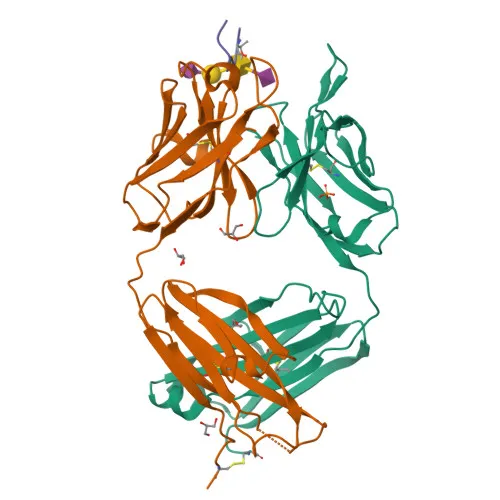
Monoclonal Antibodies
Anti-Podoplanin Rabbit Monoclonal Antibody for WB, ELISA - Q86YL7
Item Number : CM0005206
Price varies based on specs and customizations
- Application
- WB, ELISA
- Cross Reactivity
- Human, Mouse, Rat
- Protein Weight
- 17 kDa

Shipping:
Contact us to get shipping details Enjoy On-time Dispatch Guarantee.
Why Choose Us
Easy ordering process, quality products, and dedicated support for your business success.
Core Product Specifications and Parameters
| Parameter | Specification |
|---|---|
| Product Name | Podoplanin Rabbit mAb |
| Remarks/Alias | T1A; GP36; GP40; Gp38; OTS8; T1A2; TI1A; D2-40; T1A-2; AGGRUS; HT1A-1; PA2.26; Podoplanin |
| Species | Human |
| GeneID (human) | 10630 |
| GeneID | 10630 |
| Immunogen | Synthetic Peptide|A synthetic peptide corresponding to a sequence within amino acids 63-162 of human Podoplanin (Q86YL7). |
| Source | Rabbit |
| Category | Monoclonal Antibodies |
| Application | WB, ELISA |
| Cross Reactivity | Human, Mouse, Rat |
| SWISS | Q86YL7 |
| Protein Weight | 17 kDa |
| Shipping | Ice bag |
Biological Background: Podoplanin Function and Localization
- Podoplanin (also known as Aggrus, Gp36, PA2.26 antigen, T1-alpha) is a transmembrane glycoprotein encoded by the PDPN gene; alternative splicing generates multiple isoforms.
- It mediates cell migration and adhesion through various binding partners, playing critical roles in development and disease.
- During development, podoplanin binding to CLEC1B triggers platelet activation, which is essential for blood-lymphatic vessel separation. Related references: PMID:14522983 | PMID:15231832 | PMID:17222411
- Interaction with CD9 attenuates podoplanin-induced platelet aggregation, providing negative regulation. Related references: PMID:18541721
- Podoplanin promotes epithelial-mesenchymal transition (EMT) via MSN/EZR interaction, leading to RHOA activation and increased cell invasiveness. Related references: PMID:17046996 | PMID:21376833
- Podoplanin interaction with CD44 enhances directional cell migration in epithelial and tumor cells. Related references: PMID:20962267
- Podoplanin localizes to the plasma membrane and specialized structures like lamellipodia, filopodia, microvilli, ruffles, membrane rafts, and invadopodia; it is also found in the cytoplasm.
- Tissue specificity: highly expressed in placenta, lung, skeletal muscle, and brain; weakly in kidney and liver. Up-regulated in colorectal tumors and early oral squamous cell carcinomas.
Experimental Guidance and Technical Tips
- The immunogen corresponds to amino acids 63–162 of human Podoplanin (UniProt Q86YL7). Consider this region when designing epitope mapping or competitive assays.
- This antibody is indicated for Western blot (WB) and ELISA. Optimize detection conditions (e.g., blocking, antibody dilution) for your specific sample matrix.
- Given post-translational modifications (e.g., glycosylation) and reported molecular weights, validate the observed band at ~17 kDa in your target cell lines or tissues.
- Cross-reactivity with mouse and rat orthologs suggests utility in common model organisms, but confirm specificity in the relevant species.
CamelBio: Your One-Stop Sourcing Bridge
CamelBio is your dedicated partner in IVD raw material procurement, offering a comprehensive portfolio of validated antibody pairs, monoclonals, polyclonals, antigens, and ancillary reagents. For podoplanin and related cancer or developmental research targets, we provide ready-to-use, optimized antibodies and can source rare or custom raw materials to support your diagnostic assay development—from concept to clinic. Let CamelBio streamline your supply chain so you can focus on innovation.
REQUEST A QUOTE
Our professional team will reply to you within one business day. Please feel free to contact us!