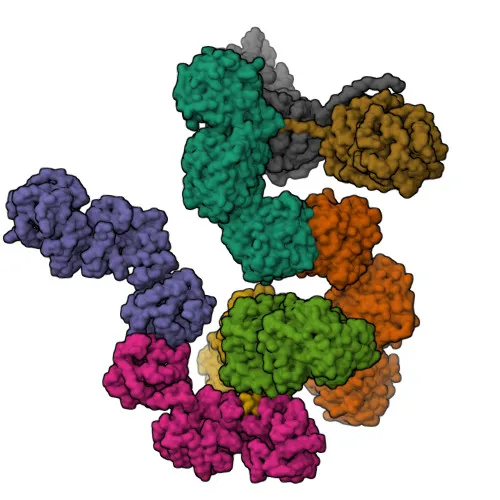
Polyclonal Antibodies
Anti-PLOD3 Rabbit Polyclonal Antibody for WB, IHC-P, IF/ICC, ELISA - O60568
Item Number : CM0017036
Price varies based on specs and customizations
- Application
- WB, IHC-P, IF/ICC, ELISA
- Cross Reactivity
- Human, Mouse
- Protein Weight
- 85kDa

Shipping:
Contact us to get shipping details Enjoy On-time Dispatch Guarantee.
Why Choose Us
Easy ordering process, quality products, and dedicated support for your business success.
Core Product Specifications and Parameters
| Parameter | Value |
|---|---|
| Product Name | PLOD3 Rabbit pAb |
| Remarks/Alias | LH3; PLOD3 |
| Species | Human |
| GeneID (Human) | 8985 |
| GeneID | 8985 |
| Immunogen | Recombinant fusion protein containing a sequence corresponding to amino acids 25-280 of human PLOD3 (NP_001075.1). |
| Source | Rabbit |
| Category | Polyclonal Antibodies |
| Application | WB, IHC-P, IF/ICC, ELISA |
| Cross Reactivity | Human, Mouse |
| SWISS | O60568 |
| Protein Weight | 85kDa |
| Shipping | Ice bag |
Biological Background: PLOD3 Function and Localization
-
PLOD3 encodes the multifunctional enzyme LH3, which catalyzes hydroxylation of lysine residues in procollagen, followed by galactosylation and glucosylation to produce mature glucosylgalactosyl-hydroxylysine modifications essential for collagen stability. Related references: PMID:10934207 PMID:11896059 PMID:11956192 PMID:12475640 PMID:18298658 PMID:18834968
-
Essential for normal biosynthesis and secretion of type IV collagens, critical for basement membrane integrity (PubMed:18834968). Related references: PMID:18834968
-
Catalyzes hydroxylation and glycosylation of lysine in the MBL1 collagen-like domain, implicating LH3 in innate immune-related collagen modifications (PubMed:25419660). Related references: PMID:25419660
-
Localizes predominantly to the rough endoplasmic reticulum lumen and membrane, and is also secreted into the extracellular space.
-
Ubiquitously expressed across tissues, with higher levels detected in heart, placenta, and pancreas.
-
Functions as a dioxygenase and glycosyltransferase, requires iron and vitamin C as cofactors; mutations in PLOD3 are linked to connective tissue disorders.
Experimental Guidance and Technical Tips
- The immunogen corresponds to amino acids 25–280 of human PLOD3; consider mapping the epitope to confirm specificity, especially when detecting splice variants or family members.
- For Western blot analysis, validate a band at approximately 85 kDa using human or mouse cell lysates known to express PLOD3.
- In IHC-P and IF/ICC, optimize antigen retrieval conditions and test multiple antibody dilutions on tissues with defined PLOD3 expression (e.g., heart, placenta).
- Polyclonal antibodies may exhibit lot-to-lot variability; include relevant positive and negative controls to ensure reproducibility.
- For ELISA, consider coating with recombinant PLOD3 protein or extracting total protein from target cells; cross-reactivity with other PLOD paralogs should be evaluated.
CamelBio: Your One-Stop Sourcing Bridge
CamelBio offers IVD developers and research laboratories a streamlined, single-vendor access to high-quality raw materials, technical services, and supply chain support. This anti-PLOD3 antibody supports research into collagen biosynthesis, basement membrane biology, and connective tissue disorders. Partner with CamelBio to source validated antibody pairs, optimized monoclonal and polyclonal antibodies, bulk ancillary reagents, and rare-target raw materials for your next diagnostic development project.
Product Datasheet
Anti-PLOD3 Rabbit Polyclonal Antibody for WB, IHC-P, IF/ICC, ELISA - O60568
REQUEST A QUOTE
Our professional team will reply to you within one business day. Please feel free to contact us!