Polyclonal Antibodies
Anti-PLK4 Polyclonal Antibody for WB and ELISA - O00444
Item Number : CM0025770
Price varies based on specs and customizations
- Application
- WB, ELISA
- Cross Reactivity
- Human, Mouse, Rat
- Protein Weight
- 109kDa

Shipping:
Contact us to get shipping details Enjoy On-time Dispatch Guarantee.
Why Choose Us
Easy ordering process, quality products, and dedicated support for your business success.
Core Product Specifications and Parameters
| Parameter | Value |
|---|---|
| Product Name | PLK4 Rabbit pAb |
| Remarks/Alias | SAK; STK18; MCCRP2; PLK4 |
| Species | Human |
| Gene ID (Human) | 10733 |
| Gene ID | 10733 |
| Immunogen | Recombinant fusion protein containing a sequence corresponding to amino acids 641-970 of human PLK4 (NP_055079.3) |
| Source | Rabbit |
| Category | Polyclonal Antibodies |
| Application | WB, ELISA |
| Cross Reactivity | Human, Mouse, Rat |
| SWISS | O00444 |
| Protein Weight | 109kDa |
| Shipping | Ice bag |
Biological Background: PLK4 Function and Localization
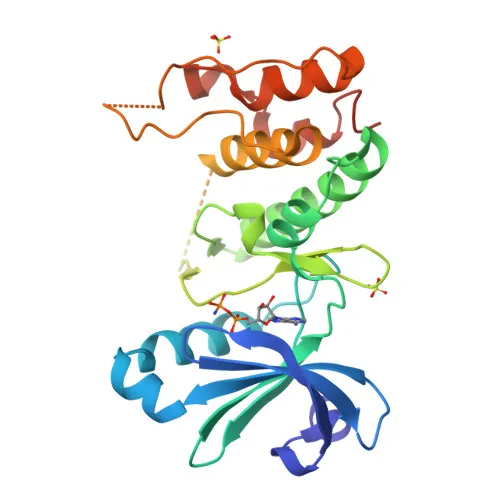
- Serine/threonine-protein kinase that plays a central role in centriole duplication, triggering procentriole formation on the parental centriole and recruiting biogenesis proteins such as SASS6, CPAP, CCP110, CEP135, and gamma-tubulin.
- Known as Polo-like kinase 4 (PLK-4), also designated Serine/threonine-protein kinase 18 (STK18) and Sak; encoded by the PLK4 gene (alternative names: SAK, STK18) in human.
- Phosphorylates FBXW5 at 'Ser-151' during G1/S transition, inhibiting FBXW5-mediated ubiquitination of SASS6 and thus promoting centriole assembly.
- Required for the recruitment of STIL to the centriole and for STIL-mediated centriole amplification, a process linked to centrosome amplification in tumors.
Related references:
PMID:22020124 - Phosphorylates CEP131 at 'Ser-78' and PCM1 at 'Ser-372', essential for proper organization and integrity of centriolar satellites.
Related references:
PMID:30804208 - Involved in deuterosome-mediated centriole amplification in multiciliated cells, enabling generation of more than 100 centrioles.
- Also functions in trophoblast differentiation by phosphorylating HAND1, disrupting HAND1-MDFIC interaction and activating HAND1; additionally phosphorylates CDC25C and CHEK2.
- Subcellularly localizes to the centrosome, centriole, cleavage furrow, and nucleolus; subject to acetylation, alternative splicing, and ubiquitination-like modifications.
Experimental Guidance and Technical Tips
- The immunogen corresponds to amino acids 641–970 (C-terminal region) of human PLK4; consider using this region for specificity validation.
- Expected band size is ~109 kDa in Western blot; use appropriate molecular weight markers and verify in positive control lysates from human, mouse, or rat cells.
- For ELISA, optimize coating antigen and antibody dilution; recombinant PLK4 protein or peptide may be used as capture.
- Since PLK4 is a low-abundance kinase, protein enrichment or immunoprecipitation may be helpful prior to WB.
CamelBio: Your One-Stop Sourcing Bridge
CamelBio provides diagnostic manufacturers and research laboratories with one-stop access to validated antibody raw materials, including anti-PLK4 polyclonal antibodies for targeted centriole duplication and cell cycle studies. We offer comprehensive supply solutions, such as bulk quantities of polyclonal antibodies, optimized antibody pairs, and ancillary reagents, supporting your IVD kit development and basic research needs.
REQUEST A QUOTE
Our professional team will reply to you within one business day. Please feel free to contact us!