Polyclonal Antibodies
Anti-PKN1 Polyclonal Antibody for WB, ELISA - Q16512
Item Number : CM0013156
Price varies based on specs and customizations
- Application
- WB, ELISA
- Cross Reactivity
- Human, Mouse
- Protein Weight
- 104kDa

Shipping:
Contact us to get shipping details Enjoy On-time Dispatch Guarantee.
Why Choose Us
Easy ordering process, quality products, and dedicated support for your business success.
Core Product Specifications and Parameters
| Parameter | Value |
|---|---|
| Product Name | PKN1 Rabbit pAb |
| Remarks/Alias | DBK; PKN; PAK1; PRK1; PAK-1; PRKCL1; PKN-ALPHA; PKN1 |
| Species | Human |
| Gene ID | 5585 (Human) |
| Immunogen | Recombinant fusion protein containing a sequence corresponding to amino acids 1-300 of human PKN1 (NP_002732.3). |
| Source | Rabbit |
| Category | Polyclonal Antibodies |
| Application | WB, ELISA |
| Cross Reactivity | Human, Mouse |
| SWISS | Q16512 |
| Protein Weight | 104kDa |
| Shipping | Ice bag |
Biological Background: PKN1 Function and Localization
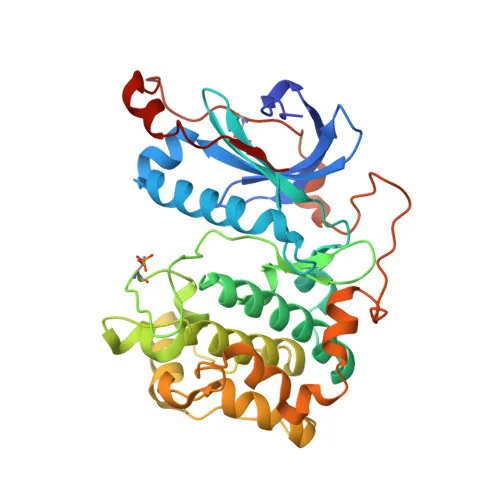
- PKN1 (serine/threonine-protein kinase N1) is a member of the protein kinase C (PKC) family, also known as PAK-1, PRK1, or PKN-alpha. It contains a catalytic kinase domain and regulatory regions including a coiled-coil domain and C2-like domain.
- Acts as an effector downstream of Rho GTPases and adrenergic signaling (ADRA1B), phosphorylating multiple substrates to regulate actin cytoskeleton dynamics, intermediate filament organization, and cell migration.
- In the nucleus, PKN1 acts as a transcriptional coactivator of the androgen receptor (AR); specifically phosphorylates histone H3 at Thr-11 (H3T11ph), leading to epigenetic activation and demethylation of H3K9me, which promotes AR-dependent gene expression.
- Phosphorylates MAPT/Tau on multiple sites, reducing microtubule binding and assembly, suggesting a role in neurodegenerative disorders such as Alzheimer's disease.
- Localizes to the cytoplasm, nucleus, endosomes, cell membrane, cleavage furrow, and midbody, consistent with its roles in signaling, mitosis, and membrane trafficking.
- Ubiquitously expressed with high levels in heart, brain, placenta, lung, skeletal muscle, kidney, and pancreas; overexpression observed in various tumor cell lines, especially breast cancer.
- Key post-translational modifications include acetylation and ubiquitination; phosphorylation sites are critical for activity.
Experimental Guidance and Technical Tips
- This polyclonal antibody was generated against an N-terminal fragment (aa 1-300) of human PKN1. It is suitable for Western blot (detecting a ~104 kDa band) and ELISA.
- Consider using appropriate positive and negative controls from relevant human or mouse cell lines/tissues. For WB, ensure full denaturation and reduction; validate in your specific sample system.
- Cross-reactivity with other isoforms or related kinases should be assessed via sequence alignment.
CamelBio: Your One-Stop Sourcing Bridge
CamelBio provides diagnostic manufacturers, labs, and research institutes with one-stop access to IVD raw materials, technical services, and consulting—covering every stage from concept to clinic. This anti-PKN1 polyclonal antibody is part of our extensive kinase and signaling portfolio, supporting research in oncology, neurodegeneration, and cell migration. We offer validated antibody pairs, optimized monoclonal/polyclonal antibodies, bulk ancillary reagents, and rare target raw-material sourcing to accelerate your assay development.
REQUEST A QUOTE
Our professional team will reply to you within one business day. Please feel free to contact us!