Polyclonal Antibodies
Anti-PKMYT1 Polyclonal Antibody for WB and ELISA - Q99640
Item Number : CM0020550
Price varies based on specs and customizations
- Application
- WB, ELISA
- Cross Reactivity
- Human, Mouse, Rat
- Protein Weight
- 55kDa

Shipping:
Contact us to get shipping details Enjoy On-time Dispatch Guarantee.
Why Choose Us
Easy ordering process, quality products, and dedicated support for your business success.
Core Product Specifications and Parameters
| Parameter | Specification |
|---|---|
| Product Name | PKMYT1 Rabbit pAb |
| Remarks/Alias | MYT1; PPP1R126; PKMYT1 |
| Species | Human |
| GeneID (Human) | 9088 |
| GeneID | 9088 |
| Immunogen | Recombinant fusion protein containing a sequence corresponding to amino acids 75-362 of human PKMYT1 (NP_004194.3) |
| Source | Rabbit |
| Category | Polyclonal Antibodies |
| Application | WB, ELISA |
| Cross Reactivity | Human, Mouse, Rat |
| SWISS | Q99640 |
| Protein Weight | 55kDa |
| Shipping | Ice bag |
Biological Background: PKMYT1 Function and Localization
- PKMYT1 (Myt1 kinase, Q99640) acts as a negative regulator of entry into mitosis by phosphorylating CDK1 primarily on Thr-14 when complexed with cyclins, thereby delaying G2/M transition.
Related references:
PMID:10373560, PMID:10504341, PMID:9001210
The kinase is also involved in Golgi fragmentation during mitosis, linking cell cycle control with organelle dispersal.
Related references:
PMID:9001210, PMID:9268380
- PKMYT1 localizes to the endoplasmic reticulum and Golgi apparatus membranes, consistent with its role in spatial regulation of cell cycle progression.
- Post‑translational modifications include acetylation and phosphorylation, while the kinase features an ATP‑binding domain essential for its catalytic activity.
- Alternative splicing generates multiple transcript variants, potentially modulating enzymatic function or subcellular distribution.
Experimental Guidance and Technical Tips
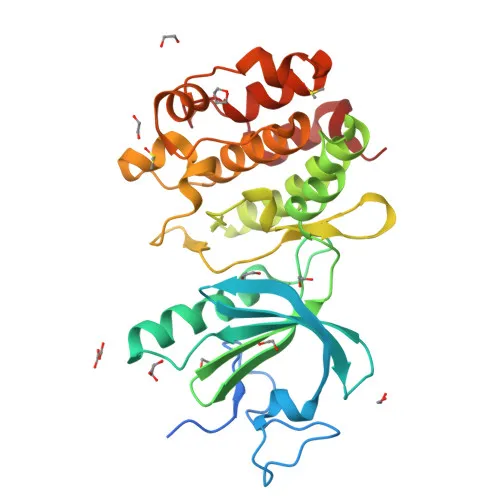
- The immunogen (amino acids 75–362) covers the central kinase domain, which is highly conserved across human, mouse, and rat; therefore, the antibody is likely to recognize the active kinase form in these species.
- For western blotting, a band around 55 kDa is expected; however, post‑translational modifications may lead to slight mobility shifts or multiple bands, and we recommend using appropriate positive and negative controls.
- In ELISA applications, pre‑coat recombinant PKMYT1 protein or optimize cell lysate concentrations, and validate blocking and washing conditions for your specific assay format.
- As with any polyclonal antibody, we advise confirming lot‑to‑lot consistency and optimizing working dilutions empirically for your experimental system.
CamelBio: Your One-Stop Sourcing Bridge
CamelBio serves as a comprehensive sourcing partner for IVD raw materials, offering this anti‑PKMYT1 polyclonal antibody along with validated antibody pairs, recombinant antigens, and ancillary reagents to support cell cycle and kinase research. Our global supply network enables one‑stop procurement of rare‑target raw materials, custom antibody services, and bulk manufacturing inputs, accelerating your diagnostic product development from proof‑of‑concept to commercialization.
REQUEST A QUOTE
Our professional team will reply to you within one business day. Please feel free to contact us!