Monoclonal Antibodies
Anti-PKC-beta Rabbit Monoclonal Antibody for WB, IHC-P, ELISA - P05771
Item Number : CM0006653
Price varies based on specs and customizations
- Application
- WB, IHC-P, ELISA
- Cross Reactivity
- Human, Mouse, Rat
- Protein Weight
- 77kDa

Shipping:
Contact us to get shipping details Enjoy On-time Dispatch Guarantee.
Why Choose Us
Easy ordering process, quality products, and dedicated support for your business success.
Core Product Specifications and Parameters
| Parameter | Value |
|---|---|
| Product Name | PKC-beta Rabbit mAb |
| Remarks/Alias | PKCB; PRKCB1; PRKCB2; PKCI(2); PKCbeta; PKC-beta |
| Species | Human |
| GeneID (Human) | 5579 |
| Immunogen | Recombinant protein | Recombinant fusion protein containing a sequence corresponding to amino acids 260-340 of human PKC-beta (NP_997700.1). |
| Source | Rabbit |
| Category | Monoclonal Antibodies |
| Application | WB, IHC-P, ELISA |
| Cross Reactivity | Human, Mouse, Rat |
| SWISS | P05771 |
| Protein Weight | 77kDa |
| Shipping | Ice bag |
Biological Background: Protein kinase C beta type Function and Localization
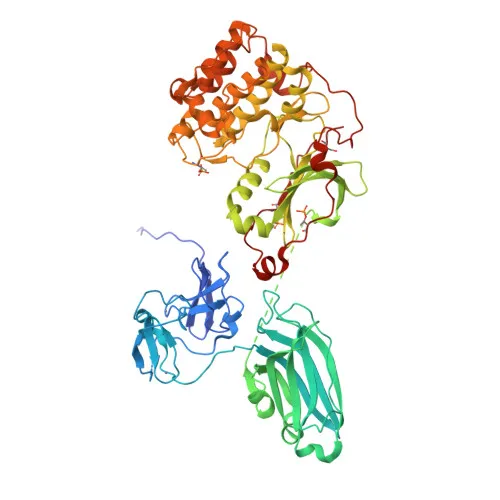
- Protein kinase C beta type (PKC-beta, gene PRKCB) is a calcium-activated, phospholipid- and diacylglycerol-dependent serine/threonine-protein kinase belonging to the protein kinase C family. It contains regulatory C1 and C2 domains and a catalytic kinase domain, and is expressed as multiple isoforms via alternative splicing.
- PKC-beta plays a pivotal role in B-cell receptor (BCR) signaling by mediating NF-kappa-B activation. It directly phosphorylates CARD11/CARMA1, leading to recruitment of the BCL10-MALT1 complex and activation of the IKK complex, ultimately promoting nuclear translocation of NFKB1 (PubMed:11598012). Related references: PMID:11598012
- In response to oxidative stress, PKC-beta specifically phosphorylates p66Shc, triggering mitochondrial accumulation and reactive oxygen species production, thereby promoting apoptosis. It also acts as an activator of ferroptosis by phosphorylating ACSL4 (PubMed:35027735) and FOXK1 (PubMed:40246981). Related references: PMID:35027735 PMID:40246981
- PKC-beta functions as a transcriptional coactivator by phosphorylating histone H3 at Thr-6 (H3T6ph), a modification that prevents LSD1-mediated demethylation of H3K4 and maintains an active chromatin state at androgen receptor target genes (PubMed:20228790). It also phosphorylates ATF2, enhancing AP-1 transcriptional activity (PubMed:19176525). Related references: PMID:20228790 PMID:19176525
- In metabolic regulation, PKC-beta participates in insulin signaling and glucose homeostasis. It phosphorylates SLC2A1/GLUT1 to promote glucose uptake (PubMed:25982116) and negatively regulates insulin-stimulated SLC2A4/GLUT4 translocation in adipocytes. Additionally, it phosphorylates KLHL3, influencing WNK4 signaling (PubMed:25313067). Related references: PMID:25982116 PMID:25313067
- Subcellular localization includes the cytoplasm, nucleus, and membrane, consistent with its roles in signal transduction from membrane receptors to nuclear transcription. The protein is subject to autophosphorylation and acetylation, which modulate its activity and interactions.
Experimental Guidance and Technical Tips
- The immunogen corresponds to amino acids 260-340 of human PKC-beta, a region within the catalytic domain. This design may confer specificity for the kinase-active form; consider verifying isoform specificity by sequence alignment if required.
- For Western blot, a band at approximately 77 kDa is expected. Use appropriate loading controls and validate antibody dilution in your sample type.
- For IHC-P, antigen retrieval conditions (citrate or EDTA buffer) may be needed; preliminary optimization on paraffin-embedded tissue sections is recommended.
- For ELISA, the antibody can be used as a detection reagent; pairing with a suitable capture antibody and coating antigen is necessary.
- The antibody cross-reacts with mouse and rat PKC-beta, enabling studies in rodent models. However, confirm reactivity in your specific tissue or cell line to rule out species-specific differences.
CamelBio: Your One-Stop Sourcing Bridge
CamelBio offers a comprehensive one-stop sourcing platform for IVD raw materials, including validated monoclonal and polyclonal antibodies, antibody pairs, and ancillary reagents. This PKC-beta rabbit monoclonal antibody is part of our kinase and signal transduction portfolio, ideal for researchers developing assays in immunology, oncology, and metabolic disease. We support bulk orders and can assist with custom raw-material sourcing for rare targets to accelerate your diagnostic development from concept to clinic.
Product Datasheet
Anti-PKC-beta Rabbit Monoclonal Antibody for WB, IHC-P, ELISA - P05771
REQUEST A QUOTE
Our professional team will reply to you within one business day. Please feel free to contact us!