Polyclonal Antibodies
Anti-PIP4K2B Polyclonal Antibody for WB, ELISA - P78356
Item Number : CM0027187
Price varies based on specs and customizations
- Application
- WB, ELISA
- Cross Reactivity
- Human
- Protein Weight
- 47kDa

Shipping:
Contact us to get shipping details Enjoy On-time Dispatch Guarantee.
Why Choose Us
Easy ordering process, quality products, and dedicated support for your business success.
Core Product Specifications and Parameters
| Parameter | Value |
|---|---|
| Product Name | PIP4K2B Rabbit pAb |
| Remarks/Alias | PI5P4KB; PIP5K2B; PIP5KIIB; PIP5P4KB; PIP5KIIbeta; PIP4K2B |
| Species | Human |
| Gene ID (Human) | 8396 |
| Gene ID | 8396 |
| Immunogen | Recombinant fusion protein containing a sequence corresponding to amino acids 1-270 of human PIP4K2B (NP_003550.1) |
| Source | Rabbit |
| Category | Polyclonal Antibodies |
| Application | WB, ELISA |
| Cross Reactivity | Human |
| SWISS | P78356 |
| Protein Weight | 47kDa |
| Shipping | Ice bag |
Biological Background: PIP4K2B Function and Localization
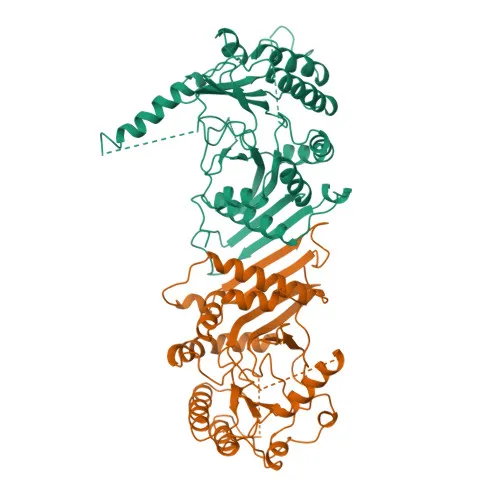
- PIP4K2B (Phosphatidylinositol 5-phosphate 4-kinase type-2 beta) is a member of the PIP4K family of lipid kinases. Alternative names include PIP5K2B, PIP5KIIbeta, and PI5P4KB.
- It catalyzes the phosphorylation of phosphatidylinositol 5-phosphate (PI(5)P) to generate phosphatidylinositol 4,5-bisphosphate (PtdIns(4,5)P2), a critical phosphoinositide in signal transduction. Related references: PMID:26774281, PMID:9038203
- PIP4K2B exhibits a preference for GTP over ATP in phosphorylating PI(5)P, and its kinase activity is modulated by physiological GTP levels, linking it to metabolic sensing. Related references: PMID:26774281
- The enzyme negatively regulates insulin signaling through a catalytic-independent mechanism by interacting with PIP5Ks to suppress PtdIns(4,5)P2 synthesis and downstream conversion to PtdIns(3,4,5)P3. Related references: PMID:31091439
- Subcellularly, PIP4K2B localizes to the endoplasmic reticulum membrane, cell membrane, nucleus, and cytoplasm, indicating versatile roles in different compartments.
- Tissue expression is high in brain, heart, pancreas, skeletal muscle, and kidney, with lower levels in placenta, lung, and liver.
- Post-translational modifications include acetylation, ubiquitin conjugation, and alternative splicing, suggesting complex regulatory mechanisms.
Experimental Guidance and Technical Tips
- The immunogen corresponds to the full-length (aa 1-270) human PIP4K2B, which may recognize multiple isoforms; validate specificity in the relevant sample system.
- For Western blot (WB), consider using reducing conditions and appropriate controls, as the predicted molecular weight is ~47 kDa; actual migration may vary due to modifications.
- ELISA applications may require optimization of coating antigen and antibody dilution; cross-reactivity with other PIP4K isoforms should be assessed if needed.
- As the antibody is rabbit polyclonal, lot-to-lot consistency must be verified for quantitative assays; consider using paired detection antibodies for sandwich ELISA development.
- Since PIP4K2B expression varies across tissues, select the appropriate cell or tissue lysate based on reported tissue specificity (e.g., brain, heart, pancreas) for positive controls.
CamelBio: Your One-Stop Sourcing Bridge
CamelBio streamlines IVD raw-material procurement for diagnostic manufacturers and research labs, offering validated antibody pairs, monoclonal and polyclonal antibodies, and ancillary reagents to accelerate assay development. For lipid kinase targets like PIP4K2B, which intersect with metabolic and cancer signaling pathways, CamelBio can source bulk quantities and custom formulations, supporting your transition from concept to clinical application. Partner with us to secure reliable, high-quality raw materials for your diagnostic pipeline.
REQUEST A QUOTE
Our professional team will reply to you within one business day. Please feel free to contact us!