Polyclonal Antibodies
Anti-PIM1 Rabbit Polyclonal Antibody for WB & ELISA - P11309
Item Number : CM0020573
Price varies based on specs and customizations
- Application
- WB, ELISA
- Cross Reactivity
- Human, Mouse, Rat
- Protein Weight
- 35kDa/45kDa

Shipping:
Contact us to get shipping details Enjoy On-time Dispatch Guarantee.
Why Choose Us
Easy ordering process, quality products, and dedicated support for your business success.
Core Product Specifications and Parameters
| Specification | Value |
|---|---|
| Product Name | PIM1 Rabbit pAb |
| Remarks/Alias | PIM1; PIM; serine/threonine-protein kinase pim-1 |
| Species | Human |
| Gene ID | 5292 |
| Immunogen | A synthetic peptide corresponding to a sequence within amino acids 213-313 of human PIM1 (NP_002639.1) |
| Source | Rabbit |
| Category | Polyclonal Antibodies |
| Application | WB, ELISA |
| Cross Reactivity | Human, Mouse, Rat |
| SWISS | P11309 |
| Protein Weight | 35kDa/45kDa |
| Shipping | Ice bag |
Biological Background: PIM1 Function and Localization
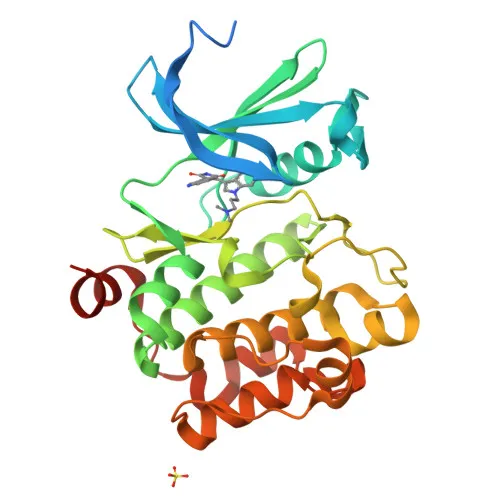
- PIM1 encodes the serine/threonine-protein kinase pim-1, a member of the PIM kinase family. Alternative initiation produces two isoforms (isoform 1 and isoform 2), both detected in prostate cancer cell lines.
- Acts as a proto-oncogene by promoting cell survival and proliferation, conferring a selective advantage in tumorigenesis. Related references: PMID:15528381 PMID:1825810 PMID:31548394
- Inhibits apoptosis through phosphorylation of proapoptotic proteins: BAD phosphorylation releases anti-apoptotic Bcl-X(L); MAP3K5 phosphorylation reduces JNK/p38MAPK activity and caspase-3 activation; FOXO3 phosphorylation also contributes to survival signaling. Related references: PMID:18593906 PMID:19749799
- Regulates cell cycle progression by phosphorylating CDC25A and CDC25C to stimulate G1-S and G2-M transitions, stabilizing CDKN1A in the cytoplasm, and down-regulating CDKN1B expression. Related references: PMID:16356754 PMID:12431783 PMID:18593906
- May influence chromatin structure by phosphorylating HP1 gamma/CBX3. Related references: PMID:10664448
- Positively regulates mTORC1 signaling through phosphorylation and inhibition of DEPDC5, a GATOR1 complex component. Related references: PMID:31548394
- Negatively regulates innate immunity by phosphorylating GBP1, leading to its interaction with 14-3-3 sigma and cytoplasmic retention, thereby inactivating it in the absence of infection. Related references: PMID:37797010
- Subcellular localization includes cytoplasm, nucleus, and cell membrane.
Experimental Guidance and Technical Tips
- The immunogen is a synthetic peptide located within amino acids 213-313 of human PIM1. For Western blot, endogenous PIM1 may appear as bands around 35 and 45 kDa due to isoform differences; consider using appropriate positive controls such as hematopoietic or prostate cancer cell lines.
- In ELISA applications, titrate both antibody and antigen to establish optimal signal-to-noise ratios; cross-reactivity with mouse and rat PIM1 allows multispecies assays after validation.
- Validate antibody specificity in your experimental system using known PIM1 inhibitors or siRNA knockdown to confirm band identity.
CamelBio: Your One-Stop Sourcing Bridge
CamelBio serves as a comprehensive B2B supply hub for IVD raw materials, offering validated antibodies like this anti-PIM1 polyclonal antibody to support oncology and kinase research. We provide one-stop access to monoclonal/polyclonal antibodies, optimized antibody pairs, and bulk ancillary reagents, complemented by technical and sourcing services tailored to diagnostic manufacturers and laboratory needs.
REQUEST A QUOTE
Our professional team will reply to you within one business day. Please feel free to contact us!