Polyclonal Antibodies
Anti-PIM1 Polyclonal Antibody for WB and ELISA - P11309
Item Number : CM0017805
Price varies based on specs and customizations
- Application
- WB, ELISA
- Cross Reactivity
- Rat
- Protein Weight
- 36kDa

Shipping:
Contact us to get shipping details Enjoy On-time Dispatch Guarantee.
Why Choose Us
Easy ordering process, quality products, and dedicated support for your business success.
Core Product Specifications and Parameters
| Parameter | Value |
|---|---|
| Product Name | PIM1 Rabbit pAb |
| Remarks/Alias | PIM; PIM1 |
| Species | Human |
| GeneID (Human) | 5292 |
| GeneID | 5292 |
| Immunogen | Recombinant protein|Recombinant fusion protein containing a sequence corresponding to amino acids 1-313 of human PIM1 (NP_002639.1). |
| Source | Rabbit |
| Category | Polyclonal Antibodies |
| Application | WB, ELISA |
| Cross Reactivity | Rat |
| SWISS | P11309 |
| Protein Weight | 36kDa |
| Shipping | Ice bag |
Biological Background: PIM1 Function and Localization
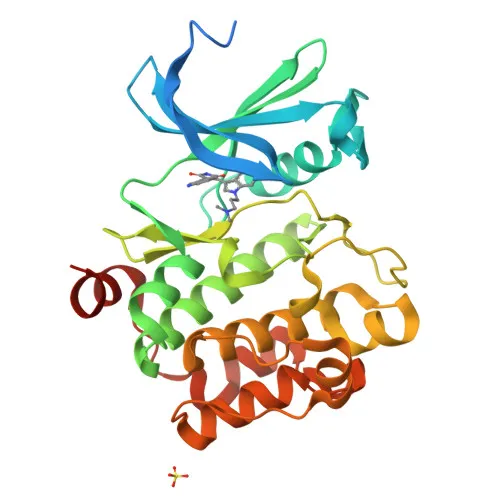
- PIM1 is a proto-oncogenic serine/threonine kinase critical for cell survival and proliferation, conferring a selective advantage in tumorigenesis. Related references: PMID:15528381, PMID:1825810, PMID:31548394
- PIM1 exerts oncogenic activity by regulating MYC transcriptional activity, cell cycle progression, and inhibiting proapoptotic proteins BAD, MAP3K5, and FOXO3. Related references: PMID:18593906
- PIM1 promotes cell cycle progression at G1-S and G2-M transitions by phosphorylating CDC25A and CDC25C. Related references: PMID:16356754
- PIM1 phosphorylates CDKN1A, leading to its cytoplasmic relocation and increased stability, and down-regulates CDKN1B to promote cell cycle progression. Related references: PMID:12431783, PMID:18593906
- PIM1 may influence chromatin structure by phosphorylating HP1 gamma/CBX3. Related references: PMID:10664448
- PIM1 acts as a positive regulator of mTORC1 signaling by phosphorylating and inhibiting DEPDC5. Related references: PMID:31548394
- PIM1 negatively regulates innate immunity by phosphorylating GBP1, leading to its retention in the cytosol via 14-3-3 protein sigma (SFN) interaction. Related references: PMID:37797010
- PIM1 localizes to the cytoplasm, nucleus, and cell membrane, and is predominantly expressed in hematopoietic and germline lineages, with isoforms detected in prostate cancer cell lines.
Experimental Guidance and Technical Tips
- For Western blot, consider testing this antibody at various dilutions (e.g., 1:500–1:2000) with appropriate blocking and detection conditions; the predicted molecular weight of PIM1 is ~36 kDa, but post-translational modifications may cause band shifts. Use phosphatase inhibitors to preserve phosphorylation states if studying active kinase.
- For ELISA, perform checkerboard titrations to determine optimal antibody and antigen concentrations; consider paired antibody formats for sandwich ELISA development.
- Given the reported cross-reactivity with rat, validate reactivity in relevant rat cell lines or tissues before large-scale studies.
- Because PIM1 is involved in multiple signaling pathways, control experiments with inhibitors or knockdown models can help confirm specificity.
CamelBio: Your One-Stop Sourcing Bridge
CamelBio provides diagnostic manufacturers, R&D labs, and research institutions with a one-stop sourcing solution for IVD raw materials, technical services, and consulting—supporting projects from concept to clinic. For research on oncogenic kinases like PIM1 in cancer biology, we supply validated antibodies, optimized polyclonal and monoclonal antibody pairs, bulk ancillary reagents, and can assist in rare target raw-material procurement. Streamline your development with reliable supply chains and expert support.
REQUEST A QUOTE
Our professional team will reply to you within one business day. Please feel free to contact us!