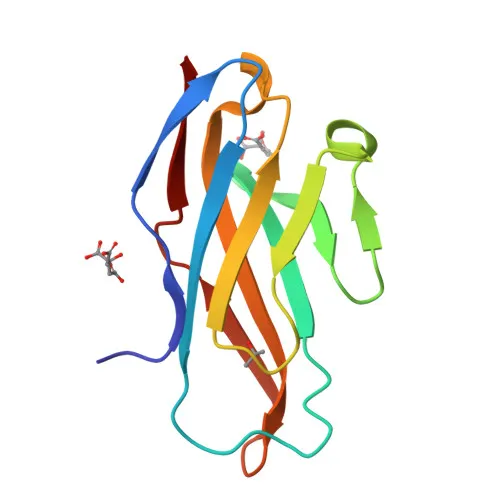
Polyclonal Antibodies
Anti-PILRA Rabbit Polyclonal Antibody for WB, ELISA - Q9UKJ1
Item Number : CM0022506
Price varies based on specs and customizations
- Application
- WB, ELISA
- Cross Reactivity
- Mouse, Rat
- Protein Weight
- 34kDa

Shipping:
Contact us to get shipping details Enjoy On-time Dispatch Guarantee.
Why Choose Us
Easy ordering process, quality products, and dedicated support for your business success.
Core Product Specifications and Parameters
| Parameter | Value |
|---|---|
| Product Name | PILRA Rabbit pAb |
| Remarks/Alias | FDF03; PILRA |
| Species | Human |
| GeneID (Human) | 29992 |
| GeneID | 29992 |
| Immunogen | Recombinant fusion protein containing a sequence corresponding to amino acids 20-180 of human PILRA (NP_840056.1) |
| Source | Rabbit |
| Category | Polyclonal Antibodies |
| Application | WB, ELISA |
| Cross Reactivity | Mouse, Rat |
| SWISS | Q9UKJ1 |
| Protein Weight | 34kDa |
| Shipping | Ice bag |
Biological Background: PILRA Function and Localization
- Paired immunoglobulin-like type 2 receptor alpha (PILRA) is an inhibitory receptor that recruits cytoplasmic phosphatases PTPN6/SHP-1 and PTPN11/SHP-2 via SH2 domains, leading to dephosphorylation of signaling molecules and blockade of signal transduction.
- PILRA belongs to the paired receptor family, which includes highly related activating and inhibitory receptors widely involved in immune system regulation.
- Acts as a cellular receptor for PIANP.
- During microbial infection, PILRA functions as an entry co-receptor for herpes simplex virus 1 (HSV-1), facilitating viral entry.
- Predominantly expressed in hematopoietic tissues, including monocytes, macrophages, granulocytes, and dendritic cells (especially CD14+/CD1a- and CD11c+ subsets), but not by lymphocytes.
- Localizes primarily to the cell membrane; alternative splicing yields secreted isoforms that are released extracellularly.
- Post-translational modifications include N-linked glycosylation and phosphorylation; the protein contains an immunoglobulin-like domain.
- The PILRA gene (human) encodes a precursor protein of 303 amino acids with a predicted molecular weight of approximately 34 kDa.
Experimental Guidance and Technical Tips
- The immunogen corresponds to the extracellular region (amino acids 20–180) of human PILRA, thus the antibody may detect both membrane-bound and secreted isoforms. For Western blotting, a band near 34 kDa is anticipated under reducing conditions.
- Consider using human monocytes, macrophages, or dendritic cell lines as positive control samples for WB; expression is expected in myeloid but not lymphoid cells.
- Cross-reactivity with mouse and rat is reported; validate in the relevant sample system and consider potential species-specific banding patterns.
- For ELISA, the antibody can be used as a capture or detection reagent; optimize coating concentrations and blocking conditions for your specific assay format.
- Since PILRA is an inhibitory receptor involved in immune checkpoint regulation, this antibody may be useful for studying immunosuppressive pathways or viral entry mechanisms in appropriate experimental models.
CamelBio: Your One-Stop Sourcing Bridge
CamelBio provides diagnostic manufacturers and research laboratories with streamlined access to IVD raw materials, from validated antibody pairs and recombinant proteins to ancillary reagents. For immune checkpoint or virology projects requiring anti-PILRA antibodies, our one-stop platform simplifies procurement of polyclonal and monoclonal antibodies, bulk reagents, and rare-target sourcing. With end-to-end support from concept to clinic, CamelBio bridges your R&D workflow efficiently.
REQUEST A QUOTE
Our professional team will reply to you within one business day. Please feel free to contact us!