Polyclonal Antibodies
Anti-PICK1 Rabbit Polyclonal Antibody for IHC-P, ELISA - Q9NRD5
Item Number : CM0017922
Price varies based on specs and customizations
- Application
- IHC-P, ELISA
- Cross Reactivity
- Human
- Protein Weight
- 47kDa

Shipping:
Contact us to get shipping details Enjoy On-time Dispatch Guarantee.
Why Choose Us
Easy ordering process, quality products, and dedicated support for your business success.
Core Product Specifications and Parameters
| Parameter | Value |
|---|---|
| Product Name | PICK1 Rabbit pAb |
| Remarks/Alias | PICK; PRKCABP; PICK1 |
| Species | Human |
| Gene ID (Human) | 9463 |
| Immunogen | A synthetic peptide corresponding to a sequence within amino acids 300-400 of human PICK1 (NP_036539.1) |
| Source | Rabbit |
| Category | Polyclonal Antibodies |
| Application | IHC-P, ELISA |
| Cross Reactivity | Human |
| SWISS | Q9NRD5 |
| Protein Weight | 47kDa |
| Shipping | Ice bag |
Biological Background: PICK1 Function and Localization
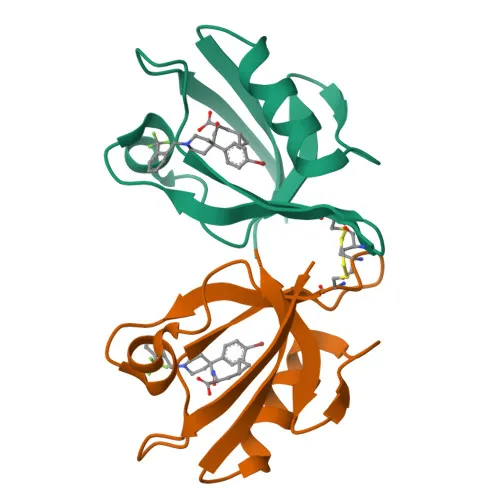
- PICK1 (PRKCA-binding protein), also referred to as Protein interacting with C kinase 1 or PRKCABP, acts as an adapter protein that binds to and organizes the subcellular localization of various membrane proteins via PDZ domain interactions.
- It plays a critical role in synaptic plasticity by regulating the trafficking and internalization of AMPA-type glutamate receptors, potentially through PRKCA-dependent mechanisms.
- PICK1 inhibits the actin-nucleating activity of the Arp2/3 complex competitively with nucleation promoting factors, thereby modulating neuronal morphology and AMPAR endocytosis.
- It is required for spine shrinkage during long-term depression (LTD) at excitatory synapses, linking actin dynamics to synaptic weakening.
- PICK1 localizes to the cytoplasm, perinuclear region, membrane, postsynaptic density, synapse, synaptosome, and associates with the cytoskeleton.
- Ubiquitously expressed, PICK1 also regulates astrocyte morphology by antagonizing the Arp2/3 activator WASL/N-WASP.
- Additional reported functions include regulation of acid-sensing ion channels ASIC1/ASIC3.
- The protein contains metal-binding (zinc, calcium) and lipid modification (palmitoylation) sites, and is subject to phosphorylation.
Experimental Guidance and Technical Tips
- The immunogen corresponds to amino acids 300–400 of human PICK1 (near the C-terminus). Epitope mapping suggests the antibody may recognize a linear epitope within this region; consider using the peptide for competitive inhibition in ELISA to confirm specificity.
- For IHC-P, classical antigen retrieval methods (heat-induced or enzymatic) are recommended, and staining patterns should reflect known subcellular localizations such as cytoplasmic and postsynaptic densities. Validate in normal human brain or other PICK1-expressing tissues.
- As a polyclonal antibody, lot-to-lot variability may occur; it is advisable to perform pilot experiments and include positive and negative controls.
- While not originally validated for Western blot, if attempting WB after heat denaturation, target band detection at ~47 kDa may be observed; optimization of blocking and antibody concentration is essential.
CamelBio: Your One-Stop Sourcing Bridge
CamelBio provides diagnostic manufacturers, labs, and research institutes with one-stop access to IVD raw materials, technical services, and consulting—covering every stage from concept to clinic. This anti-PICK1 polyclonal antibody supports neuroscience and receptor trafficking research, and CamelBio can supply a full range of validated antibody pairs, optimized monoclonal/polyclonal antibodies, bulk ancillary reagents, and rare target raw-material sourcing to accelerate your assay development.
REQUEST A QUOTE
Our professional team will reply to you within one business day. Please feel free to contact us!